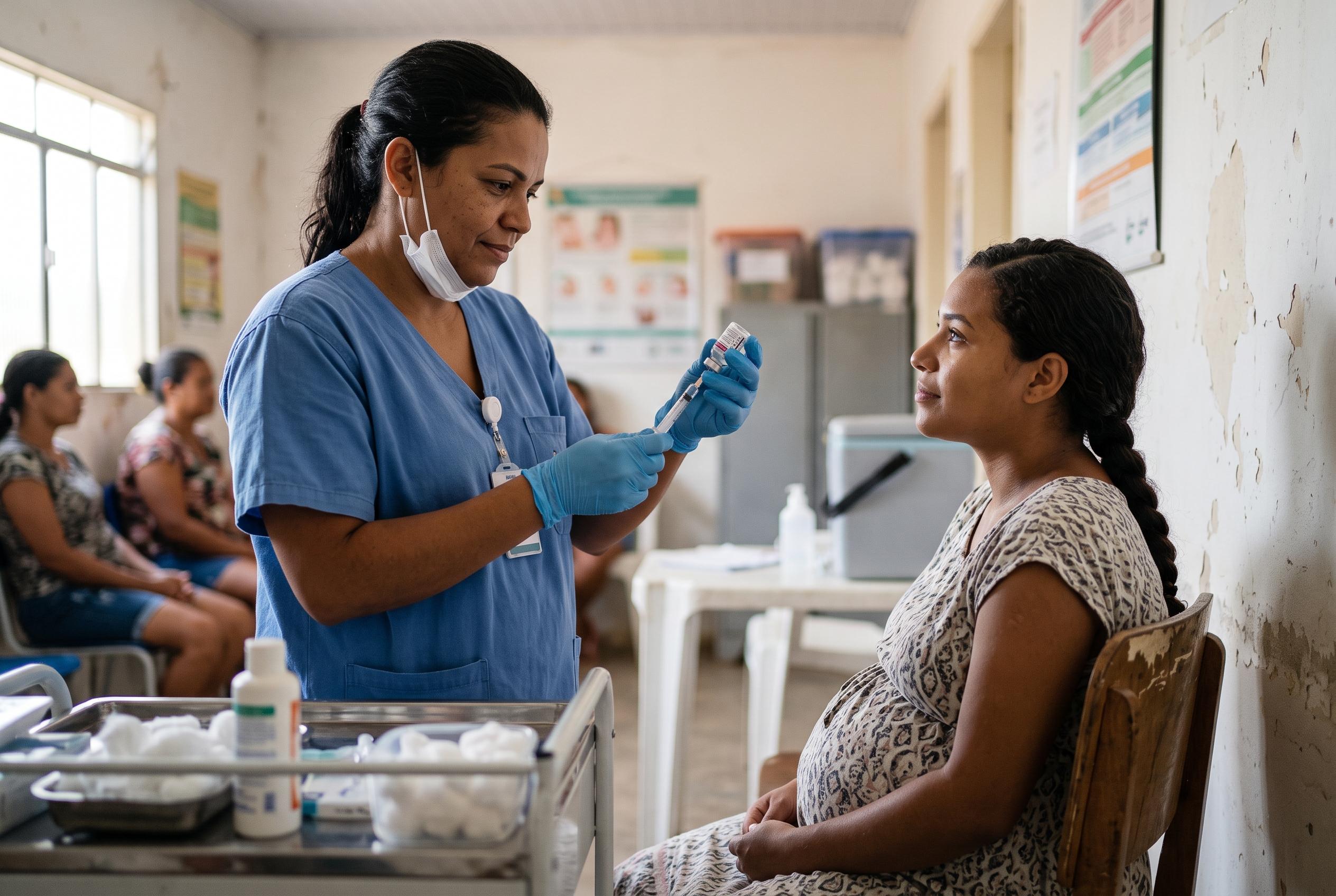

The World Health Organization’s approval of a multi-dose Pfizer RSV vaccine presentation removes key hurdles for low-income countries, enabling faster integration into routine maternal immunisation programmes and potentially saving thousands of young lives.
Lower-income countries are closer to routine maternal immunisation against RSV after the World Health Organization prequalified a multi-dose presentation of Pfizer’s Abrysvo vaccine, removing a product hurdle that had held back Gavi-backed roll-out. Gavi says the decision should allow countries that have spent the past year preparing RSV plans to move from groundwork towards actual introductions.
The change in presentation matters because the version WHO first cleared in March 2025 was a one-dose kit, with the vaccine and sterile water supplied separately and mixed before injection. In poorer health systems, that format is harder to finance and distribute at scale. WHO has made clear that prequalification is the gateway for UN procurement, and PATH has noted that it is also a precursor to Gavi support. A multi-dose vial is expected to reduce packaging, refrigeration space and waste, making the vaccine easier to fit into antenatal services where budgets, cold chains and disposal systems are already under strain.
WHO’s policy case for infant RSV prevention was built over 2024 and 2025. Its advisory group backed global use of maternal vaccination and infant monoclonal antibodies in September 2024, and in May 2025 WHO told countries to introduce either Pfizer’s maternal vaccine or nirsevimab, depending on what their health system could deliver most feasibly, cost-effectively and with the strongest coverage. For vaccination programmes, WHO recommends giving the maternal jab in the third trimester, from 28 weeks onwards, so antibodies can cross the placenta before birth and protect babies in the first six months of life.
Gavi had been working towards that point for years. The alliance said its board identified RSV as a priority in 2018, but support depended on a licensed product, a WHO recommendation, prequalification and a workable investment case. After the first, single-dose WHO listing in March 2025, Gavi said an updated RSV case would return to its board, and in July 2025 the board opened a funding window for an RSV maternal vaccine programme. By November that year, the alliance said the effort had moved into design, with teams working on country planning and delivery through maternal and child health services. Marta Tufet Bayona, then Gavi’s head of policy, said the first WHO prequalification “opens doors for other innovative RSV products in the pipeline”.
The public health stakes are substantial. WHO’s RSV reference material says the virus caused 33 million acute lower respiratory infections, 3.6 million hospital admissions and 101,400 deaths in children under five in 2019, with more than 97% of paediatric deaths in low- and middle-income countries. In its March 2025 announcement, WHO said about half of under-five RSV deaths occur in babies younger than six months, and that there is still no specific treatment beyond supportive care. Nearly every child is infected at least once by the age of two, which is why health agencies see protection in early infancy as particularly valuable.
Outside the big multilateral agencies, global health groups have treated the new presentation as an access test as much as a regulatory one. PATH said last year that the vaccine had so far been used mainly in high-income and some upper-middle-income markets, even though the heaviest burden falls elsewhere. Clint Pecenka, director of PATH’s RSV vaccine programme, called WHO prequalification “critical and exciting progress” and said prevention could reduce pressure not only on health systems but on households as well. The Access to Medicine Foundation, in a June 2025 review, said late-stage trials of RSV preventive products for children had taken place in only 12% of the 113 low- and middle-income countries in its index over the previous five years. Among the five countries with the highest incidence of RSV-related lower respiratory infection in under-fives, it said only South Africa had been included, while Gambia was the sole low-income trial site.
The multi-dose clearance does not end the wider debate over how countries should protect infants. WHO still places maternal vaccination alongside nirsevimab, the long-acting monoclonal antibody that starts working within about a week and lasts at least five months. Its RSV disease page also notes that clesrovimab, another monoclonal antibody for infants, has recently received market authorisation, although WHO has not yet reviewed it for policy use. What the packaging decision does change is the practicality of maternal vaccination for public-sector programmes that depend on pooled procurement and stretched cold chains. After a year in which Gavi moved from board approval to programme design, the central question is now less whether the vaccine can be bought than how quickly countries can fold it into routine antenatal care.
Disclaimer: This content is for informational purposes only and is not intended to be a substitute for professional medical judgment, advice, diagnosis, or treatment.