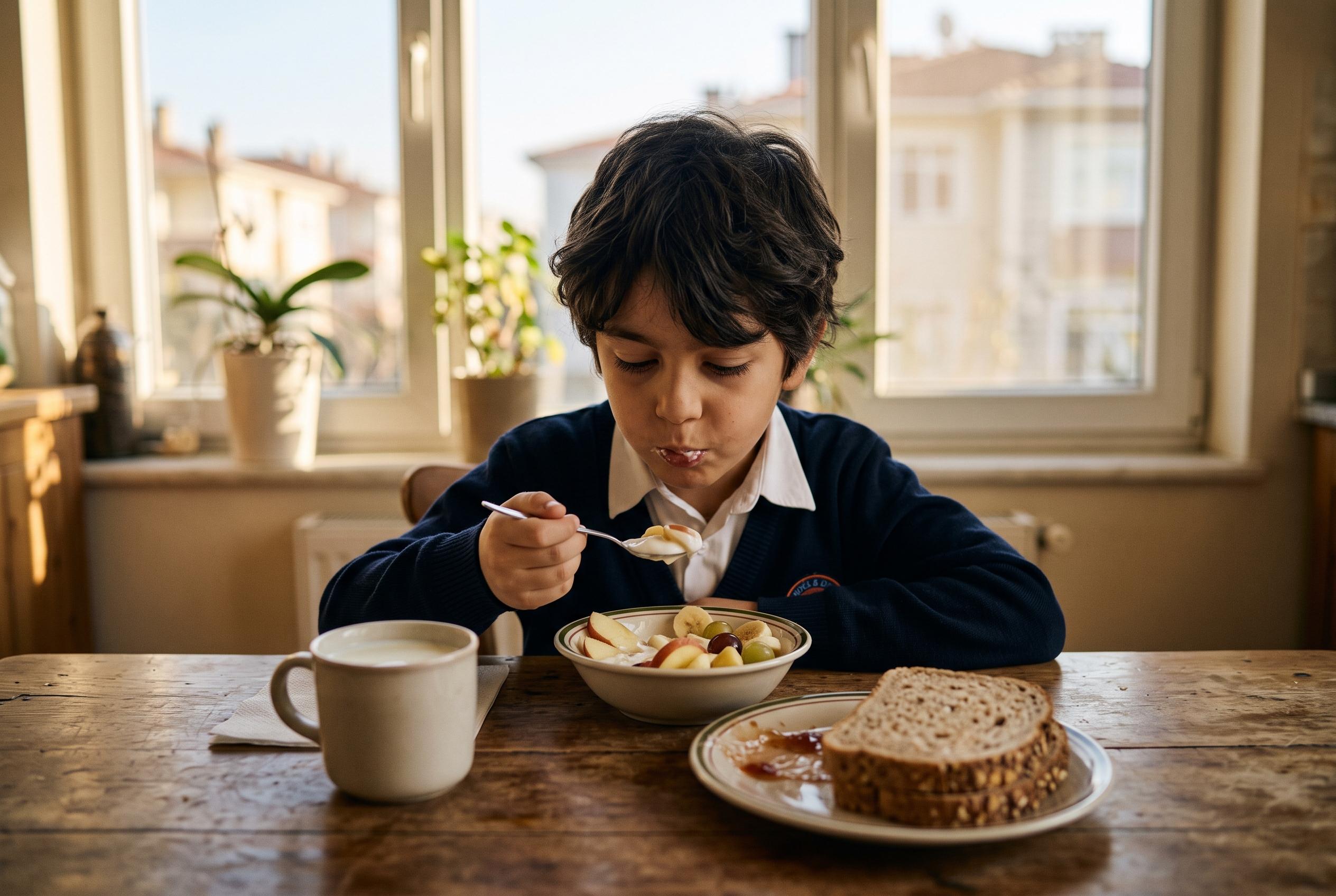

Nutrition specialists in Turkey stress the importance of a balanced breakfast at the start of the school term, linking it to better concentration, behaviour, and long-term metabolic health for children, and warning against sugary and heavily processed foods as quick fixes.
As children return to classrooms, nutrition specialists are warning that missing breakfast can trigger far more than a mid-morning slump. Reports across several Turkish outlets say schoolchildren who leave home hungry are more likely to struggle with concentration, energy and self-control in lessons, and may later compensate with packaged, sugary snacks that can raise the risk of unhealthy weight gain.
Kocaeli TV, citing Medicana Konya Hospital nutrition specialist Beyza Vural Öten, said breakfast should be seen as the body’s first fuel after 10 to 12 hours of sleep. Öten linked skipping it not only to poor focus, but also to low blood sugar, learning difficulties, school adjustment problems and behavioural issues. She also argued that breakfast should not be postponed, particularly for children who are still growing or who are already underweight, and said the habit begins with families making time to sit down together in the morning.
A parallel warning from Medicana Konya Hospital dietitian Merve Sena Nazlı placed equal emphasis on what happens later in the school day. Gazete Birlik quoted Nazlı as saying: “Çocuklar aç gittiğinde paketli ve şekerli gıdalara yöneliyorlar. Bu da obezite riskini artırıyor,”. In other words, the concern is not simply that children feel hungry, but that hunger nudges them towards ultra-processed snacks and sweet foods that provide a quick lift and little lasting satiety. Hürgün reported that, in Nazlı’s view, children who skip breakfast miss the chance to begin the day alert and energetic, which can then feed into weaker classroom performance.
Several of the reports sharpened the health warning by focusing on the kinds of foods children may rely on instead. Bizim Sivas said Nazlı singled out simit and poğaça as examples of simple carbohydrates: refined bakery foods that deliver short-lived energy but can encourage overeating later. Liberal TR said she connected that pattern not only to obesity, but also to increased abdominal fat and the risk of fatty liver disease in children. That pushes the discussion beyond appearance or body weight and into the territory of metabolic health at a very young age.
Nazlı’s advice was also notably practical. Rather than relying on breakfast cereals mixed with milk or convenience foods, she recommended a simple plate built around staples most families already have at home: eggs prepared as boiled eggs, omelette, menemen or even pancakes if that is what a child prefers; cheese for calcium; bread; a few pieces of tomato or pepper; and a portion of fruit. Liberal TR and Hürgün both reported that she sees breakfast quality as just as important as the act of eating it. Children who leave home feeling full, she argued, are less likely to buy or seek out unhealthy snacks later, which makes breakfast part of weight control as well as learning support. Those same reports said studies have associated starting the day with breakfast with better school performance.
For busy households, the specialists’ message was that healthy does not have to mean elaborate. Bizim Sivas reported that Nazlı suggested even a very quick combination such as one boiled egg, a slice of cheese and a few olives can be enough to send a child to school better prepared for the morning. She also advised parents to choose honey or molasses over chocolate spread when they want to add energy to breakfast. The underlying point is that a short preparation time is not, in her view, a reason to default to heavily sweetened or highly processed options.
Older reporting from Agronews shows that Nazlı has been making the same case for some time, but with a broader developmental frame. In 2023 she argued that nutrition is central to brain development, that eating habits formed in childhood often persist into adult life, and that the foundations are laid even earlier, beginning in the womb. That report also moved beyond breakfast to suggest lunchbox ideas, including wholegrain bread with cheese and greens, walnuts and ayran; boiled egg with fruit and milk; home-made savoury pastries; toast with cheese and olives; and bread filled with chicken or meatballs. The emphasis was on steadier energy, better concentration and foods prepared at home where possible.
Taken together, the reports amount to a seasonal reminder at the start of term: breakfast is being presented not as an optional extra, but as part of a child’s learning routine and longer-term health. The clinicians quoted in them stop short of claiming a new nationwide study or official dataset, but they are consistent on the practical message for parents. A modest, balanced breakfast eaten without delay, and backed up by lunchbox planning and family routine, may do more for a child’s attention, behaviour and eating choices than a hurried morning built around sugary convenience foods.
Disclaimer: This content is for informational purposes only and is not intended to be a substitute for professional medical judgment, advice, diagnosis, or treatment.