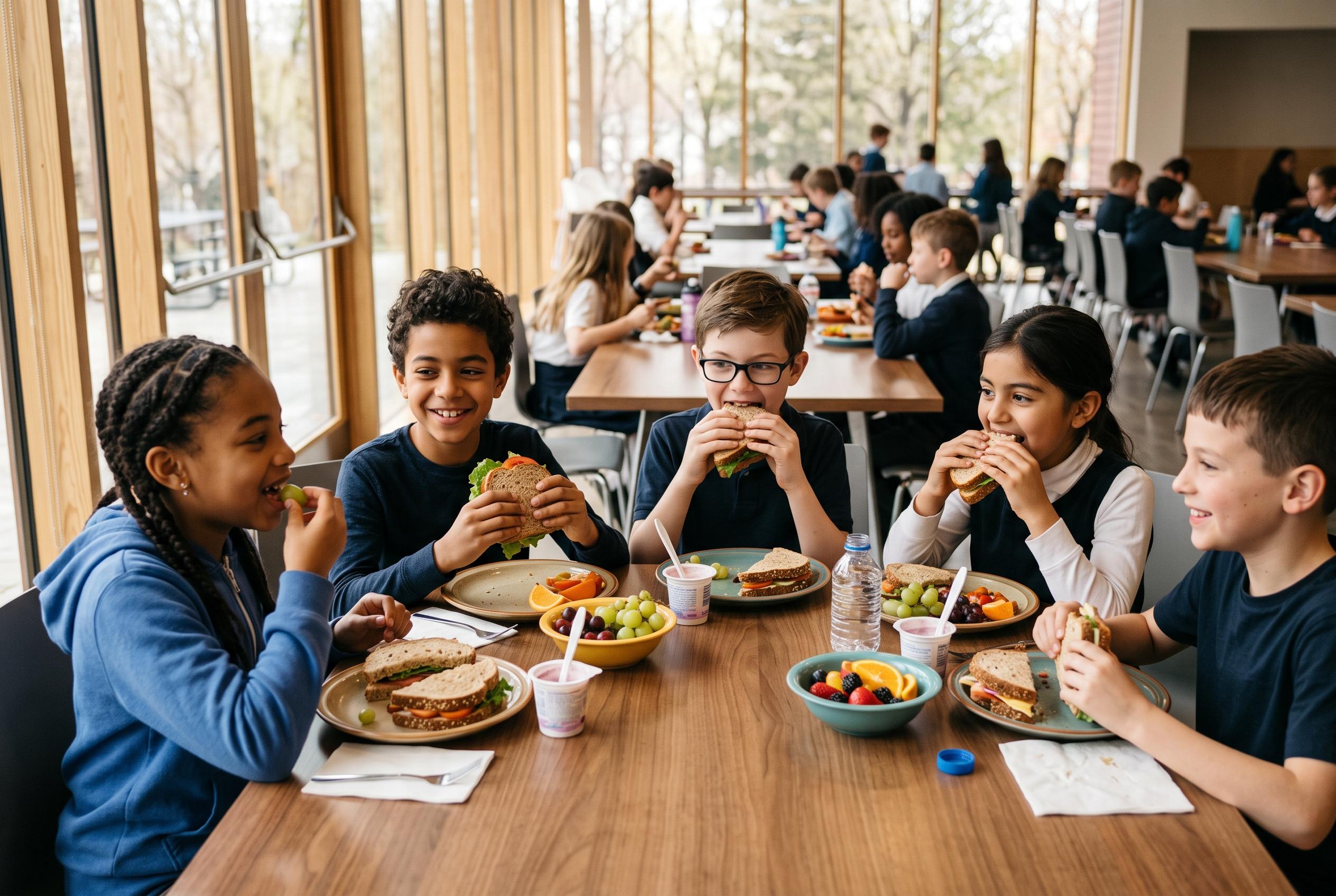

Public-health bodies and dietitians are urging parents to focus on balanced, varied, and practical school lunches rather than chasing elusive ‘brain foods’, promoting easy-to-prepare, nutritious options that children will actually eat.
Parents hunting for the ideal school lunchbox are being given a much simpler message by public-health bodies and dietitians than many glossy meal plans suggest: stop chasing a miracle “brain food” and aim instead for balance, variety and something your child will actually eat. Guidance from the NHS, the New South Wales government, the World Cancer Research Fund and clinicians at UT Southwestern says the most reliable formula is a mix of fruit or vegetables, a source of protein, a starchy food and water, with school meals still a good option where they work for a family.
That advice is markedly less about individual vitamins and far more about building a sensible pattern. The NHS recommends lean fillings such as chicken or turkey, fish including tuna or salmon, lower-fat spreads and reduced-fat cheese, while urging parents to avoid mayonnaise in sandwiches and to add salad or vegetables wherever they can. The World Cancer Research Fund goes further by suggesting a lunchbox should draw from each food group and by using a plate model of half fruit or vegetables, a quarter protein and a quarter starchy carbohydrates. Kendra Chow, a registered dietitian at the charity, says: “Wholemeal, wholegrain and brown options are best as they contain the most fibre.”
In practice, that means the old sandwich-plus-snack routine can stay, but it needs better company. NHS advice points parents towards cherry tomatoes, carrot, cucumber, celery and pepper sticks, as well as small pots of hummus or other dips. New South Wales health guidance gives much the same message, listing avocado, baby spinach and cherry tomatoes among lunchbox-friendly vegetables and reminding families not to forget a bottle of water. UT Southwestern’s culinary medicine team says a balanced lunch should be about 50% fruit and vegetables, with the rest made up of wholegrains, proteins and healthy fats that support children through lessons, sport and after-school activities.
It also means lunch does not have to revolve around a sandwich every day. The New South Wales guidance explicitly encourages families to repurpose what they already eat at home, turning leftover rice dishes into sushi sandwiches or packing items such as frittata, dhal and rice paper rolls. In a video for the state site, chef Adam Liaw says frozen and canned vegetables can save time and money while still being nutritious. UT Southwestern makes a similar point through cultural examples, suggesting Indian dishes such as ghugni and chana masala, or Mexican-style lunches built around brown rice, beans, corn tortillas, peppers, avocado and tomatoes. That is a broader approach than lunchbox plans that rely on a fixed five-day menu.
The strongest consensus across the sources is about preparation. Stephanie Chang, a registered dietitian at CHOC, said she likes to plan lunches for the whole week so she does not reach for whatever is quickest. The New South Wales government suggests chopping extra vegetables at dinner time for the next day’s lunch, while the World Cancer Research Fund recommends batch-preparing at the weekend and using leftovers such as roast chicken and cooked vegetables. Safety matters too: New South Wales advises using an insulated lunch bag and a freezer brick or frozen water bottle to keep food cool until lunchtime.
Parents of fussy eaters are also being told not to confuse rejection with final defeat. CHOC says it can take repeated exposure before a child accepts a new food, and suggests letting children choose one new fruit or vegetable when shopping. Its dietitians also recommend bento-style boxes so foods stay separate, which can matter for children who dislike different items touching. The charity shares deliberately playful examples, from avocado with pita chips renamed “Monster Mash” to crackers with peanut butter and raisins dubbed “Bug in the Mud”, on the grounds that presentation can make healthier choices more acceptable.
There are, however, some important caveats. Schools may restrict peanuts, tree nuts or shellfish because of allergy risks, and UT Southwestern says families should check those rules carefully and swap in alternatives such as sunflower butter where permitted. Processed meats draw some of the clearest warnings. The World Cancer Research Fund says to avoid processed options such as ham in regular lunchbox rotation, while Jaclyn Albin, a culinary medicine specialist at UT Southwestern, advises steering clear of foods such as spam, sausage and salami because of their saturated fat content and wider health risks. Advice diverges at the margins: the NHS says to skip mayonnaise in sandwiches, while CHOC includes mayonnaise among optional fats, a reminder that portion size and the rest of the lunch still matter.
The broader lesson is that parents do not need expensive ingredients or an Instagram-worthy lunchbox to feed children well during the school day. A turkey wrap with peppers, a salmon bagel with salad, a pot of yoghurt with fruit, leftovers turned into rice rolls, or refried black beans in a quesadilla can all fit the brief. As Gina O’Toole, another CHOC dietitian, put it: “My kids love refried black beans topped with cheese and corn, in a burrito, quesadilla or just to dip with chips.” The best lunchbox, the evidence suggests, is the one built often enough to become routine, varied enough to stay interesting, and practical enough to survive a busy school week.
Disclaimer: This content is for informational purposes only and is not intended to be a substitute for professional medical judgment, advice, diagnosis, or treatment.