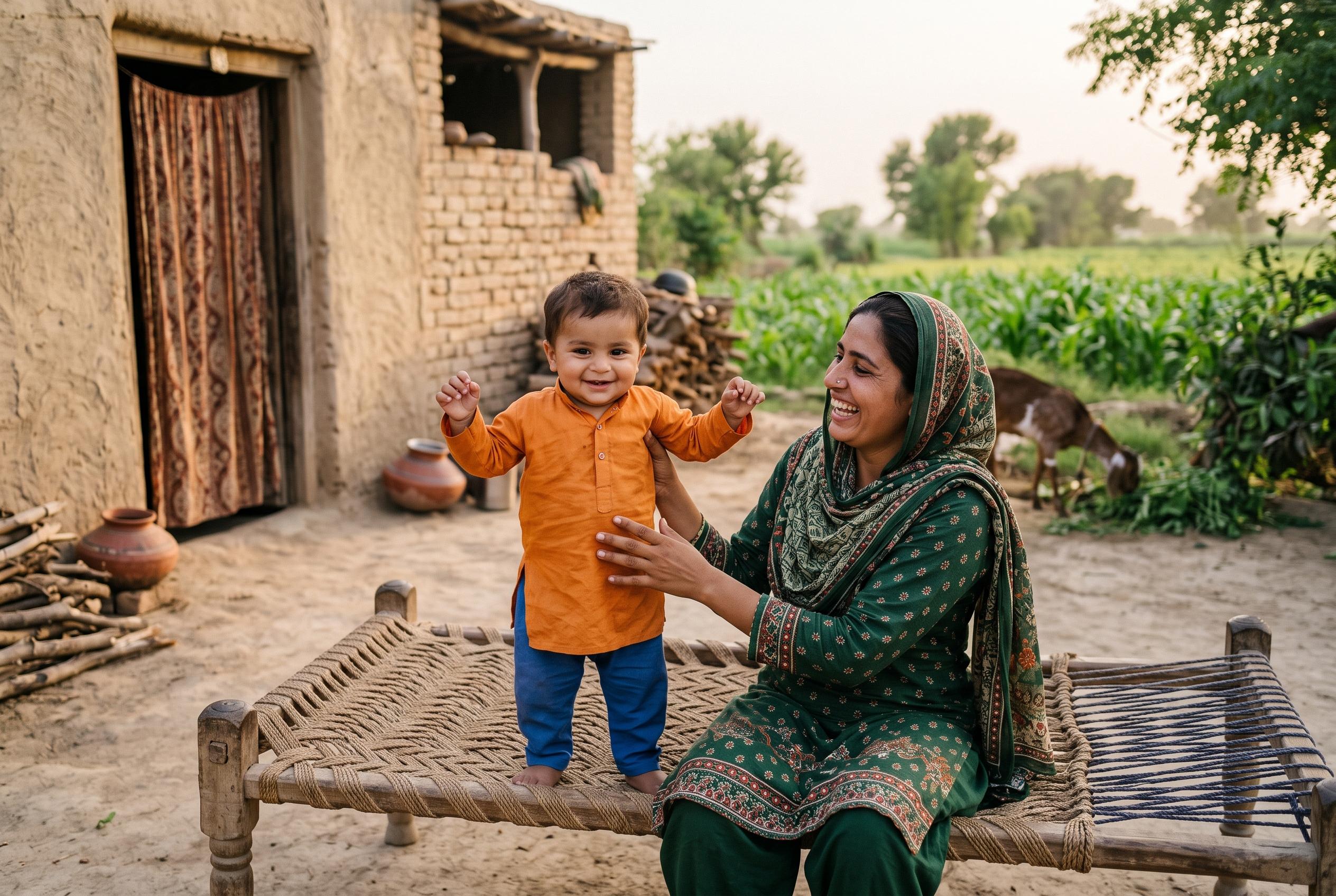

Pakistan has renewed its Benazir Nashonuma Programme for three more years, aiming to build on early successes in reducing child stunting and malnutrition through integrated health, nutrition, and social protection efforts.
Pakistan has moved its child nutrition drive into a new phase, extending the Benazir Nashonuma Programme for three more years after partner agencies said the scheme had already shown unusually strong results in cutting early stunting. On 9 July 2026, the Benazir Income Support Programme, the World Food Programme, UNICEF and the World Health Organization said the renewal would aim to protect an additional 3.3 million women and children from malnutrition, with children in the scheme found to be 22 per cent less likely to be stunted at six months.
The extension gives Pakistan a more concrete answer to a problem that has long been discussed largely in terms of causes rather than delivery. According to the July announcement, the programme is embedded in the country’s main social protection system and works through 578 facilitation centres and 224 nutrition stabilisation centres for pregnant and breastfeeding women and children under two. The same statement said the programme had reached 4.7 million people since its launch in 2020 and could reach 8 million in total with the new term. WFP material published earlier in 2026 put the reach slightly lower, at 4.6 million mothers and young children, underlining that the scale is large even if partner tallies differ at the margins. The agencies also said wasting stands at 17.7 per cent, affecting 5 million children, and that malnutrition costs Pakistan an estimated $17 billion a year.
What has made the renewal notable is the claim that the programme is doing more than moving food. A joint factsheet published in June reported that an independent cohort evaluation presented in May 2026 found stunting among beneficiary children was 22 per cent lower at six months and 18 per cent lower at 12 months. It also recorded lower rates of low birth weight, down 6 per cent, preterm births, down 11 per cent, and what the evaluation called small vulnerable newborns, down 7 per cent. Child anaemia was 12 per cent lower and full immunisation coverage 17 per cent higher among participating families. Yet the same evaluation suggested the limits of a single intervention: fewer than a quarter of women achieved adequate dietary diversity.
Those findings sit against a stubborn national baseline. When UNICEF and the Pakistani government launched the National Nutrition Survey 2018, they said it had assessed 115,500 households and found four in ten children under five were stunted, a fall of 4 per cent from the previous survey in 2011. Even with that improvement, nearly two in ten children under five were wasting, and nearly 13 per cent of children aged between two and five were reported to have some form of functional disability. Aida Girma, then UNICEF’s representative in Pakistan, called the survey “a wake-up call to a clear and present emergency”.
The picture is still harsher when the discussion turns from calories to care, feeding and micronutrients. UNICEF says only 38 per cent of Pakistani infants are exclusively breastfed for the first six months of life. More than half of children under five are deficient in vitamin A, 40 per cent are deficient in both zinc and vitamin D, and nearly 62 per cent are anaemic. Its Pakistan nutrition overview also says eight in 10 children do not eat the right type and quantity of food. That helps explain why stunting cannot be reduced simply by handing out more staple food: maternal nutrition, feeding practices, infection, sanitation and the quality of children’s diets all shape growth.
That is why officials and aid agencies keep returning to the first 1,000 days, from pregnancy to a child’s second birthday. WFP’s nutrition programming guidance describes that window as the period that lays the foundation for lifelong health and growth and says optimal nutrition then can prevent lasting harm. In Pakistan, the July renewal was framed in exactly those cross-sector terms. Dr Luo Dapeng, WHO’s representative in Pakistan, said the early gains “prove the power of integrated whole-of-government and science-based approaches across health, nutrition, social protection, WASH, food systems, and education”.
The programme’s design reflects that argument. UNICEF says it targets the most vulnerable pregnant and breastfeeding women and young children by linking nutrition and health services to the social protection registry. WFP’s reporting from Multan this year described mothers receiving not only specialised nutritious foods but also counselling on breastfeeding, complementary feeding and hygiene, alongside referrals and screening. Anita Hirsch, WFP’s representative in Pakistan, said in July that “The results of the Benazir Nashonuma Programme are extremely promising for the prevention of child malnutrition.”
The real test now is whether a programme that has produced striking evaluation results can shift national indicators that have proved resistant for years. Official partner statements still describe about four in 10 Pakistani children under five as stunted, equivalent in recent UNICEF estimates to roughly 10 million children. The three-year extension gives the government and its UN partners until 2029 to show that combining cash support, maternal and child health services, nutrition counselling and wider action on water, sanitation and education can turn those early programme gains into a broader national decline.
Disclaimer: This content is for informational purposes only and is not intended to be a substitute for professional medical judgment, advice, diagnosis, or treatment.