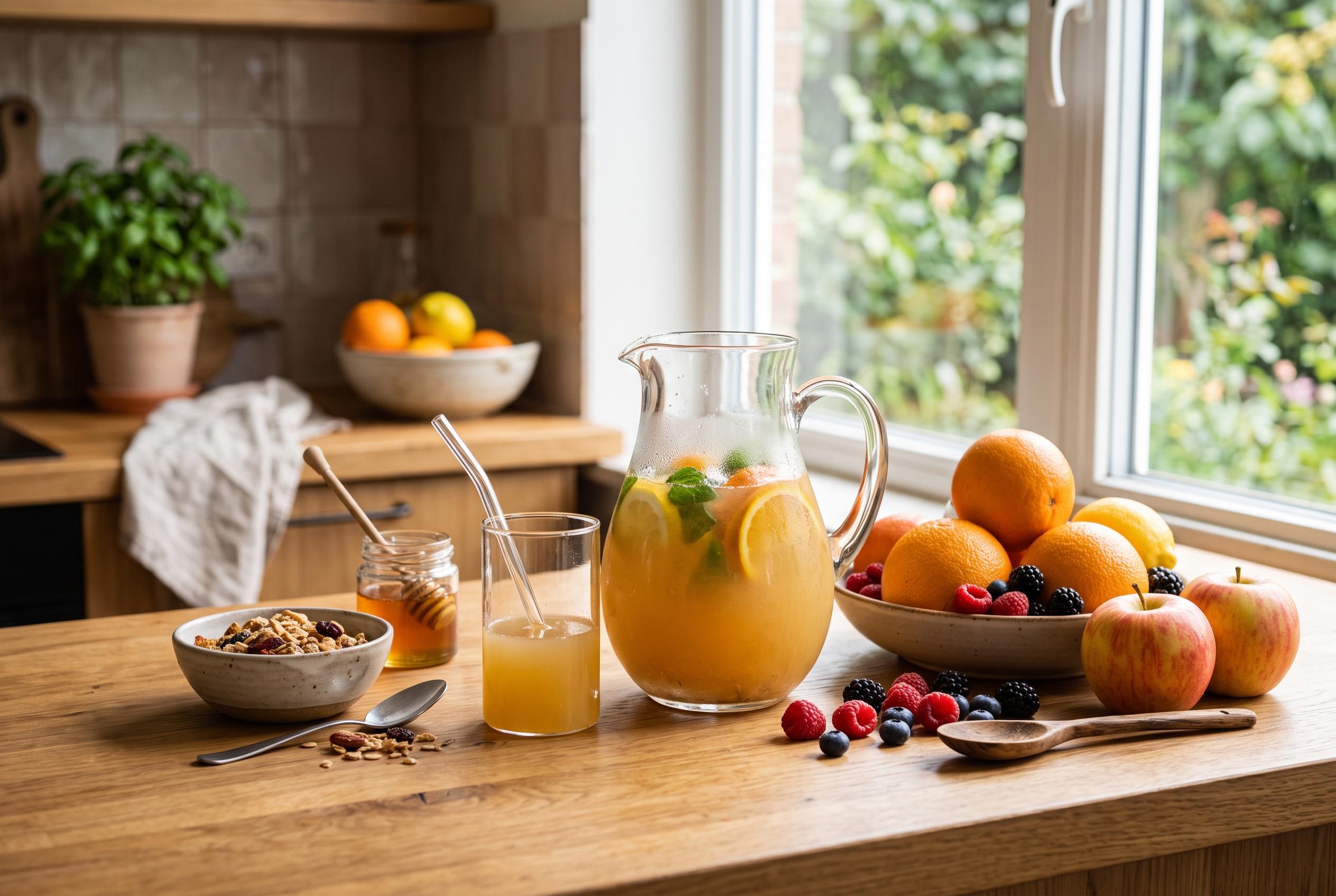

A new recipe guide from El Balad encourages parents to serve children homemade, low-sugar fruit drinks, emphasising the health benefits of whole fruit alongside juice and recommending water as the main hydration source.
With children heading home from school, many parents look for something chilled and simple to serve that is not a shop-bought drink packed with added sugar. A guide published by El Balad lays out a handful of easy homemade juice ideas built around fruit that is often already in the kitchen, along with a few basic rules on keeping them lighter and more nutritious.
One option combines orange and carrot. The recipe uses two oranges, one medium carrot, half a cup of cold water and ice if wanted. The carrot is washed, chopped and blended with the orange juice and water until smooth. Another blends strawberries with a banana and half a cup of plain milk or yoghurt, with a little water added only if needed.
The guide also suggests watermelon with mint and a squeeze of lemon, served cold without sugar because the fruit is already naturally sweet. A mango drink is made by peeling a ripe mango, cutting it up and mixing it with cold water, then thinning it further if a lighter texture is preferred.
The broader nutrition message is familiar. Harvard Health has noted that whole fruit usually offers more fibre than juice, while even 100% fruit juice can deliver sugar more quickly because the fibre has been removed. That is why the El Balad piece recommends giving children whole fruit regularly alongside juices, rather than treating juice as a substitute.
The article also advises parents to avoid adding sugar to homemade drinks and to offer them with a balanced snack after school. Water, it says, should remain the main drink through the day, with juice kept as an occasional refreshment rather than an everyday staple.
Disclaimer: This content is for informational purposes only and is not intended to be a substitute for professional medical judgment, advice, diagnosis, or treatment.