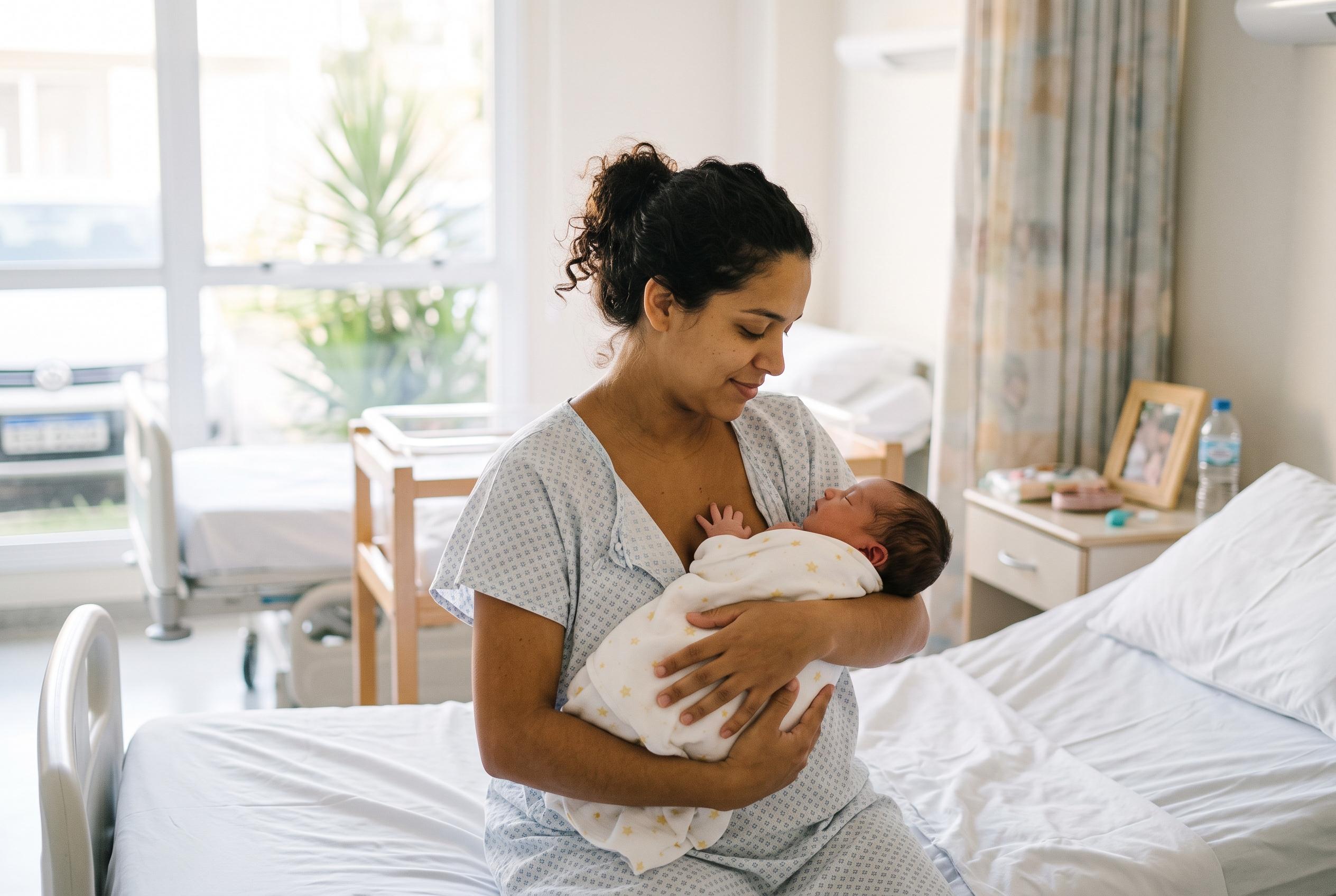

New research and recent policy changes in Brazil showcase how vaccinating pregnant women can transfer protective antibodies to infants, offering interim defence against infections like RSV, flu, and COVID-19 during their most vulnerable early months.
Before a baby receives the first doses in its own vaccination schedule, it may already arrive in the world carrying a shield built during pregnancy. That protection is not made by the infant’s still-developing immune system, but by the mother’s response to vaccines given while she is expecting, according to maternal-immunisation guidance cited by Pfizer and the Pan American Health Organization.
When a pregnant woman is vaccinated, her immune system produces antibodies against the targeted infection. Those antibodies can cross the placenta, especially in the second half of pregnancy, and reach the baby before birth. A recent review on placental antibody transfer, published in PubMed, says maternal IgG is moved across the placenta to help protect the fetus, while PAHO says the approach can protect both mother and newborn.
The idea matters because the first months of life are when babies are most exposed and least able to defend themselves. Eduardo Jorge da Fonseca Lima, who leads the immunisations department at the Brazilian Society of Paediatrics, says a newborn’s immune system is still being built and has not yet had time to form its own protection. In that window, infections such as RSV, whooping cough, influenza and Covid-19 can hit harder than they do in older children or adults.
The placenta is the key route for this borrowed protection. Carolina Ciprano, an infectious-disease specialist and member of the immunisation committee at the Brazilian Society of Infectious Diseases, says the transfer of antibodies gives the newborn temporary defences while its own immune tools are still immature. Research on placental transfer, including a review published in 2017, shows that vaccination during pregnancy can raise the level of disease-specific antibodies in the mother and improve the amount passed to the infant.
Not every maternal vaccine serves exactly the same purpose. Some, such as the flu shot, help protect the mother from serious illness and also provide the baby with a measure of early defence. Others, including the RSV vaccine, are aimed primarily at protecting the infant in those first vulnerable months. The Brazilian government’s pregnancy vaccine guide also notes that antibodies formed after vaccination can be passed to the baby and help in the early weeks of life.
That protection is real, but it is temporary. Ciprano says it generally lasts for about six months, though the duration depends on the antibody, the disease and the timing of vaccination. As those antibodies fade, the baby must rely increasingly on its own developing immune response and on the routine childhood vaccination schedule. Lima says the mother’s antibodies are a bridge, not a substitute, and the baby still needs its own shots on schedule.
Some vaccines need to be repeated in each pregnancy for that reason. A woman may still have memory from an earlier dose, but the antibody level later on may not be high enough to give the next baby the best possible start. That is why dTpa, or adult-type acellular triple vaccine, is recommended again in each pregnancy, and why the RSV vaccine is also given anew for every gestation. Hepatitis B is different: if the series was already completed, it does not have to be restarted simply because the woman is pregnant.
The public-health case has become clearer since Brazil began offering the RSV vaccine in the public system in December 2025 for pregnant women from 28 weeks onwards. The Health Ministry reported a 52.5% fall in severe acute respiratory syndrome cases linked to RSV among children under six months in the first half of 2026 compared with the same period in 2025. The ministry says its wider analysis of serious cases avoided is still preliminary.
Breastfeeding adds another layer after birth, but it does not replace vaccination in pregnancy or the child’s own immunisations. Antibodies in breast milk work differently from those transferred through the placenta, mainly helping at body surfaces and mucosal sites. In practice, protection for babies is built in stages: antibodies from the mother during pregnancy, immune factors from breast milk after delivery, and then the child’s own response as the vaccination schedule advances.
Disclaimer: This content is for informational purposes only and is not intended to be a substitute for professional medical judgment, advice, diagnosis, or treatment.