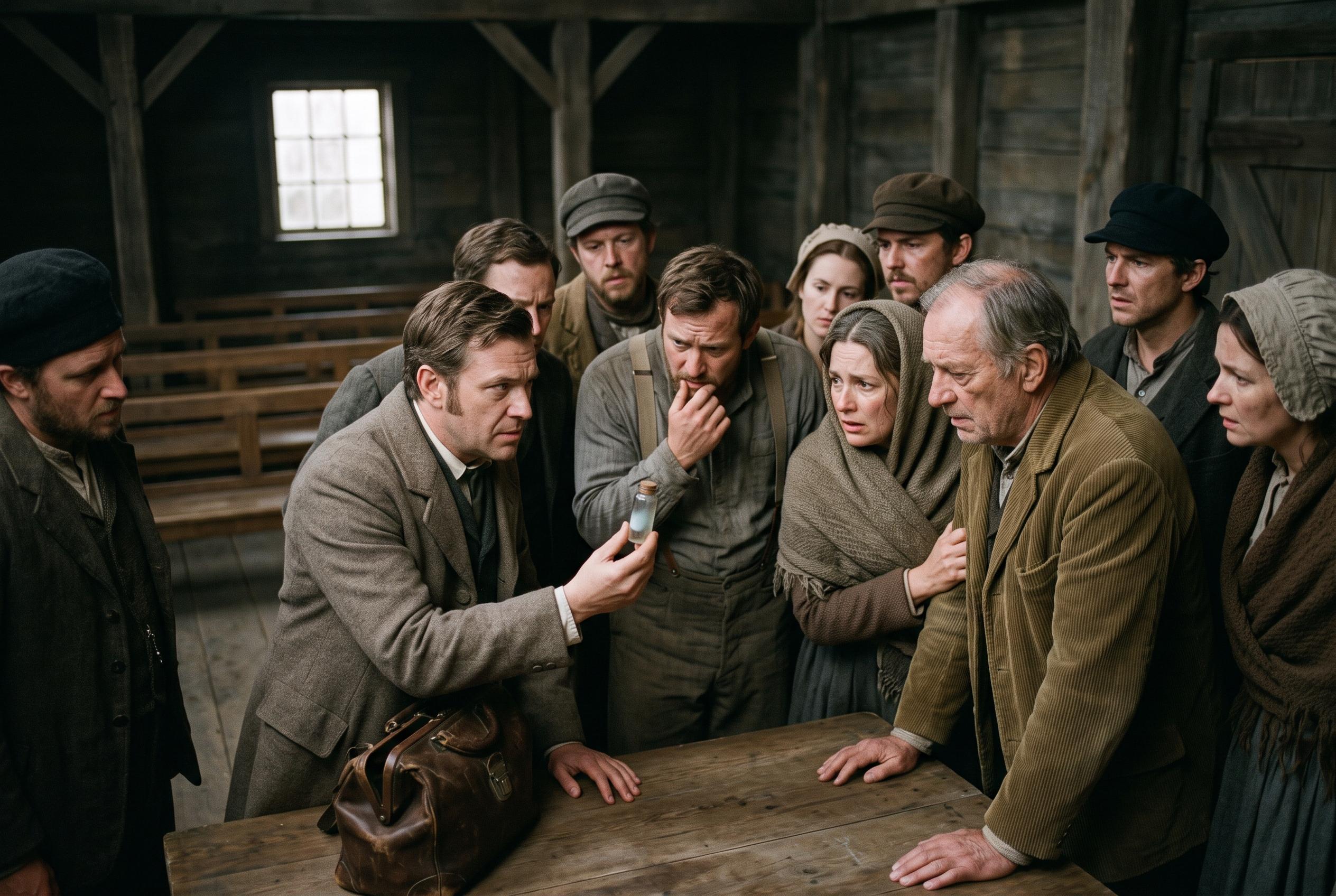

From 19th-century England to today’s debates, vaccine scepticism has long been driven by emotional narratives and fears of authority, complicating efforts to promote public health.
Vaccine hesitancy has been part of public life since the earliest immunisation campaigns, and its appeal has never rested on science alone. In 19th-century England, opponents of smallpox vaccination took to the streets over compulsory inoculation, framing the issue as one of civil liberty and bodily autonomy. In the United States, resistance was organised as early as 1894 through the Anti-Compulsory Vaccination League of Brooklyn, showing that suspicion of vaccine mandates long predates the current political moment.
What makes today’s debates harder to resolve, according to the article from the Genetic Literacy Project, is that the argument is increasingly emotional and narrative-driven rather than purely factual. The piece says public health campaigns have generally relied on information, clarity and scientific literacy, yet those efforts have had limited success because vaccine hesitancy is shaped by mistrust, identity, religion, belonging and personal experience as much as by knowledge gaps.
That argument is borne out by the historical record. Reporting by The Washington Post on the origins of anti-vaccination sentiment in England described fears that vaccination could alter the body in grotesque ways, including claims that people might take on cow-like features. The Brooklyn Public Library has also documented the legal and political battles surrounding mandatory vaccination in New York, while accounts of the Charlbury riots in Oxfordshire show how forceful resistance could become when public health policy collided with local anger over state power.
The deeper point, the article argues, is that vaccine scepticism often works through symbolism. In those stories, doctors dismiss concerns, children suffer after shots and vaccination becomes a stand-in for broader fears about control, authority and freedom. That framing can be powerful precisely because it is not always about medicine in a narrow sense; it can be used to express anxiety about government, institutions or social change.
The article says that dynamic has been reinforced in the current era under Robert F. Kennedy Jr, with federal public health messaging shifting closer to the language used by vaccine-hesitant groups. It cites the Centers for Disease Control and Prevention’s recent language about a return to “individual-based decision-making” and comments from Kirk Milhoan, who described the debate as “autonomy versus public health”. The concern among critics is that this kind of framing elevates philosophical arguments while downplaying the real risks that vaccines are designed to prevent.
At the same time, the article cautions against treating everyone who questions vaccines as ignorant or malicious. Some people’s scepticism, it notes, is rooted in genuine historical trauma, including the legacy of discrimination and forced medical experimentation affecting Black Americans and other marginalised groups. That is why some researchers are now looking at vaccine hesitancy as a communication problem that requires closer reading, not just more data: understanding the stories people tell, and why those stories resonate, may be more useful than repeating facts alone.
Disclaimer: This content is for informational purposes only and is not intended to be a substitute for professional medical judgment, advice, diagnosis, or treatment.