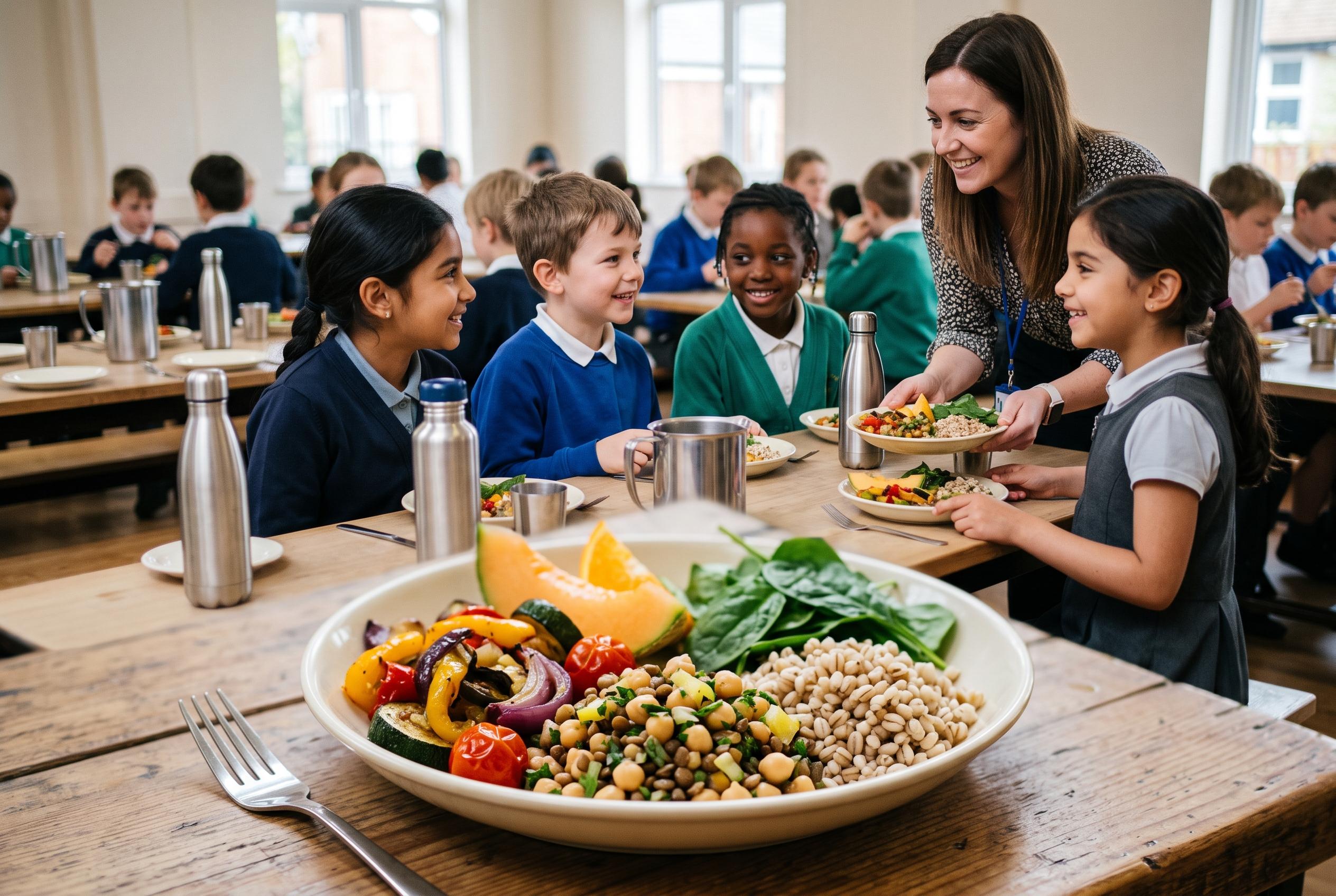

England introduces its most comprehensive reforms in over a decade to improve school meals, promoting more fruits, vegetables and pulses, and aligning closer with Mediterranean dietary patterns to combat childhood obesity and dental issues.
England’s school meal rules are set for the biggest overhaul in more than a decade, with the Department for Education aiming to put more fruit, vegetables and pulses on children’s plates while cutting back on foods high in fat, salt and sugar. The changes are intended to address rising childhood obesity and dental problems, with government figures cited in the accompanying material suggesting that one in three children leave primary school overweight or obese and that sugary diets are a leading cause of hospital admissions for five- to nine-year-olds.
Under the new standards, deep-fried items will be removed, pulses such as lentils and chickpeas will become a regular part of menus at least once a week, and every meal will need to include at least one portion of fruit or vegetables. Breakfast items including fried eggs, pastries, chocolate spread and sugary cereals are set to disappear from school offer lists, while cakes, sweet puddings and ice cream will face tighter limits. Pizza and sausages, meanwhile, will be capped because of their salt and fat content.
The policy also tightens how schools are expected to run their catering. According to government guidance, schools already have to provide balanced meals with fruit and vegetables every day, starchy foods and dairy, plus meat or poultry on at least three days a week. The updated approach puts more emphasis on wholegrains, fresh ingredients and lower-oil cooking, and schools will also be expected to publish menus and food policies online. A food governor will be appointed to help hold schools to account, while the Department for Education and the Food Standards Agency prepare a monitoring plan.
The move brings England closer to long-standing practice in Spain, where lentils, chickpeas and other pulses have long been routine in school lunches. Spanish menus typically rotate pasta, rice, vegetables and legumes through the week, making the inclusion of a lentil stew or chickpea dish unremarkable for many families. Spain introduced its own tighter school-menu rules in 2025, and the comparison now underlines how English school catering is shifting towards a more Mediterranean-style model built around plant-based staples.
Disclaimer: This content is for informational purposes only and is not intended to be a substitute for professional medical judgment, advice, diagnosis, or treatment.