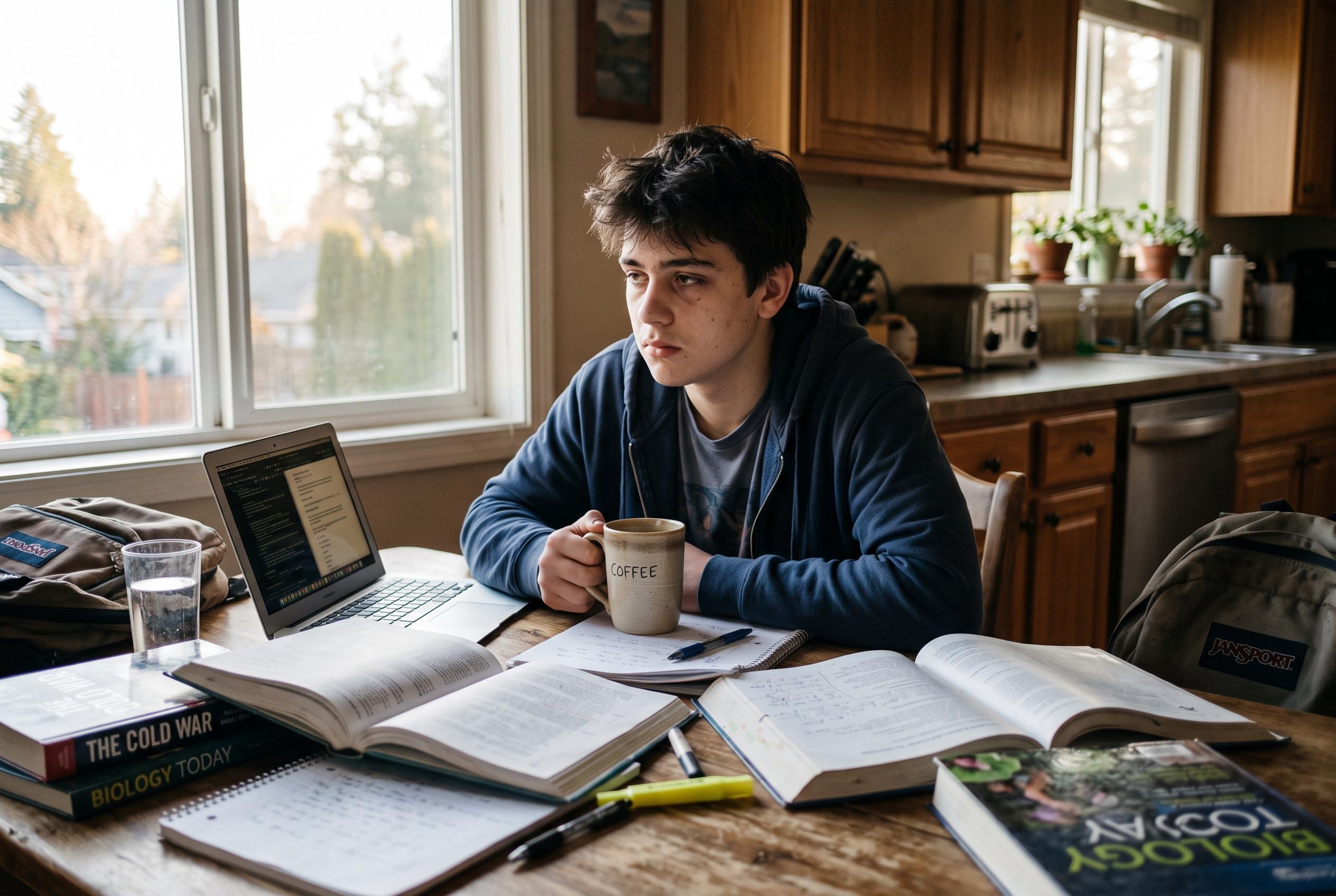

Recent research underscores the biological shift in adolescents’ sleep patterns, highlighting the need for later school start times to combat widespread sleep deprivation and its associated health risks among teenagers.
Teenagers are not being difficult when they struggle to fall asleep before midnight. During puberty, the body clock shifts later, so many adolescents feel sleepy and wakeful at times that simply do not match school routines. The Sleep Foundation, Penn Medicine and Ohio State Health & Discovery all note that this change in circadian rhythm helps explain why teens tend to drift towards later bedtimes and later wake times.
That biological delay matters because many schools still start too early for adolescents’ natural sleep patterns. The American Academy of Pediatrics has long recommended that middle and secondary schools begin no earlier than 8:30am, while National Institutes of Health-backed research has found that later starts can translate into more sleep. In one study cited by the National Institute of Child Health and Human Development, students who started classes about an hour later slept an average of 43 minutes more each night.
The result of that mismatch is chronic sleep loss. The Centres for Disease Control and Prevention said in 2023 that nearly three-quarters of high school students were not getting the recommended eight hours on school nights. Sleep deprivation in teenagers is linked with poorer attention, slower reaction times, weaker memory, irritability and more impulsive behaviour, according to the National Heart, Lung and Blood Institute and other sleep experts.
Parents cannot reset puberty, but they can reduce the damage. The most effective steps are also the simplest: early morning light, less screen use before bed, steadier weekend wake times, earlier homework, and careful limits on caffeine from drinks such as soda and energy drinks. Sleep specialists say these habits help reinforce the body clock rather than fighting it.
If sleep problems persist for weeks, or if they come with falling asleep in class, night waking, anxiety, depression or substance use, the issue may be bigger than a late bedtime. In those cases, experts advise looking beyond sleep hygiene alone and considering professional help, especially when mood or mental health concerns are also present.
Disclaimer: This content is for informational purposes only and is not intended to be a substitute for professional medical judgment, advice, diagnosis, or treatment.