
While Florida’s Department of Health proposes removing some childhood vaccines from school-entry mandates, paediatric experts emphasise that the medical necessity remains unchanged, highlighting ongoing debates over public health and individual choice.
Parents have every reason to be unsure about Florida’s school vaccine rules as the state weighs whether to ease some requirements. But the most important point, as Coral Gables paediatrician Luz Marina Pages writes in the Orlando Sentinel, is that the medical case for childhood vaccination has not changed. Florida’s Department of Health has proposed removing hepatitis B, varicella, Hib and pneumococcal conjugate vaccines from school-entry requirements, but the proposal is not yet final and current rules remain in force while the process continues. Medical Daily reported that the proposal, approved by State Surgeon General Joseph Ladapo, has opened a 21-day public comment period.
That distinction matters because school requirements and paediatric advice are not the same thing. Pages says doctors recommend these vaccines because they prevent serious disease, not simply because they are mandated for school. Hepatitis B can lead to chronic liver disease and liver cancer. Hib and pneumococcal vaccines help protect young children from meningitis, pneumonia and bloodstream infections. Varicella vaccination reduces the risk of chickenpox and its complications. SchoolDecision reported that the proposal would also expand Florida’s religious exemption form to include moral and ethical beliefs, while leaving intact vaccines required by state statute, including MMR, polio, diphtheria and tetanus.
The broader public-health issue is that vaccination does not affect only one child. Pages notes that children move through classrooms, homes, playgrounds and sports teams, often alongside infants too young for complete vaccination, relatives receiving cancer treatment or family members with weakened immune systems. The CDC said on September 4, 2026, that the United States had recorded 3,134 confirmed measles cases this year across 47 jurisdictions, including Florida. Florida Trend reported earlier this year that the state had already seen 143 measles cases by March 21, with most concentrated in Collier County, underlining how quickly vaccine-preventable disease can spread when enough people are vulnerable.
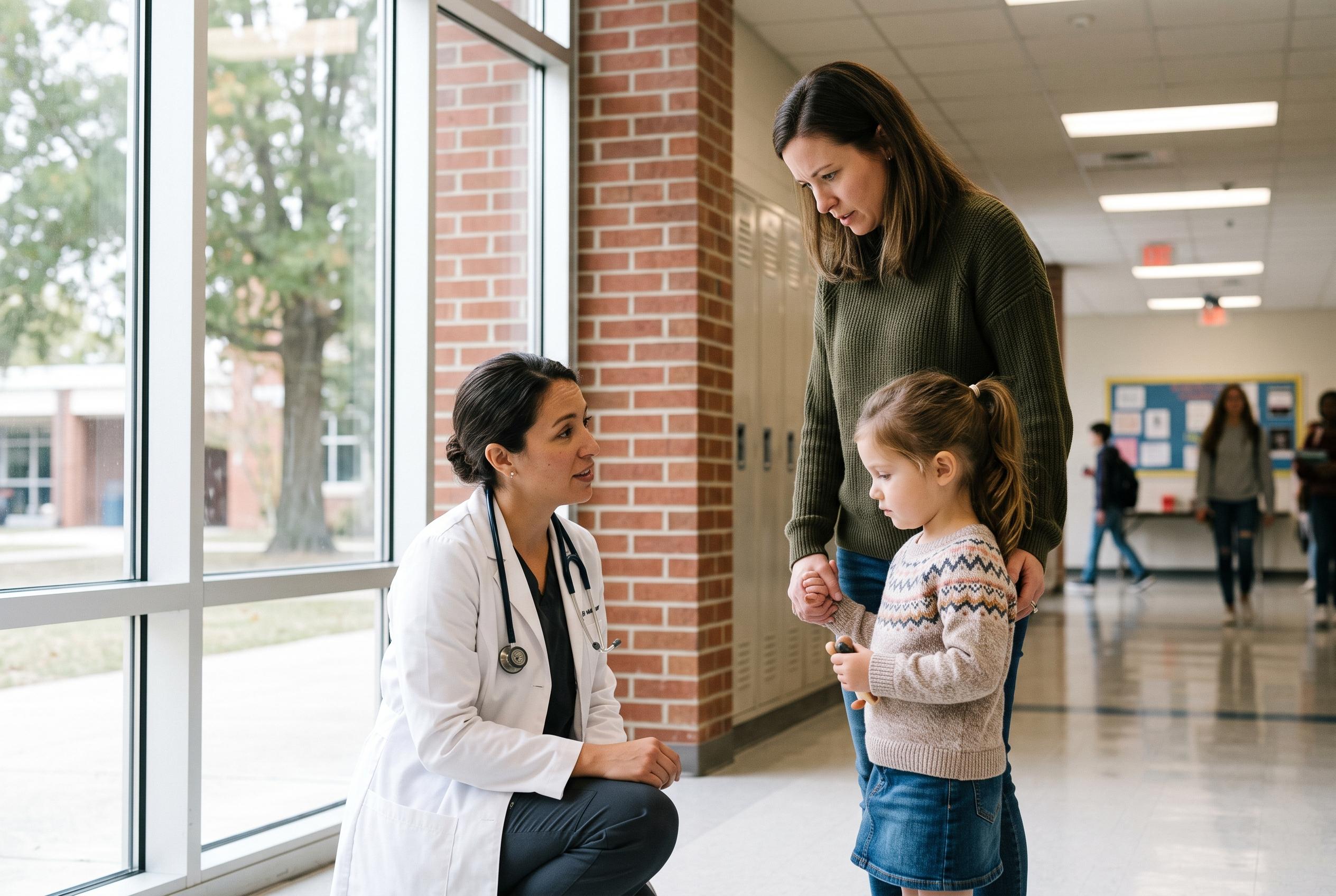
For families, the immediate message is simple: policy debate is not the same as medical advice. Florida’s rulemaking may change what the state demands for school attendance, but it does not change the evidence that paediatricians use when they counsel parents in the exam room. As Pages puts it, the question remains what is best for the child in front of the doctor, and that answer is still shaped by decades of data showing these vaccines prevent illness, reduce complications and help protect the wider community.
Disclaimer: This content is for informational purposes only and is not intended to be a substitute for professional medical judgment, advice, diagnosis, or treatment.