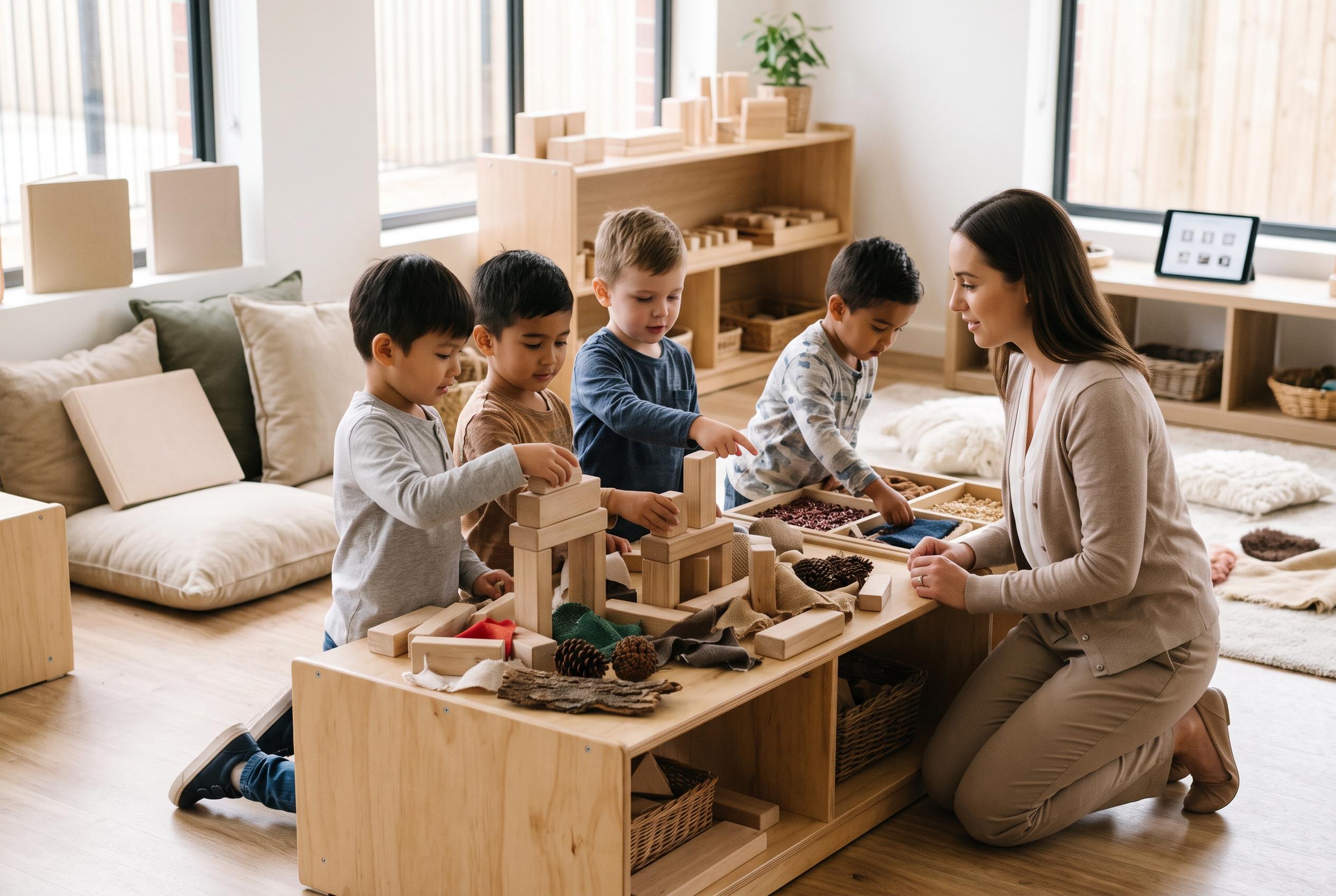

Innovative early learning environments are evolving beyond traditional methods to cultivate curiosity, resilience, and adaptability in children, crucial for navigating a future shaped by technological advances and unpredictable careers, says new research and expert advice.
Early learning settings are being asked to do more than prepare children for kindergarten. They are increasingly expected to help shape the habits, dispositions, and skills that will carry pupils through a future marked by rapid technological change and unpredictable career paths. That is the central argument made in the lead article, which says young children need environments designed for curiosity, resilience, creativity, and adaptability rather than for an outdated model of schooling.
Research from the University of Pennsylvania’s Wharton School supports that view, framing early childhood education as an investment in “brain capital” rather than simply a classroom phase. The article argues that children will need the ability to judge, regulate emotion, collaborate, and solve problems under uncertainty, particularly as artificial intelligence reshapes work. In that sense, early education is not just about readiness for school, but readiness for a changing economy.
The physical classroom matters, too. A study published in an education journal found that flexible preschool spaces can strengthen sensory development and creative thinking, while research in Frontiers in Education showed that layout, accessibility, and visual complexity affect engagement, peer interaction, and autonomy. Together, the findings suggest that the environment itself can either support or restrict the way young children learn.
That idea is echoed in a review published by MDPI, which identified several ways well-designed early years spaces can aid child well-being: by offering varied opportunities, organising social interaction, allowing personalisation, and giving children meaningful ways to act on their surroundings. A chapter published by the National Centre for Montessori in the Public Sector also stresses that early learning environments should include indoor and outdoor spaces, caregiving areas, and room for exploration, experimentation, and play. The National Association for the Education of Young Children has similarly argued that educators should shape environments around children’s diverse strengths, needs, and routines.
The broader message is that early childhood education cannot be treated as an afterthought to later workforce planning. If schools want to prepare children for futures that no one can yet map with certainty, they need to start with the places where learning begins. That means designing spaces that invite movement, discovery, and reflection, and recognising that the most valuable outcome may not be a specific skill, but a lifelong capacity to keep learning.
Disclaimer: This content is for informational purposes only and is not intended to be a substitute for professional medical judgment, advice, diagnosis, or treatment.