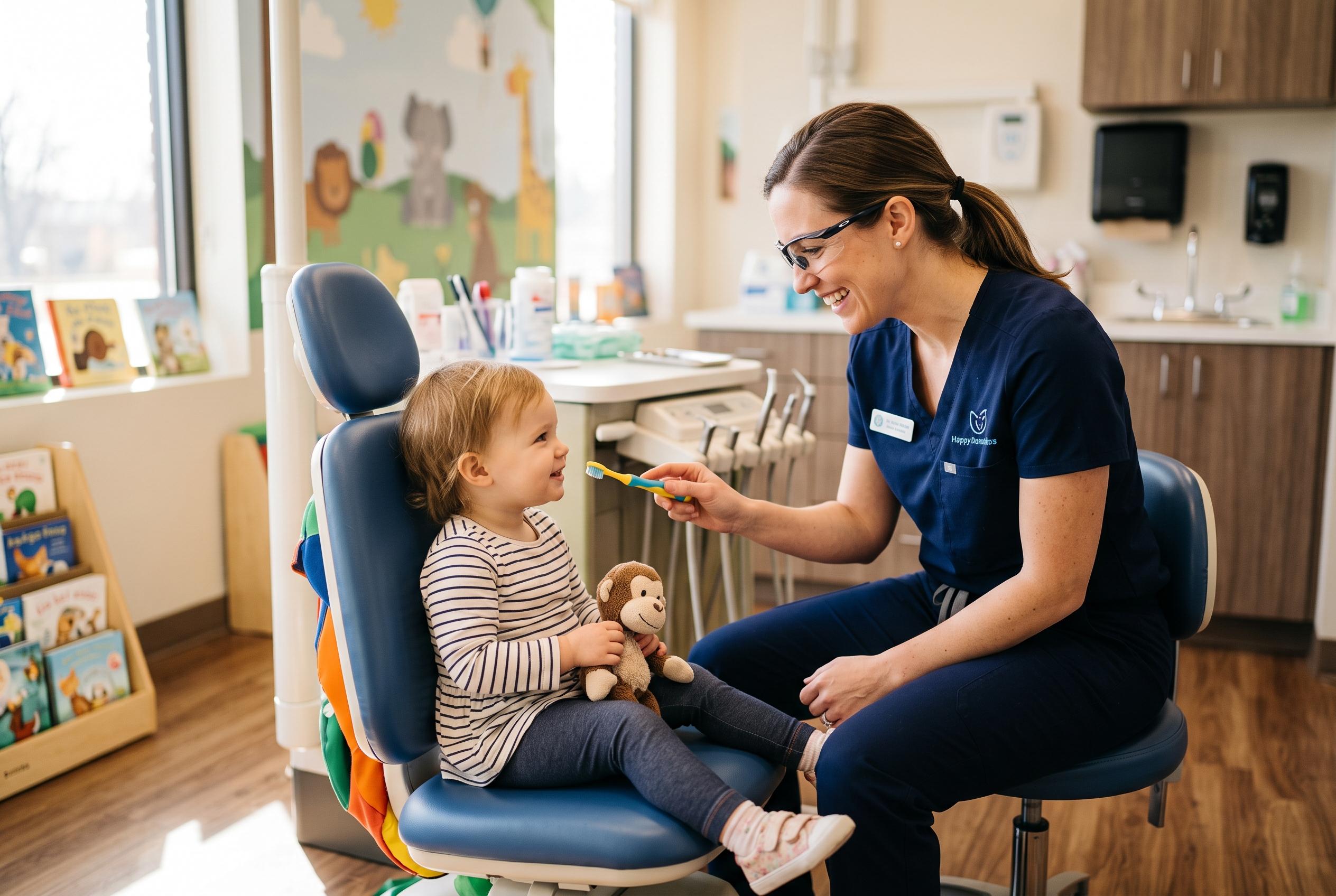

Paediatric dentists advocate for first dental appointments by age one to prevent cavities, promote early oral health, and ease children into dental care amidst rising childhood tooth decay concerns.
Parents are often told to wait until a child has a full set of teeth before booking a dental visit, but paediatric dentists advise much earlier action. The American Academy of Pediatric Dentistry recommends a first appointment by age one, or within six months of the first tooth appearing. That early visit is not just about checking for decay; it is also a chance to spot risk factors, guide parents on home care and help children become familiar with the dental setting before they have a painful experience to fear.
That matters because tooth decay remains a major childhood health problem. The Centres for Disease Control and Prevention says cavities are the most common chronic disease in childhood in the United States, and untreated decay can affect eating, speaking, playing and learning. The CDC also says fluoride varnish can prevent a meaningful share of cavities in baby teeth, while fluoridated water, fluoride toothpaste and sealants all help reduce risk. In other words, the first visit is an early defence, not a formality.
During an initial exam, the dentist will usually look at the teeth, gums, bite and jaw growth, then assess a child’s caries risk. That assessment may take into account feeding habits, fluoride exposure and how the teeth are developing. Depending on the child’s age and cooperation, the visit may be brief, with some practices using a knee-to-knee position for infants and toddlers so the parent and clinician can gently support the child together. Fluoride varnish may also be applied if the dentist thinks it is appropriate.
Parents can make the appointment easier with a little planning. Booking at a time when the child is typically rested and calm often helps, and it is useful to bring medical information, current medicines, allergy details and any notes about sensory needs or developmental differences. The dentist can use that information to tailor care, especially for children with asthma, heart conditions or other health concerns that may affect treatment.
Preparation at home should be simple and calm. For infants and toddlers, paediatric practices often recommend matter-of-fact language, pretend play and short practice sessions that help the child get used to an adult looking inside the mouth. For children with autism, sensory sensitivities or developmental delays, more structured support can help, including social stories, visual videos and advance communication with the dental team about triggers and calming strategies.
The first visit usually ends with advice for parents rather than a long procedure. Dentists may discuss brushing, feeding, thumb-sucking, pacifier use and when to return, with many children seen every six months and higher-risk children seen more often. The broader goal is to build comfort early, so dentistry becomes a normal part of health care rather than something a child only encounters in pain or panic.
Disclaimer: This content is for informational purposes only and is not intended to be a substitute for professional medical judgment, advice, diagnosis, or treatment.