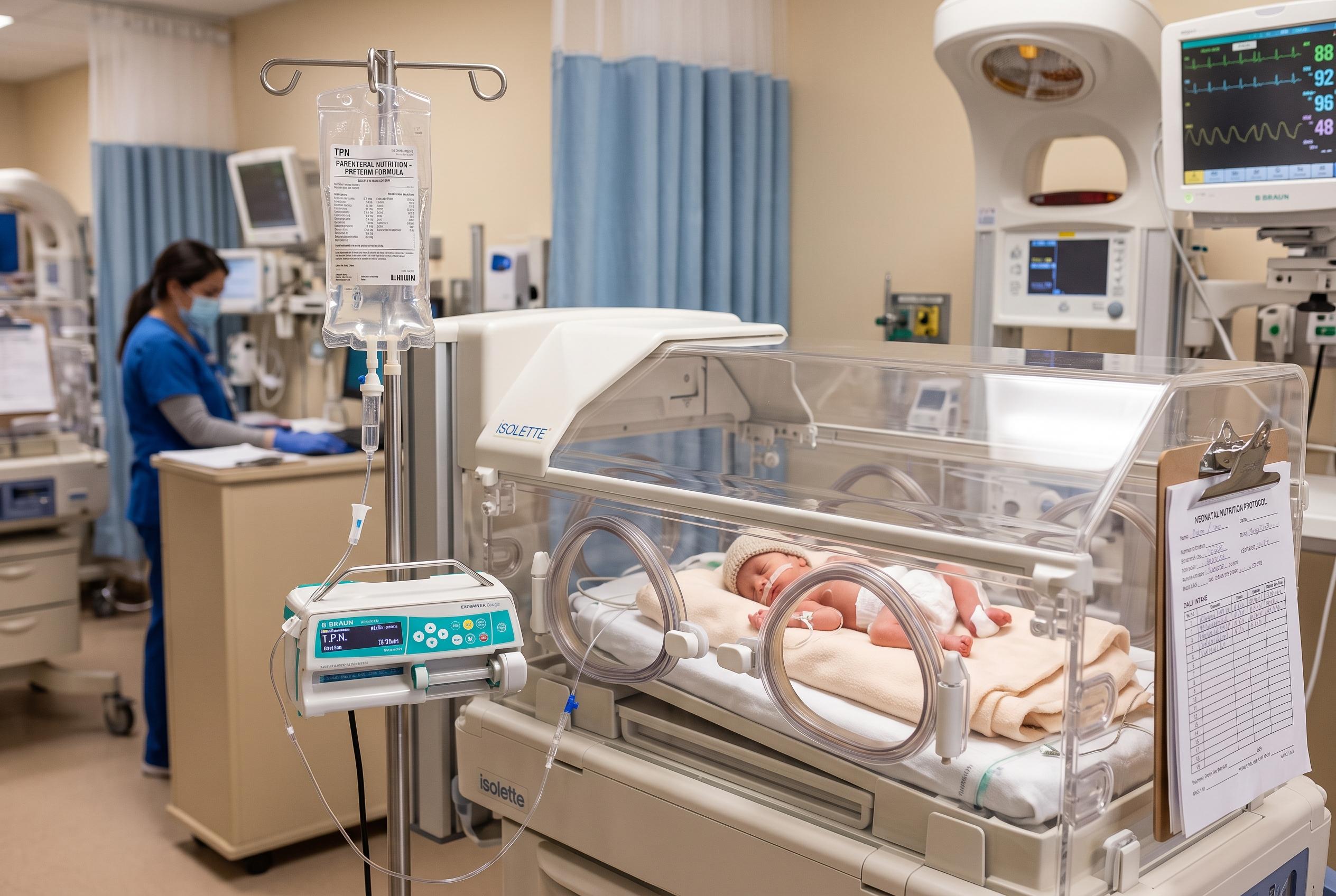

A recent review underscores the complexity and critical importance of personalised nutrition management in extremely premature infants born at 22 to 23 weeks, highlighting gaps in evidence and the risk of both under- and over-nutrition affecting long-term outcomes.
For babies born at 22 to 23 weeks of gestation, nutrition is one of the most delicate decisions in neonatal care. At that stage of development, infants are often barely above 500 grammes, with immature intestines, limited energy reserves and organs that are still forming. A new review in Pediatric Research says the central challenge is not simply giving calories, but doing so in a way that supports growth, brain development and survival without triggering harm.
The review by Romero-Lopez, Naik, Thoene and colleagues says practice in this area still relies heavily on evidence from older preterm infants and on expert judgement. That matters because infants born at 22 or 23 weeks are not just smaller versions of babies born a few weeks later. Their digestive barriers are less developed, their fluid balance is more fragile and their risk of respiratory and circulatory instability is higher. A New England Journal of Medicine editorial has also noted how difficult it is to replicate the steady nutrient transfer that normally occurs in utero once delivery happens so early.
In the first days after birth, many of these infants cannot take enough milk through the gut, so parenteral nutrition becomes essential. NICE guidance for preterm infants says this intravenous feeding is intended to support safe growth and reduce nutritional deficiencies, while neonatal reviews describe it as a life-saving bridge until enteral feeding is tolerated. The mixture typically includes amino acids, glucose, lipids, electrolytes, vitamins and trace elements, but clinicians must balance early delivery of nutrients against the risk of metabolic instability, liver problems and other complications.
Protein is a particular concern. Extremely premature infants can lose nitrogen quickly if intake is too low, yet the review says the best dose and timing for amino acids in 22-to-23-week infants remain uncertain. Human milk is still preferred whenever possible because it provides immune factors, enzymes and growth-promoting compounds, while donor milk is often used when a mother’s own milk is not available. But both usually need fortification to meet the high needs of these babies, and the review says standard fortification may not be enough for infants with highly variable renal function, growth patterns and illness severity.
The authors say feeding advancement also remains a major unresolved question. Small volumes of milk are often given at first to stimulate the gut, but clinicians must watch closely for intolerance and for necrotising enterocolitis, a serious inflammatory bowel disease seen in very premature babies. Too little nutrition can impair growth and neurodevelopment, while too much carbohydrate, inadequate minerals or the wrong lipid balance can create new problems. The review concludes that the field still lacks large trials focused specifically on 22-to-23-week infants, and that long-term outcomes, not just short-term weight gain, should guide future research.
Disclaimer: This content is for informational purposes only and is not intended to be a substitute for professional medical judgment, advice, diagnosis, or treatment.