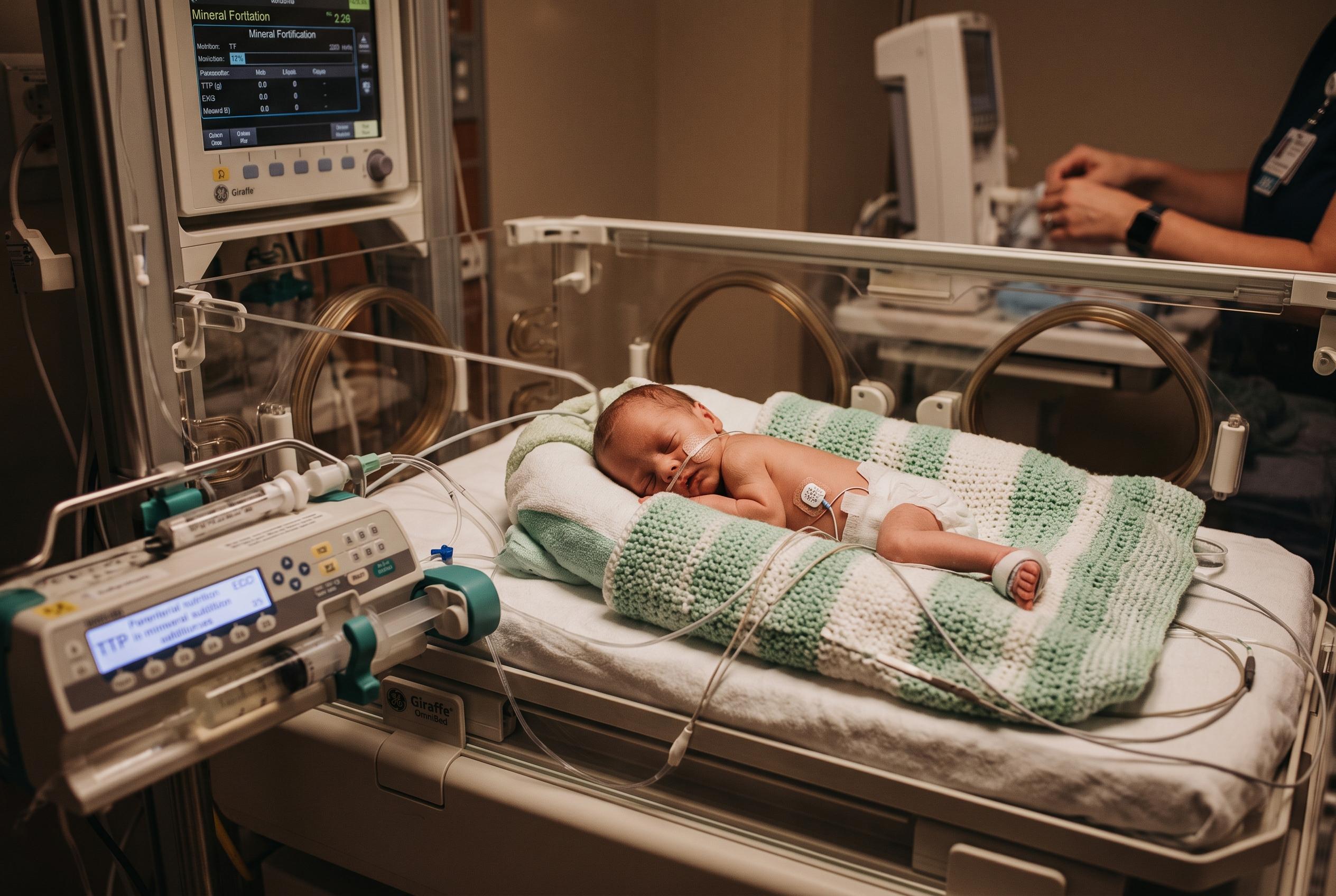

A recent study highlights the significance of early mineral and glucose shifts in very premature babies, revealing potential strategies for personalised nutritional care to enhance growth and reduce risks in vulnerable infants.
Very small premature babies face a metabolic fault line in the hours and days after birth. A study published in the Journal of Perinatology examines whether extremely low birth weight infants who are small for gestational age handle that transition differently from babies of similar size who are not, and whether early changes in minerals and glucose are linked to later growth.
The research by Joung, Prendergast and Marchioni focuses on infants weighing less than 1,000 grams, a group that depends heavily on carefully managed nutritional support soon after delivery. In these babies, feeding is often restarted with intravenous nutrition before milk feeds are advanced, but that process can trigger refeeding syndrome, a dangerous shift in phosphorus, potassium, magnesium, calcium and glucose as the body moves from starvation physiology to growth mode. Phosphorus is central to cellular energy production, muscle function and bone formation, which is why low levels can have wide-ranging effects.
The authors tracked how five laboratory measures changed during the first week of life rather than relying on a single test result. That approach matters because it can show whether an infant experiences a short-lived dip, a sustained deficiency or a rapid decline that coincides with the increase in calories and protein. The comparison between small for gestational age and appropriate-sized infants is intended to test whether restricted growth before birth leaves some babies more vulnerable to these early metabolic swings.
Previous research has suggested that this risk is real. A study indexed on PubMed found refeeding syndrome in 20% of 338 extremely low birth weight infants, with a higher rate among small-for-gestational-age babies and a mortality rate of 32% in infants who developed the syndrome, compared with 11% in those who did not. Another retrospective cohort study published by Nature reported hypophosphataemia in 41% of very low birth weight infants with intrauterine growth restriction, against 8.9% in those without it, reinforcing the idea that growth-restricted babies may need closer monitoring in the early postnatal period.
The new paper also sits within a broader debate about how much phosphorus to give, and how quickly. A U.S. survey published in Nature found that 91% of neonatal intensive care units include phosphorus in parenteral nutrition from birth, although practices still vary. Other studies have suggested that higher early phosphate intake may lower the risk of refeeding-like hypophosphataemia, while a secondary analysis of the ProVIDe trial linked early hypophosphataemia and refeeding syndrome with higher mortality and poorer neurodevelopmental outcomes at 2 years. Taken together, those findings suggest that mineral management in the first days of life is not a minor technical detail but a determinant of longer-term outcomes.
For clinicians, the practical question is whether biochemical instability in the first week can help identify which babies are likely to struggle with postnatal growth. In extremely premature infants, growth is measured not only by weight gain but also by length and head circumference, which give a better sense of lean tissue, skeletal development and brain growth. If Joung and colleagues’ findings point to a distinct pattern in small for gestational age infants, that could support earlier supplementation, tighter laboratory surveillance and more individualised nutritional care for some of the most fragile patients in neonatal medicine.
Disclaimer: This content is for informational purposes only and is not intended to be a substitute for professional medical judgment, advice, diagnosis, or treatment.