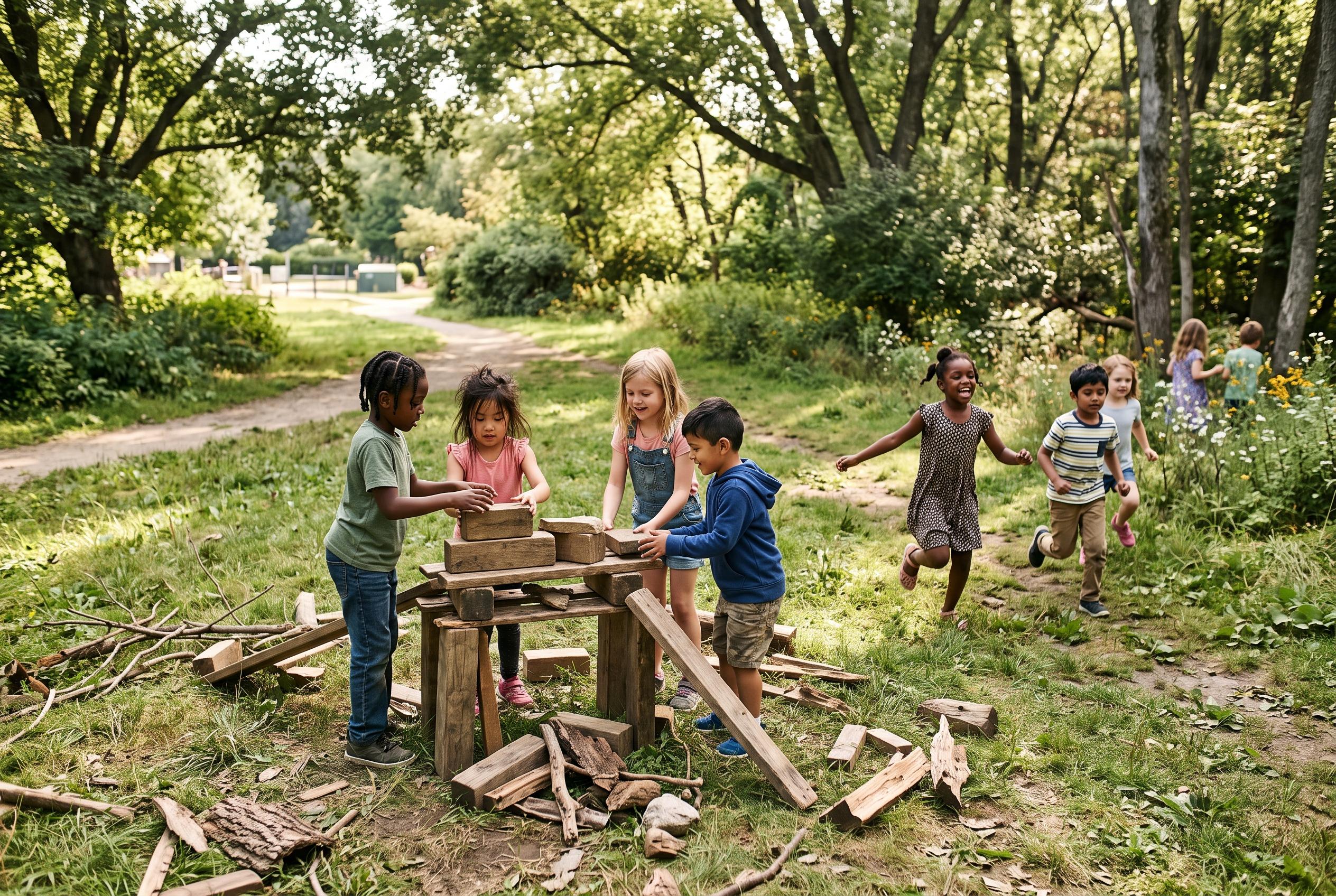

Experts warn that over-scheduling children with extracurricular activities can hinder their growth, advocating for more unstructured free time to promote resilience, creativity, and well-being.
The question parents face at the start of term is not how many activities can fit into a week, but what those commitments are crowding out. Clinicians quoted by the Child Mind Institute argue that the warning sign is simple: if a child can no longer keep up with homework, get at least eight hours of sleep, spend time with family and still see friends, the timetable has tipped from enriching to excessive. The American Academy of Pediatrics makes much the same point for teenagers, saying there is no magic number of clubs or lessons that is automatically too many.
That does not mean after-school activities are a mistake. Rachel Cortese, a speech-language pathologist and former New York City teacher, told the Child Mind Institute that many children do well with structure, while educational specialist Ruth Lee said activities can provide valuable social contact and a way to burn off energy before settling back to schoolwork. The paediatrics academy says involvement outside lessons can also deepen a young person’s sense of connection to school, something linked in research to lower failure and dropout rates. The point is not to reject organised activities, but to choose them with more care than panic.
What has changed is the amount of unscripted time children have lost. The Child Mind Institute describes much of modern childhood as “structured free time”, replacing the looser afternoons that earlier generations took for granted. Writing in The Washington Post, the paediatric occupational therapist Angela Hanscom warned that children are often moved from one activity to the next so quickly that imagination barely has room to start. The newspaper cited the American Academy of Pediatrics’ report on play, which linked play to gains in executive function, language, early maths, social development and a stronger sense of agency. When every hour is managed by adults, children get fewer chances to invent rules, solve disputes and direct themselves.
That matters especially for younger children, for whom more is not usually better. Guidance from HealthyChildren, the academy’s public information site, advises holding off on organised sport until about age six, when children are more developmentally ready for it. Before then, daily free play matters more than drills or competition because it helps build bones, muscles, balance and social skills without pressure to perform. The same guidance says children tend to thrive when they sample different sports before puberty rather than specialising early in one pursuit and sticking with it all year.
For families already deep into youth sport, the medical advice is strikingly concrete. HealthyChildren says children should not train more hours each week than their age, should have one or two rest days every week, and should take at least two to three months away from a sport across the year, even if that break is split up. It also warns parents not to build a family life around improbable professional dreams: only 3% to 11% of high-school athletes go on to compete in college sport, about 1% receive athletic scholarships and fewer than 2% of NCAA athletes turn professional. Burnout, the academy says, is often tied to year-round specialisation, and parents should watch for poor sleep, inadequate nutrition, missed periods in female athletes and signs of disordered eating.
Adults’ motives deserve as much scrutiny as a child’s stamina. In an opinion essay for The Washington Post, the writer Rebecca Onion argued that overscheduling is driven partly by parental anxiety about meritocracy and shrinking economic security: families fear their children will fall behind unless every season is used to acquire another edge. The Child Mind Institute pushes back against one of the most common justifications, noting that cramming in activities does not necessarily help with university admissions. Admissions officers, it says, are usually more interested in sustained commitment and genuine interest than in a scattered list assembled to look impressive.
A calmer approach is to judge fit, not volume. HealthyChildren says, “You can’t put a number on how many extracurricular commitments are too many.” A teenager’s diary may look packed from the outside, the academy notes, but if that young person seems happy and is doing well, parents need not assume a problem. The Child Mind Institute adds that children differ sharply in how much structure they need: some flourish with routines after school, while others need more independent time to think for themselves and be creative. That is why dropping an activity, changing coaches or taking a season off should be seen as an adjustment, not a failure.
The case for preserving open time is strongest when parents consider what children learn there. Claire McCarthy of Harvard Health calls unstructured time “important, crucial actually, for child development”. She argues that boredom is not an emergency but the starting point for a useful skill: learning how to amuse oneself. Free time also teaches negotiation and collaboration because, unlike a class or a team practice, nobody else has already assigned the roles or written the rules. McCarthy recommends looking for programmes that include choice time rather than minute-by-minute management, and at home she suggests simple materials, park trips, library visits and limiting device use to two hours a day or less.
The healthiest family schedule, then, is not the fullest one. It is the one that still leaves room for supper, sleep, friendships, dawdling and the occasional spell of boredom. Parents who decline an extra sign-up are not denying their children opportunity. More often, they are protecting the conditions that make sport, music, clubs and play enjoyable in the first place, and recognising that a successful childhood is not the same thing as a perfectly optimised one.
Disclaimer: This content is for informational purposes only and is not intended to be a substitute for professional medical judgment, advice, diagnosis, or treatment.