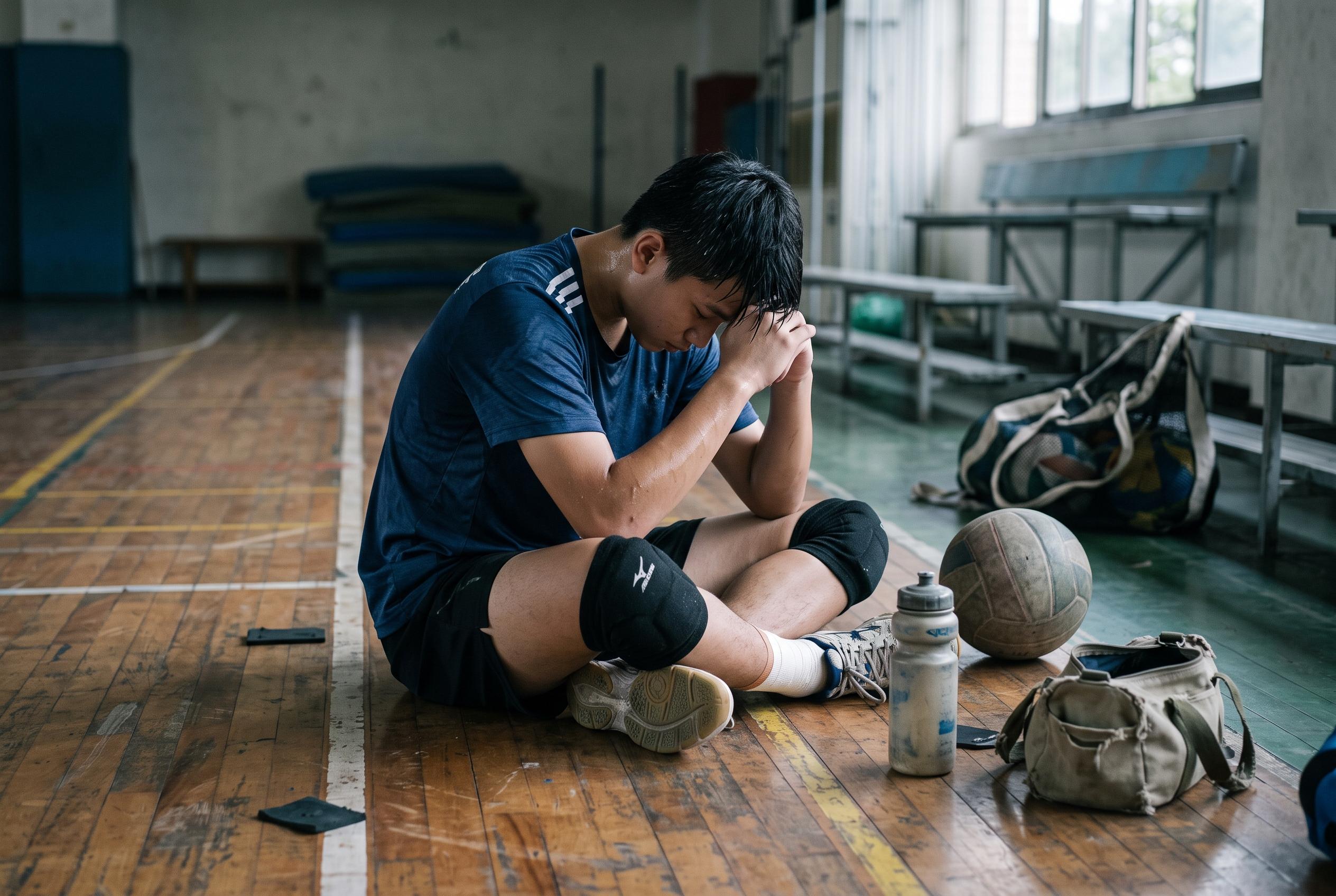

Despite proposed reforms to reduce training hours and shift towards community-based sports, a new survey reveals young Taiwanese athletes continue to face overtraining, injuries, and emotional strain, raising questions about the effectiveness of recent policy changes.
Taiwan’s planned shake-up of school sports classes has been met with fresh evidence that many young athletes are still training beyond official limits, missing lessons and carrying injuries while trying to stay competitive. A survey released on Monday by the Child Welfare League Foundation found that sport remains a source of joy and opportunity for most pupils, but said the system around them is still too often built around medals rather than children.
That tension matters because the policy backdrop is shifting quickly. Last week the Cabinet approved amendments that would stop the creation of new primary-school sports classes and push existing ones towards club-based and community-based models. Ministry of Education statistics cited by the foundation show how large the system has become: in 2022, Taiwan had 171 primary-school sports classes with 6,560 pupils, 370 junior-high classes with 19,811 students and 152 senior-high classes with 10,464 students. The foundation’s own June survey, based on 1,904 responses from current junior-high and senior-high sports students, said more than 90% enjoy sport and feel a sense of achievement from it, while 91.2% believe joining a sports class or team helps them gain admission or extra credit for further study. Some 43% said sport had changed the course of their lives.
The report argues, though, that the benefits are being bought at a cost. Ministry rules set a three-hour daily cap for junior-high sports students and a three-hour guideline for senior-high pupils, yet the foundation found that 66.6% had trained for more than three hours on weekdays. Another 18.6% said they had been kept training for more than three hours without a break. Weekend training is not capped, but the same survey found that 60.6% had trained for more than three hours in a day at weekends and 15.6% had gone for eight hours or more.
That pressure spills straight into the classroom. More than a third of respondents, 38.7%, said training took up most of their study time, and 26.2% said they had been pulled out of normal lessons for training. Nearly a third, 31.6%, said they had taken more than 16 days of official leave in a single semester for competition or training camps. Central News Agency noted that, if that pace continued across a school year, some students could breach the education ministry’s 30-day annual benchmark for such leave. Speaking at the launch event, taekwondo athlete Luo Chia-ling said balancing schoolwork and training had never been easy, and recalled using breaks between classes to fit in practice before struggling to catch up after repeated competition absences.
The emotional and physical strain appears to be building as well. According to the survey, almost three in 10 students continued high-intensity training while injured, while injury and rehabilitation demands remained a significant burden. More than half, 56.4%, said they had at some point questioned the point of their training, and 46.5% said their passion for sport was fading. Girls reported lower feelings of achievement and higher burnout than boys. The unease stretches beyond sport itself: 47.4% worried that falling behind academically would damage their future options, and many reported anxiety about limited career choices or a lack of skills outside competition.
The foundation’s findings also suggest the problem is cultural, not only administrative. United Daily News reported that the survey identified four broad coaching styles, with 43.7% of students describing their coach as fully supportive but 19.8% still encountering a high-pressure, authoritarian model. Huang Yun-hsuan, the foundation’s research and organisational development director, said students under more supportive coaches showed higher satisfaction and achievement, and lower burnout. The same report found that 28.3% of students agreed that winning medals justified sacrifice, while 22.6% thought coaches should not be questioned. Family pressure was also visible: 44.9% said parents instructed them directly as if they were coaches, and 40.9% said they were blamed when results were poor. Public Television, which also interviewed Luo, said some young athletes face the blunt message from home that “拿不到成績就趁早換方向”.
Those patterns echo concerns already raised by Taiwan’s state watchdog. In a May report headed “先是學生,再是運動員”, or students first, athletes second, the Control Yuan urged the Executive Yuan to review the sports-class system more broadly. It said official exam data from 2022 to 2024 showed that more than half of junior-high sports-class students were graded at the lowest “C” level in English and mathematics. Among baseball-speciality students in 2024, 35.85% received “5C”, meaning the lowest grade in all five tested subjects, far above the overall average of 6.62%. The watchdog said students remained vulnerable to unequal power relations, weak complaints systems and a long-standing tendency to prize training over learning.
The political question now is whether the overhaul can go beyond rhetoric. The Ministry of Education has already written a three-hour limit, an exit mechanism and academic-support requirements into the rules for sports classes, while the Child Welfare League Foundation is calling for four further changes: proper enforcement of training-hour and leave rules, stronger training in positive discipline for coaches, better support for female athletes, and more serious career guidance and family support. With the Cabinet having told the sports ministry and education ministry to work out their division of school-sport responsibilities from 1 January 2027 and submit a transition plan by the end of this year, the latest survey leaves them with a narrow window to prove that reform will change daily life for children, not simply rename the system.
Disclaimer: This content is for informational purposes only and is not intended to be a substitute for professional medical judgment, advice, diagnosis, or treatment.