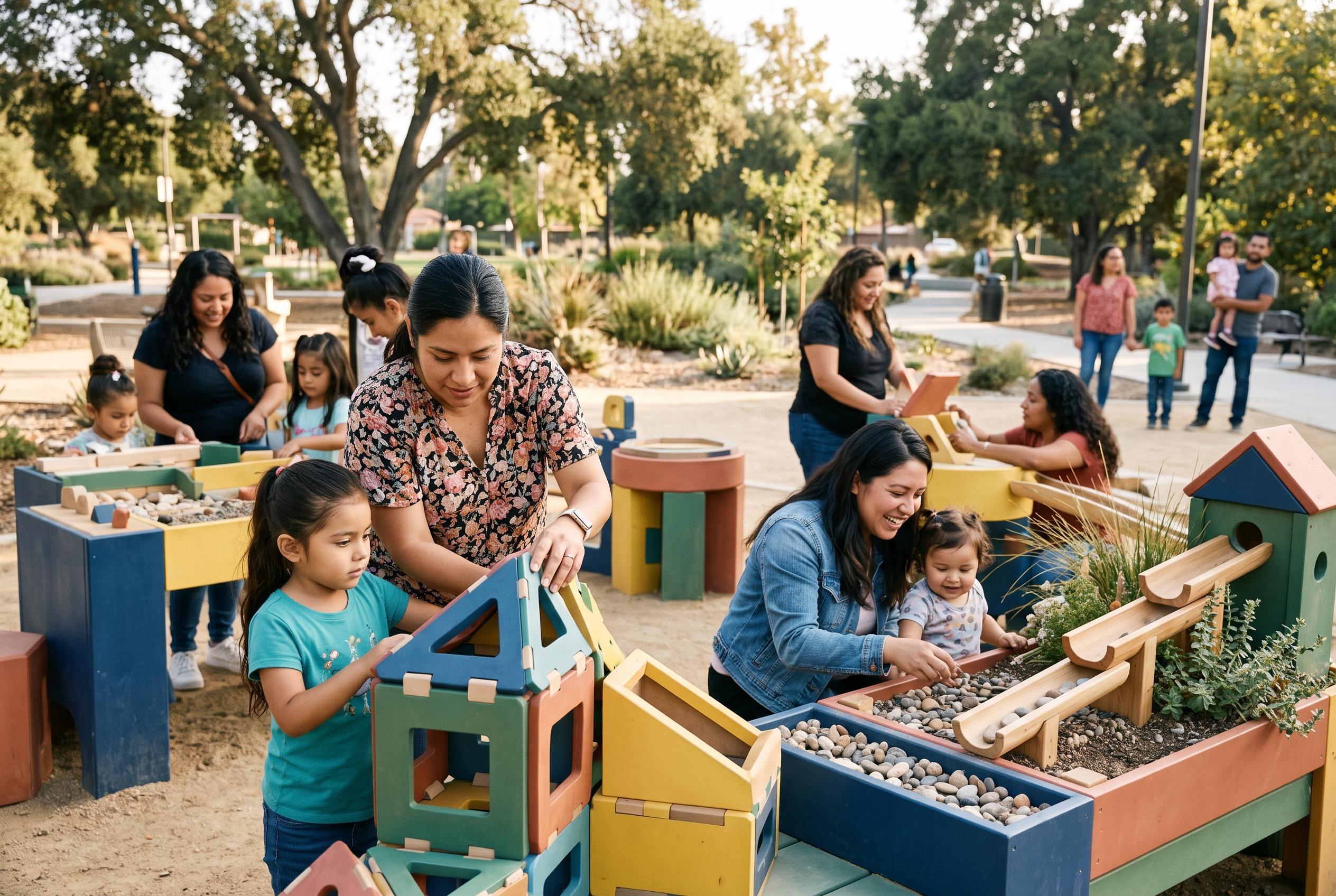

A study spearheaded by Latin American mothers in Southern California reveals how community-driven design of playful installations not only enhances early STEM skills but also strengthens community bonds, promotes civic engagement, and fosters a sense of safety amid ongoing structural challenges.
A new study in Frontiers in Education finds that playful learning in public spaces can do more than support early STEM skills: it can also deepen parents’ sense of agency, community connection and leadership. Researchers working with Latina mothers in Southern California say the project showed how family-led, community-based design can turn everyday places such as parks, bus stops and grocery stores into more welcoming spaces for children and caregivers.
The study builds on the Playful Learning Landscapes initiative, which aims to bring the science of learning into ordinary public settings. Earlier work on the project has shown that the design process works best when it reflects local values and lived experience. In this case, the installations drew on Latine families’ cultural knowledge, including familiar games, food routines and shared practices that already support learning at home and in the neighbourhood.
To understand how parents experienced that work, the researchers interviewed 20 Latina mothers in Southern California after they had helped collect survey data in their communities. The mothers described their role not as passive participation, but as a relational form of research rooted in trust, care and responsibility. They said they relied on their knowledge of the neighbourhood, their existing relationships and their everyday routines to speak with other families about the installations and the places where they appeared.
Parents also said the installations changed how public spaces felt. Parks were described as more lively, safer and more attractive, while the designs themselves were seen as culturally meaningful because they echoed games and learning practices families already knew. Mothers said children could play and learn at the same time, and that adults often joined in too. Several parents said community members valued the chance to be heard, especially because so many consultations in public life do not lead to visible change.
But the study also makes clear that design alone cannot overcome structural barriers. Parents said safety concerns, crime, homelessness and the wider political climate continued to shape whether families felt able to use parks and other public spaces. The researchers argue that these constraints matter just as much as the installations themselves, because families cannot benefit from playful learning opportunities if they do not feel safe enough to access them.
The mothers’ own accounts suggest that participation brought personal growth as well as civic purpose. Several said the project helped them become more confident speaking in public, advocating for children and engaging with other community members. The researchers conclude that community-based participatory research can position parents as experts rather than just participants, while helping create more equitable access to playful learning in everyday places.
Disclaimer: This content is for informational purposes only and is not intended to be a substitute for professional medical judgment, advice, diagnosis, or treatment.