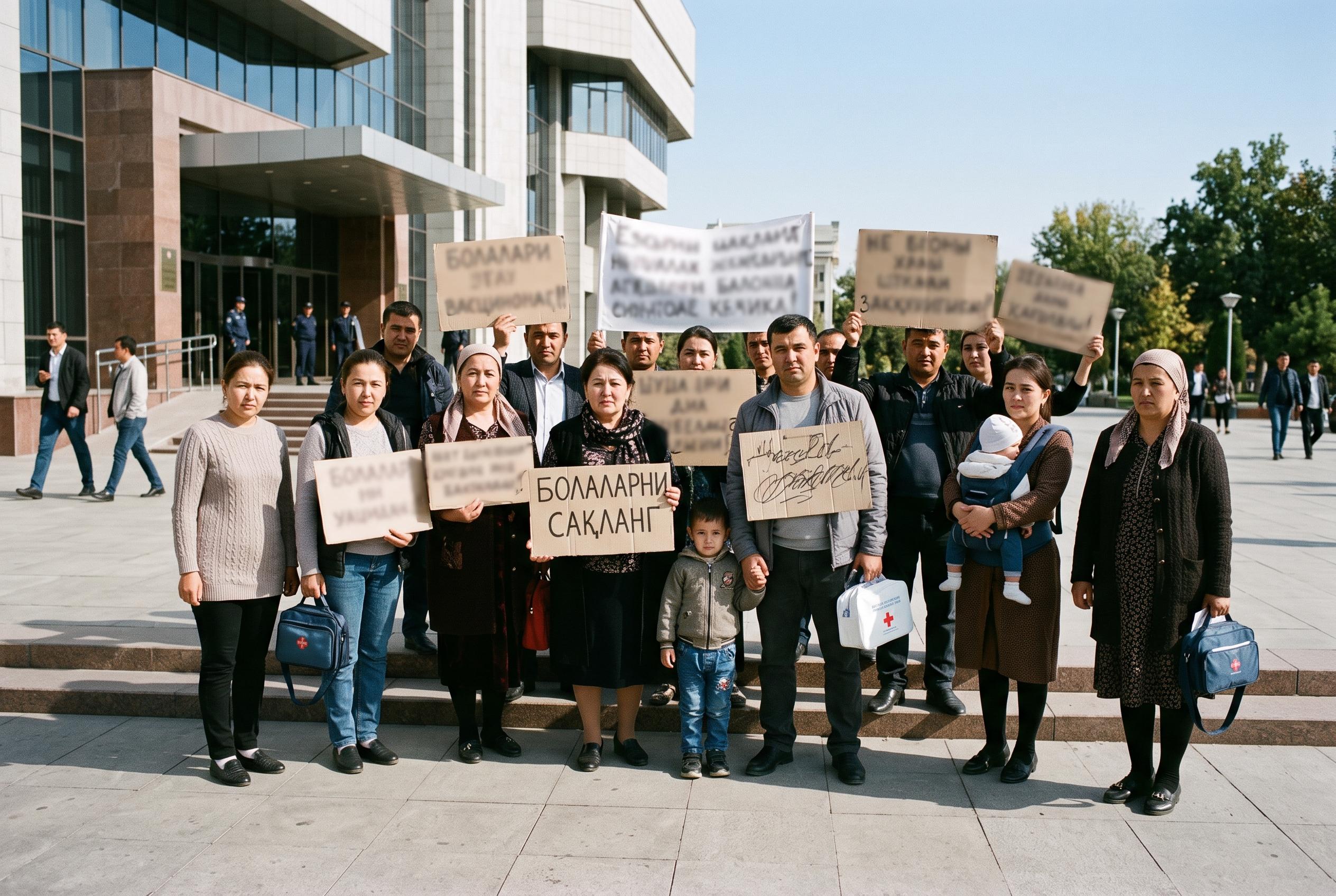

Parents in Uzbekistan rally outside the Health Ministry as outbreaks of measles and cases of subacute sclerosing panencephalitis surge, highlighting urgent gaps in immunisation coverage amid disrupted vaccine schedules and recent disease resurgence.
Parents of children with a rare and often devastating brain disease gathered outside Uzbekistan’s Health Ministry on 9 September, appealing for medicines, medical care and financial help. The case has drawn fresh attention to subacute sclerosing panencephalitis, or SSPE, a complication of measles that can emerge years after infection and is usually fatal or leaves survivors with severe disability.
In comments to Gazeta, the ministry said 238 children are currently being monitored across the country. Of those, 133, or 55.8%, had not received measles vaccination in line with the national immunisation schedule. The ministry said 228 of the 238 children, or 95.8%, had contracted measles before their first birthday, when the risk of later SSPE is thought to be highest.
Medical references from the US National Library of Medicine, MedlinePlus and the Merck Manual describe SSPE as a progressive disorder caused by the measles virus, typically appearing seven to ten years after infection. The illness begins with subtle cognitive or behavioural changes and can progress to seizures, neurological decline and death. Prevention depends on measles vaccination, which remains the only known way to avert the condition.
The Health Ministry said most of the unvaccinated children became ill very early in life, before they could complete routine immunisation. It said the national schedule in 2019 called for measles vaccination at one year of age, meaning children born that year were due to be protected in 2020. The ministry also said the Covid-19 lockdown disrupted routine vaccine coverage, while internal analysis suggested roughly one in 10 parents either rejects or neglects vaccination programmes.
Officials added that Uzbekistan changed its measles schedule in 2023, beginning vaccination at six months in response to the epidemiological situation. They also said 105 of the 238 children under observation had been vaccinated, but 83 of those children had already fallen ill with measles before receiving a dose. The ministry cited scientific literature saying a small proportion of vaccinated people may not develop full immunity, while the World Health Organisation puts the effectiveness of two doses at up to 97%.
The ministry also rejected claims that poor-quality vaccine causes SSPE, saying the vaccines included in Uzbekistan’s national schedule have all undergone WHO prequalification, a process that assesses quality, safety and effectiveness. It said some studies have found wild measles virus strains in SSPE patients and noted that the disease usually appears seven to ten years after measles infection. The ministry linked the current burden to measles surges in Uzbekistan and neighbouring states in 2019, 2020 and 2023-24.
Among the children discussed in the report is a boy from Surkhandarya region, identified only by initials, who was born in 2019, caught measles at six months and was later diagnosed with SSPE in September 2022. Gazeta reported that the ministry also dismissed the claim that 90% of SSPE cases were born in 2019, saying 185 of the monitored children, or 77.7%, were born that year, with smaller numbers born in other years between 2015 and 2024.
The wider backdrop remains troubling. Earlier this year, Uzbekistan lost its measles-free status, and the World Health Organisation told Gazeta that measles transmission in the country had been considered re-established since 2019 because of gaps in immunisation. WHO says at least 95% coverage is needed to prevent outbreaks. Uzbekistan recorded 1,026 measles cases in 2023, up sharply from just eight in 2022.
Disclaimer: This content is for informational purposes only and is not intended to be a substitute for professional medical judgment, advice, diagnosis, or treatment.