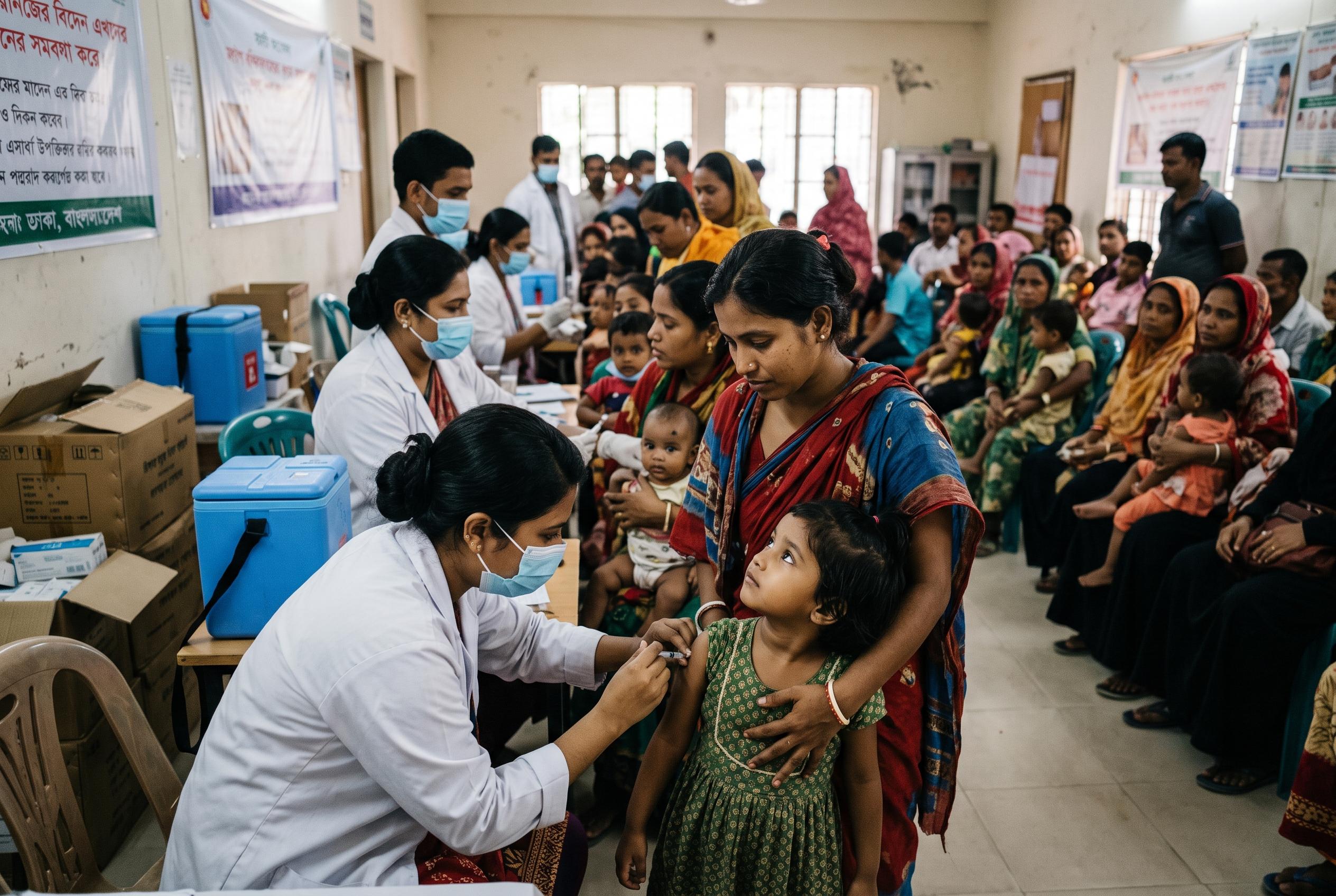

A severe measles outbreak across Bangladesh exposes gaps in routine immunisation and hospital capacity, prompting emergency responses and calls for a long-term catch-up strategy amid rising cases and public health pressures.
Bangladesh is confronting a major measles emergency that has laid bare gaps in routine immunisation, surveillance and hospital capacity. The World Health Organisation said in April that the outbreak had spread across 58 of the country’s 64 districts, with most reported cases in children under five and a high risk level because of large numbers of susceptible children and suspected deaths. A later report carried by The Daily Star, citing official health data, said the total number of people affected had climbed far higher by September, underlining how quickly the crisis has widened.
The disease has been hitting young children hardest, with severe complications including pneumonia and encephalitis straining hospitals. According to the Associated Press, the outbreak followed a slide in childhood vaccination coverage after the Covid-19 pandemic and political turmoil, with coverage falling from 93% in 2024 to 86% in 2025. WHO and Bangladeshi health officials have said the response has included emergency measles-rubella campaigns, broader surveillance and stronger hospital preparedness.
The government’s vaccination drive has expanded rapidly. WHO said the first phase targeted children aged six months to five years in high-risk districts, while a nationwide effort later followed. By late June, the United Nations in Bangladesh said more than 18.4 million children had been vaccinated, slightly above the original target, including strong coverage in the Rohingya camps in Cox’s Bazar and on Bhasan Char. Even so, health officials warned that transmission remained significant and that cases were still being reported daily.
The conflicting counts reported over the course of the outbreak point to a wider problem: confirmed infections, suspected cases and suspected deaths are not all measured in the same way, making the full toll difficult to pin down. But the public health lesson is clear. Measles, a disease preventable through vaccination, has surged because too many children missed routine doses, especially in hard-to-reach communities. Health experts say Bangladesh will need not just an emergency campaign, but a durable catch-up strategy if it is to avoid another large-scale outbreak.
Disclaimer: This content is for informational purposes only and is not intended to be a substitute for professional medical judgment, advice, diagnosis, or treatment.