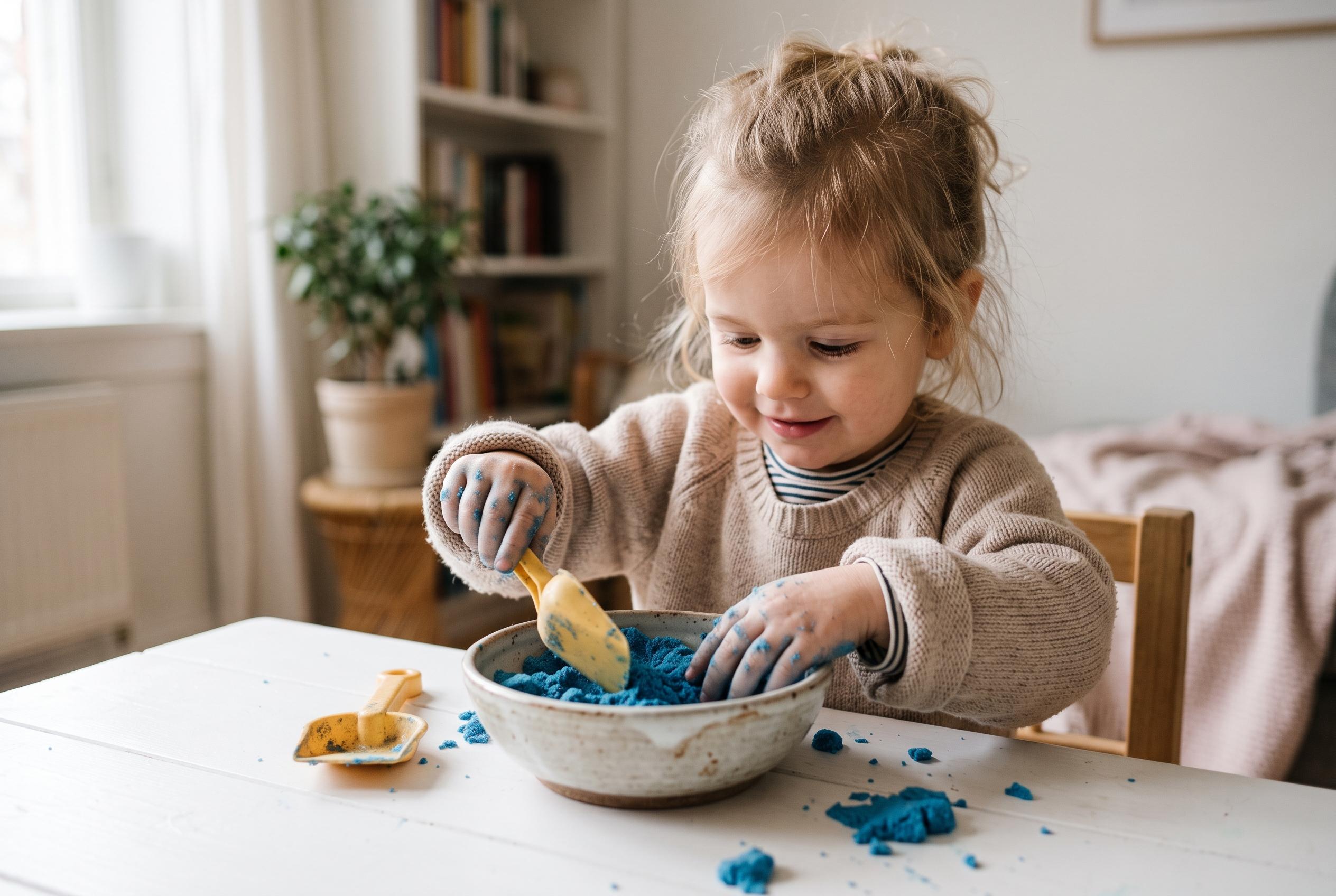

Simple sensory activities like water and dough can significantly boost toddlers’ language, motor skills, and emotional regulation, offering a foundational tool for early learning and confidence building.
Sensory play can look deceptively simple: a toddler with a cup of water, a bowl, a spoon or a patch of dough, absorbed in the same action again and again. But child-development specialists say those ordinary moments can support much more than amusement. The Cleveland Clinic, Healthline and Babylist all note that sensory play can strengthen language, motor skills, cognitive growth and emotional regulation, while also encouraging curiosity and adaptability.
At its most basic, sensory play gives young children a chance to learn by doing. Cleveland Clinic says activities that engage the senses can help children notice how materials move, change and respond, whether they are pouring water, riding a bike or listening to music. Healthline adds that these experiences allow children to test ideas, make connections and build early problem-solving skills through touch, sight, sound and movement.
The physical benefits are just as important. Repeated scooping, stirring, squeezing and transferring help toddlers practise fine motor control and hand-eye coordination, according to Babylist and Creative Children Center. Those small actions may seem routine, but they require children to judge force, plan movement and correct mistakes. In that sense, a simple sensory bin or water tray can do as much for coordination as a more elaborate toy.
Sensory play can also support language development by linking words to real experiences. Creative Children Center and Healthline both point out that children learn abstract ideas more easily when they can feel, see or hear them in context. A child who touches cold ice, squashes soft dough or listens to water splashing is building a vocabulary for texture, temperature, sound and movement that is grounded in experience rather than memorisation.
That hands-on learning can also give toddlers a rare sense of control. Much of their day is directed by adults, from mealtimes to bedtime routines. Sensory play creates a small space where they can decide what to fill, empty, mix or repeat. Experts quoted by Babylist and Cleveland Clinic say that independence matters because it helps children build confidence and stay engaged for longer stretches.
Some parents also use sensory activities to help children settle, but specialists urge caution about overstating the effect. Healthline and Creative Children Center say sensory play may support emotional regulation, yet no single activity works the same way for every child. A toddler may find water soothing, while another may become more energised. The value lies less in a guaranteed calming effect than in giving children a safe way to explore, repeat and reset.
That is why many of the best activities are also the simplest. The articles from Cleveland Clinic, Babylist and DrSensory all recommend familiar household materials such as water, play dough, safe natural objects, sensory bins and outdoor play. Water play, in particular, can offer varied sensations through temperature, sound and movement, but DrSensory stresses that it should always be closely supervised. Small children still explore with their mouths, so choking hazards and swallowing risks need special attention.
The appeal of sensory play may be that it does not require much from adults beyond a little time and supervision. A child does not need a sophisticated kit to learn from a spoon, a cup or a patch of mud. What matters is the chance to explore, repeat and discover at their own pace. For toddlers, that is often enough to turn a small, everyday moment into a meaningful lesson.
Disclaimer: This content is for informational purposes only and is not intended to be a substitute for professional medical judgment, advice, diagnosis, or treatment.