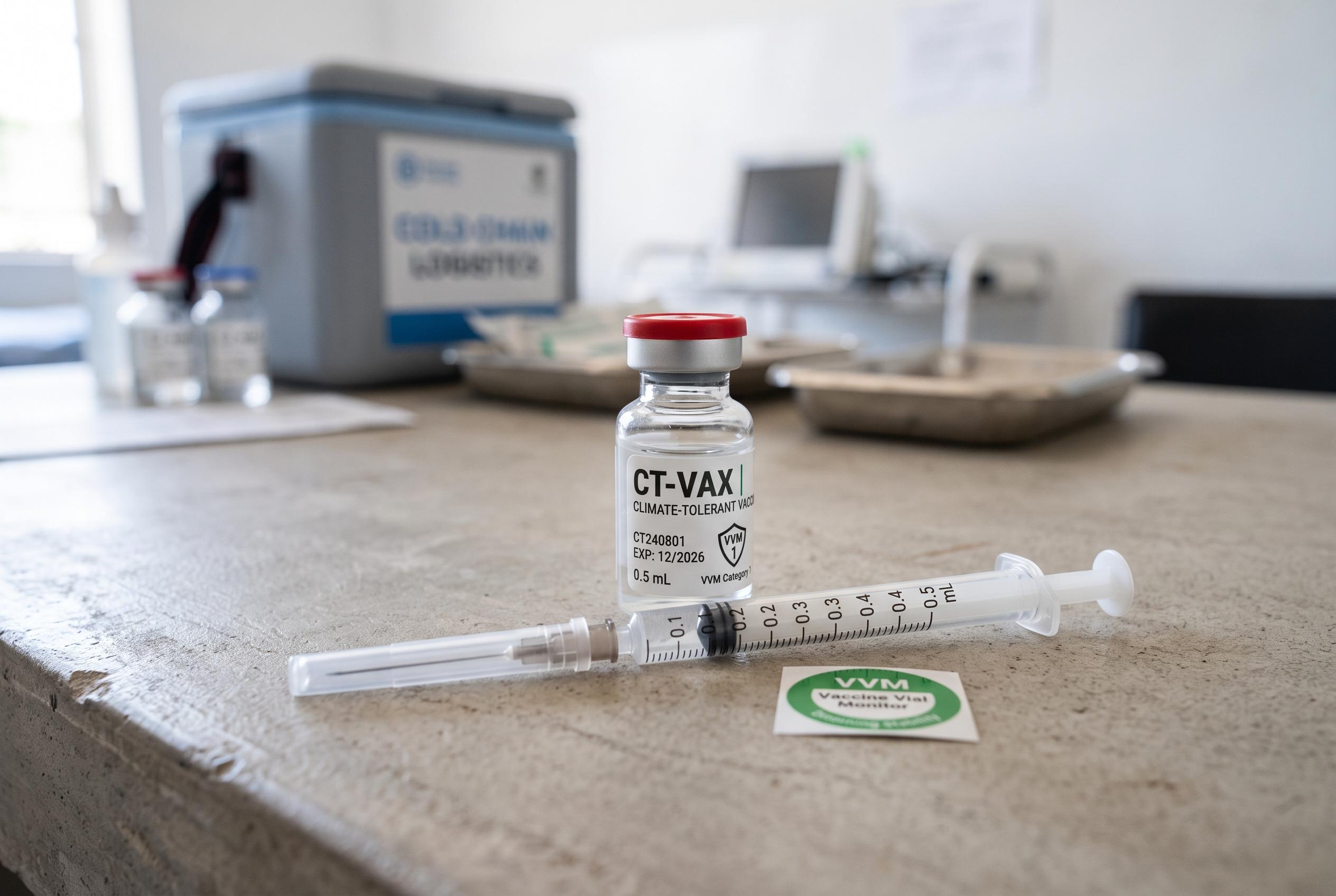

Researchers in Southampton have made progress toward a vaccine that remains effective under less demanding storage conditions, potentially transforming immunisation efforts in re
Researchers in Southampton say they have taken a step towards a vaccine that can survive far less demanding storage conditions, a change that could ease one of the biggest logistical problems in global immunisation. Prof Saul Faust, who leads the NIHR Clinical Research Facility in Southampton, said early-stage studies showed immune responses “equivalent” to those produced by the conventional version and that the candidate was “safe and well tolerated”. He added that the work could reduce reliance on refrigeration, cut waste and make vaccines easier to deliver in hard-to-reach places.
The focus is on the cold chain, the temperature-controlled system used to keep vaccines potent from manufacture to injection. The Jenner Institute says most vaccines still need to be held between 2C and 8C, and that when that chain fails, potency can drop quickly. It says cold-chain breakdowns can lead to wastage rates of 25% to 50% in some settings, especially where infrastructure is weaker. The World Health Organization has also said that half of all vaccines globally are wasted, with temperature failures one of the major reasons.
The Southampton team is working towards a vaccine that can tolerate 30C and 75% relative humidity, the standard set out by the WHO. Researchers also say separate data indicate the vaccine components can survive swings from -20C to +40C, a range that could matter during transport between aircraft holds, warehouses and delivery trucks in hot weather. The National Institute of Standards and Technology has long argued that tighter control of storage and transport conditions is essential to prevent potency loss, and its work on temperature standards has already helped reduce waste in some cases by more than 30%.
A larger trial involving 160 volunteers is due to begin in the coming months. Because the original vaccine is already licensed, the programme does not need the kind of large efficacy trials required for a completely new product, meaning the next stage is aimed at confirming durability and performance rather than proving the vaccine from scratch. If the approach holds up, it could make immunisation campaigns less vulnerable to power cuts, transport delays and other disruptions that still undermine vaccine delivery in many parts of the world.
Disclaimer: This content is for informational purposes only and is not intended to be a substitute for professional medical judgment, advice, diagnosis, or treatment.