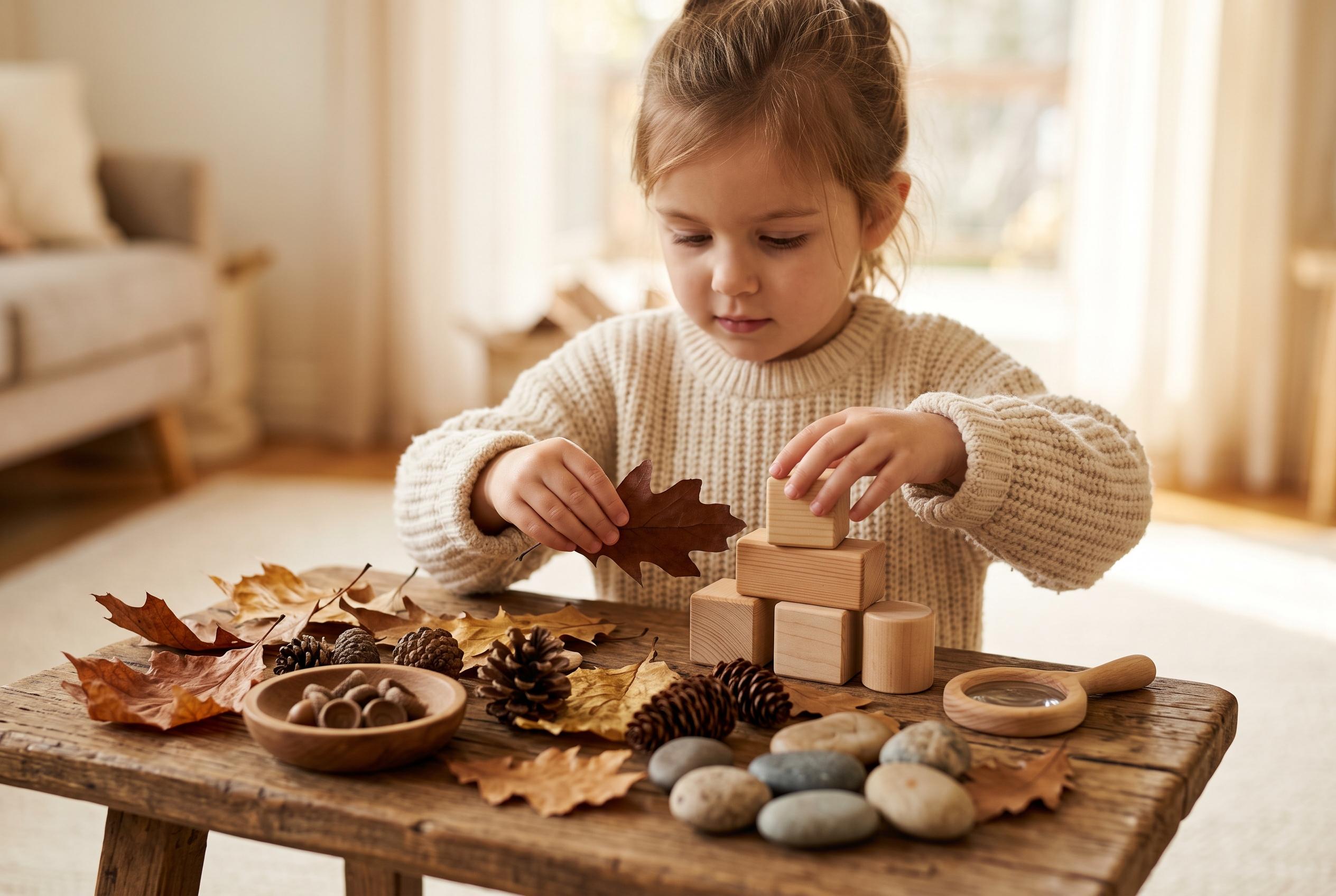

As autumn links sensory activities to cognitive, emotional and motor skills development, experts advocate for safer, simplified methods that emphasise tactile discovery over messy setups, promoting mindful play for young children.
Autumn sensory play is increasingly being pitched as a simpler, safer affair than the overflowing bins of loose fillers that often dominate social media. A guide updated by TryDayOut on 2 September says adults should “skip the tiny loose pieces” and instead use large, familiar materials such as whole apples, paper leaves, fabric and a light pumpkin, with supervision close at hand. Early years educators are making a similar case: seasonal play can still be rich in language, movement and tactile exploration without turning into a high-risk or high-prep set-up.
That shift matters because sensory play is being used for far more than entertainment. Love2Learn Early Learning Center describes it as support for brain development, emotional regulation, language and motor coordination, while classroom-focused resources from Little Bins for Little Hands present autumn bins as a way to build counting, sorting, pretend play and shared social routines. In practice, that means an activity can pull double duty: a child crunching leaves or washing apples is also hearing new descriptive words, practising turn-taking and strengthening fine motor control.
Not everyone agrees on how far adults should pare materials back. TryDayOut argues that dried corn, acorns, mini decorative gourds, pom-poms and water beads should be taken “off the table” for toddlers, and notes U.S. Consumer Product Safety Commission advice against water beads altogether. By contrast, Little Bins for Little Hands still lists dried corn, rice, pasta, beans and acorns among common fillers, while also warning that younger children need close supervision and, ideally, larger or taste-safe options such as oats, crushed cereal, cooked spaghetti or cloud dough. The result is a clear split between broad preschool ideas and stricter under-three guidance.
Outdoor collecting remains one of the easiest starting points. Busy Blooming Joy suggests handing a toddler a bucket and asking them to gather leaves, conkers or any other seasonal finds they spot, calling that walk a “precursor to many of the sensory activities” that follow. Love2Learn takes a similar approach with a leaf-crunch tub made from clean, dry leaves, plus scoops, cups and tongs. The appeal is obvious: autumn provides a ready-made range of sounds and textures, from crisp leaves to smooth conkers, and adults can build vocabulary around words like “crunchy”, “dry” and “colorful” as the child plays.
Pumpkins, unsurprisingly, sit at the centre of many of the most detailed ideas. Alison Hanlon, an occupational therapist writing at CU in OT, treats pumpkin play as a graded sensory experience rather than a one-off mess session. She suggests starting by knocking on the outside for auditory input and scraping the shell for proprioceptive input, then inviting a hesitant child to use a spoon before their hands. Hanlon also advises keeping a towel nearby and allowing frequent breaks, while Love2Learn recommends gloves or spoon play for children who are wary of the slimy texture. The emphasis is on helping the child stay regulated, not forcing contact.
For adults who want the seasonal theme without the clean-up, several sources offer lower-mess versions. Busy Blooming Joy includes sealed jars, sensory bottles and taped-down bags filled with leaves or other finds from a nature walk, while Little Spoon proposes turning pumpkin innards into a jack-o’-lantern sensory bag for children who are still mouthing objects. The same article also leans into repetitive, heavy-work play with a reusable “Hammer The Pumpkin” activity: golf tees pushed into a Styrofoam pumpkin and tapped down with a child-safe hammer. It is less therapy-speak than practical family improvisation, but the appeal is the same: tactile input, repetition and clear cause and effect.
Story-led and classroom versions widen the field further. Little Bins for Little Hands recommends tying bins to books such as Earl the Squirrel or Ten Apples Up on Top and using them in centres or small groups, where children share scoops, buckets and other tools. Its apple-themed bins are explicitly framed around counting, sorting and pretend play, and its pumpkin patch versions push dramatic play with shredded paper, toy pumpkins and leaves. Even the more informal home guides echo that structure, linking seasonal objects to specific actions such as scooping, pouring, picking, sorting and building.
The most consistent message across the package is not that autumn sensory play needs more fillers, but that it needs better matching: to the child’s age, to their tolerance for mess, and to the adult’s capacity to supervise. TryDayOut says five minutes may be enough and recommends repeating favourites with “one small change”. Hanlon urges adults to offer choice rather than pressure, including the simple prompt, “Do you want to touch with your hand or the spoon?” Taken together, the advice points towards a more thoughtful version of seasonal play: less about producing a picture-perfect bin, and more about offering manageable textures, useful words and a sense of discovery.
Disclaimer: This content is for informational purposes only and is not intended to be a substitute for professional medical judgment, advice, diagnosis, or treatment.