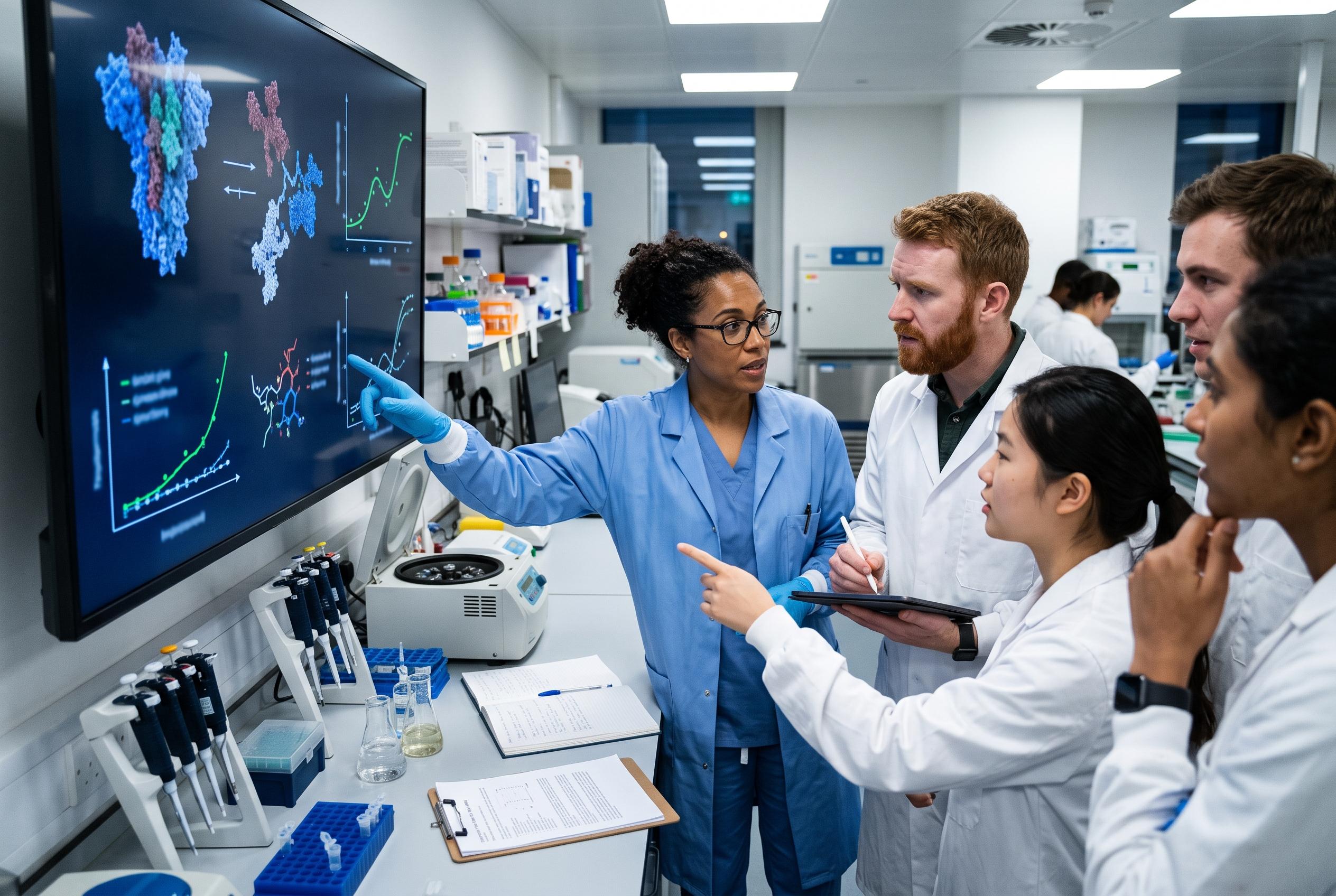

The return of measles as a major health threat in the US is transforming vaccine and treatment strategies, with biotech firms racing to develop new therapeutics as outbreaks spike and vaccine debates intensify.
Measles, once declared eliminated in the United States in 2000, has returned as a public health problem with unusual force, and that shift is changing the logic of drug development. As Marc Elia, chairman and chief executive of Invivyd, told PharmaVoice, pipelines for a disease that had largely faded from view were never likely to be deep, because developers had little incentive to build them over the past two decades. Now, with outbreaks rising sharply and vaccination politics becoming more fraught, the company argues that a therapeutic market is beginning to take shape.
Invivyd’s lead measles programme, VMS063, is still preclinical, but the company says it is designed as a monoclonal antibody against the measles fusion protein and could function in a similar way to approved antibodies used to prevent respiratory syncytial virus. That matters because measles has no FDA-approved treatment at all, leaving physicians with prevention as the main defence. Elia has also suggested that infection can do lasting damage beyond the initial illness, including weakening immune memory and, in rare cases, causing severe brain inflammation or death.
The public health backdrop helps explain why companies are taking a closer look. The Centres for Disease Control and Prevention reported 284 measles cases across 32 U.S. jurisdictions as of December 19, 2024, with most cases tied to outbreaks and many occurring in unvaccinated people. The agency later put the 2024 total at 285 cases and said about 40% of patients were hospitalised, underscoring how quickly the disease can become serious even in a country with a long-standing vaccine programme.
By 2026, the outbreak had grown much larger. Axios reported in July that the United States had recorded 2,318 cases, the highest level in more than 30 years, with Texas, Utah and South Carolina among the hardest-hit states. Other reporting during the year described tense local responses and public disagreement over deaths and outbreak management, reinforcing Invivyd’s view that vaccines alone may not be enough if uptake continues to weaken.
That broader disruption has also brought old vaccine assumptions under scrutiny. The Trump administration issued an executive order aimed at reducing the number of childhood vaccines given at a single visit, and some officials have pushed to split the combined measles, mumps, rubella and varicella shot into separate injections. Merck has said there is no published scientific evidence supporting that approach and warned that separating the product would require years of new development and testing. For now, Invivyd and other developers remain at an early stage, but the recent surge in cases has given the field a new sense of urgency.
Disclaimer: This content is for informational purposes only and is not intended to be a substitute for professional medical judgment, advice, diagnosis, or treatment.