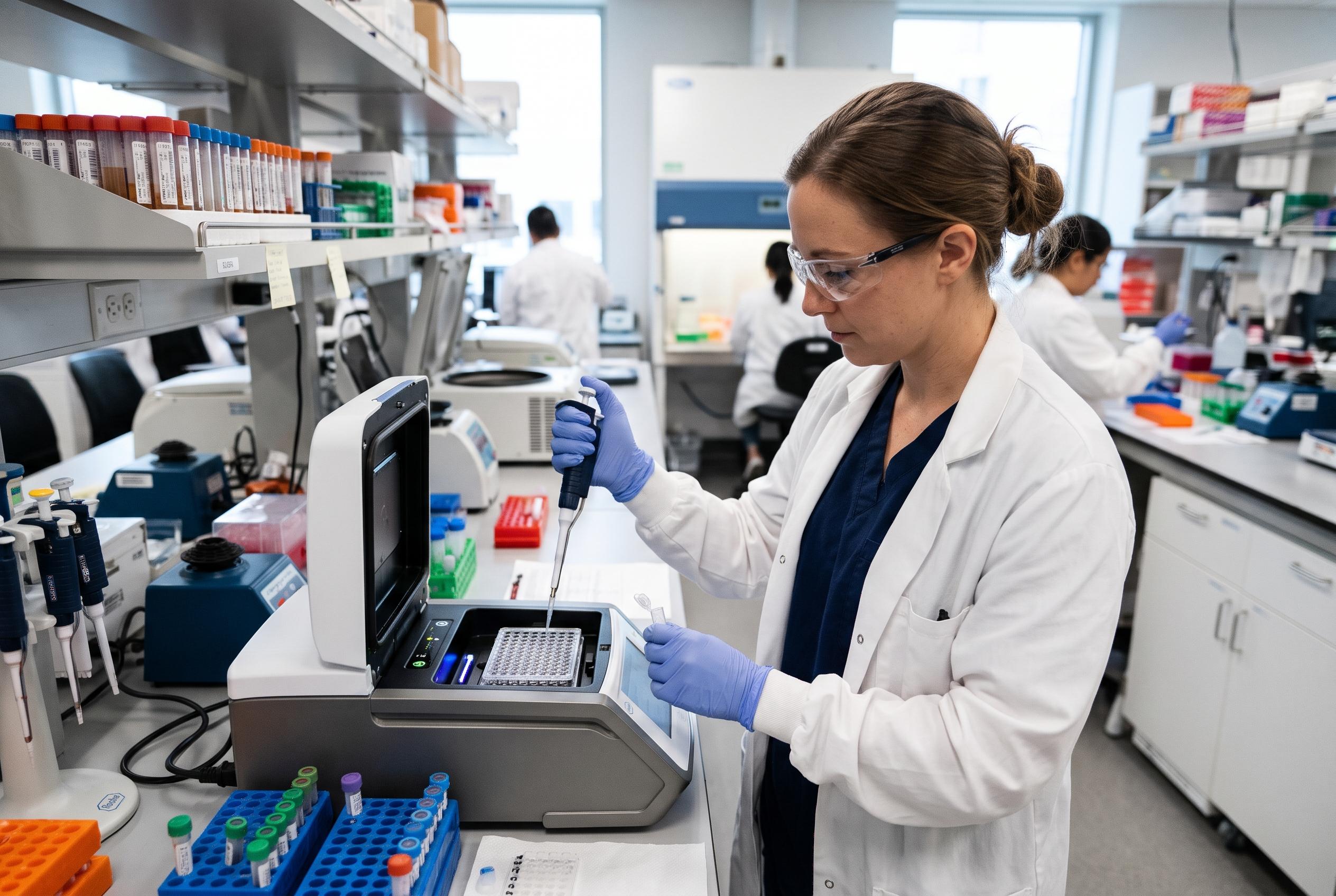

Labcorp data presented at IDWeek 2026 show clinicians increasingly turning to PCR to detect active measles infection earlier, as cases and outbreaks surge across the US.
Testing for measles is shifting in a way that public health specialists say better matches how the infection should be diagnosed. Data presented by Labcorp at IDWeek 2026 show that PCR testing has risen sharply relative to IgM serology, reflecting a broader move towards methods that can confirm active infection earlier and more reliably. The company’s analysis also found that the PCR-to-IgM ordering ratio moved above 1.0 for the first time in January 2026, before easing again later in the year. According to the CDC, PCR on a nasopharyngeal or throat swab is the preferred way to confirm suspected measles, with urine used as a secondary specimen if needed.
The rise in testing comes against the backdrop of a worsening national outbreak picture. Contagion Live reported that Labcorp data covering April 2025 through March 2026 showed PCR volume up 284.5% and positivity up 71.6%, while IgM volume rose 41.9% and positivity climbed 265.5%. The same report said U.S. measles activity continued to build, with 4,588 confirmed cases reported by the CDC as of 22 October 2026, compared with 2,289 cases for all of 2025. Another report on the Labcorp poster said outbreaks had also become more common, with 37 outbreaks defined as three or more linked cases, up from 16 in 2024.
Clinicians appear to be adapting, but not evenly. The Labcorp presentation found that primary care doctors ordered most of the tests, while paediatricians were the most consistent users of PCR, which the researchers said was more aligned with guideline-based practice. The same analysis suggested that the change in ordering patterns was linked in part to the South Carolina outbreak and to increasing awareness in outbreak settings. State-level heat maps also showed shifting PCR and IgM positivity in Utah, South Carolina and Pennsylvania, underscoring how local transmission can alter testing behaviour.
Even so, experts warn that the timing of testing remains critical. Labcorp’s Walworth said IgM can be useful, particularly when paired with IgG to assess prior protection, but it can also produce false positives because of cross-reactivity or recent vaccination. He also noted that IgM may not be detectable immediately after symptoms begin, which means testing too early can miss infection, while PCR can identify viral RNA sooner. The CDC likewise says specimens should be collected as early as possible, ideally at first contact with a suspected case, and recommends collecting samples from all suspected cases rather than waiting for the rash to fully develop.
Disclaimer: This content is for informational purposes only and is not intended to be a substitute for professional medical judgment, advice, diagnosis, or treatment.