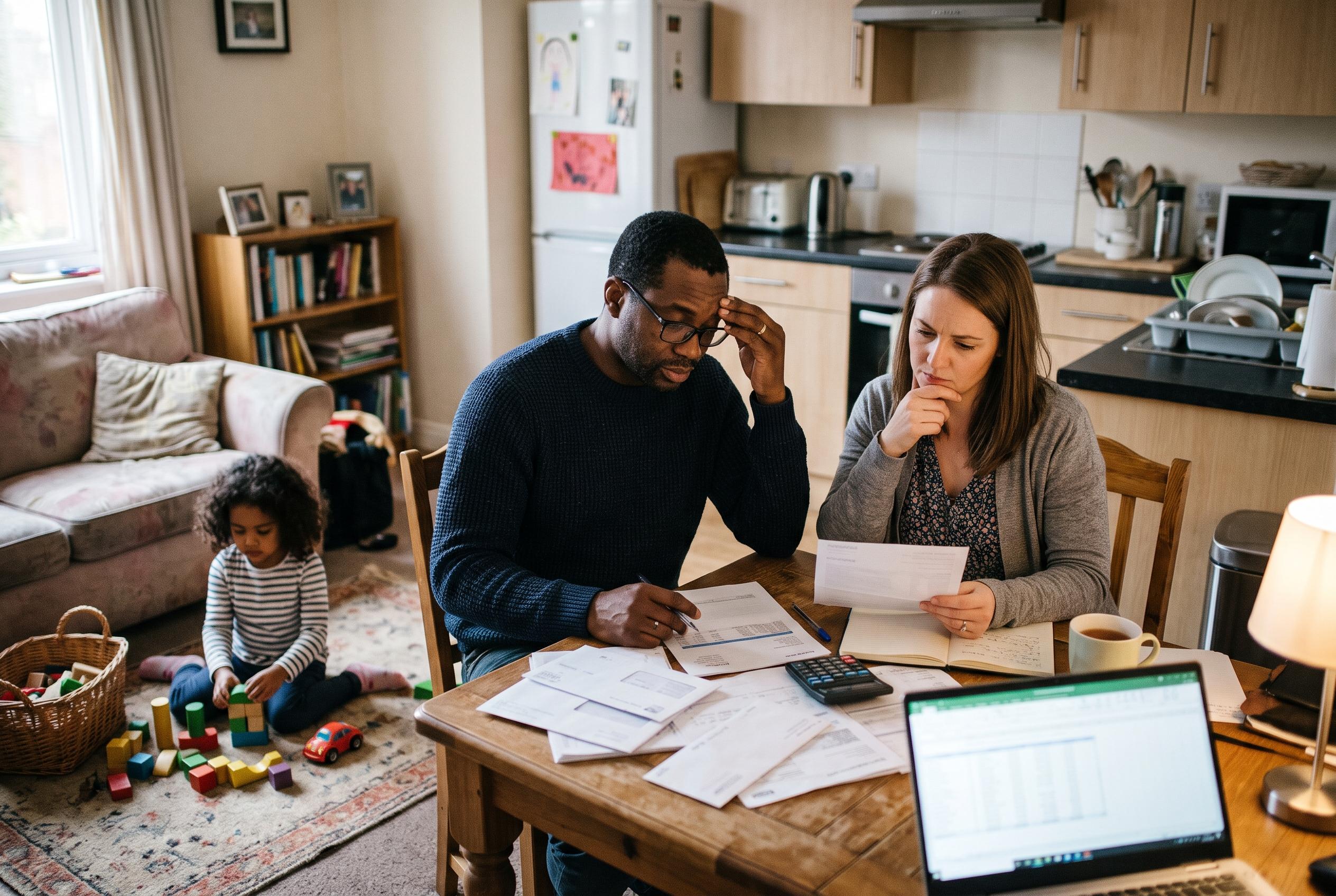

New findings suggest the pressures identified in the US Surgeon General’s 2024 warning have intensified, with families facing rising costs, work demands and too little support.
A new look at parental stress suggests the pressure on families has not eased since the U.S. Surgeon General warned in 2024 that parenting had become a public health issue.
In the advisory, “Parents Under Pressure”, Vivek Murthy said parents were experiencing markedly higher levels of strain than other adults. The report said 48% of parents said most days their stress was completely overwhelming, compared with 26% of other adults, while 41% said they were so stressed they could not function, versus 20% of other adults. A separate summary of the advisory also highlighted that 33% of parents reported high levels of stress over the previous month, compared with 20% of other adults.
That warning now looks more, not less, relevant. The American Psychological Association’s 2026 Stress in America survey found that 77% of U.S. adults named the cost of living as a significant source of stress, 59% said they were doing everything right but still falling behind, and 72% said stress is simply part of life. Nearly half said they had cut back on social plans because of it. The association’s chief executive, Arthur C. Evans Jr., cautioned that getting used to chronic stress is not the same as coping with it well.
The latest APA survey does not separate parents from other adults, which means the Surgeon General’s comparison remains the clearest recent snapshot of how mothers and fathers are faring. According to the advisory, the main pressures include money, children’s health and safety, and the pull of technology and social media. The report also pointed to the growing strain of combining care with paid work, noting that parents now spend an average of 33.5 hours a week on work or work-related activity, and that mothers’ hours have risen sharply since the mid-1980s.
For many parents, the strain is not a single problem but the accumulation of several at once: illness, childcare, school demands, work deadlines and the expectation that home life should somehow remain orderly. Research cited in the wider debate around the advisory suggests that parental burnout is especially severe in wealthy, individualistic countries, where parents often feel they are meant to cope alone and to perform perfectly. That helps explain why stress can feel less like a temporary bad spell and more like a constant state of being on call.
The advisory also makes clear that this is not simply a matter of personal resilience. It calls for paid family and medical leave, paid sick time, childcare subsidies and tax credits, as well as stronger workplace support for parents. In other words, the problem is framed not as an individual failure but as a structural one.
That approach matters because the numbers describe more than discomfort. They point to a widening gap between what parents are expected to manage and the support they actually receive. For many families, the challenge is not that they do not love parenting, but that they are trying to do it in a system that leaves too little room to recover, ask for help or simply keep going without feeling overwhelmed.
Disclaimer: This content is for informational purposes only and is not intended to be a substitute for professional medical judgment, advice, diagnosis, or treatment.