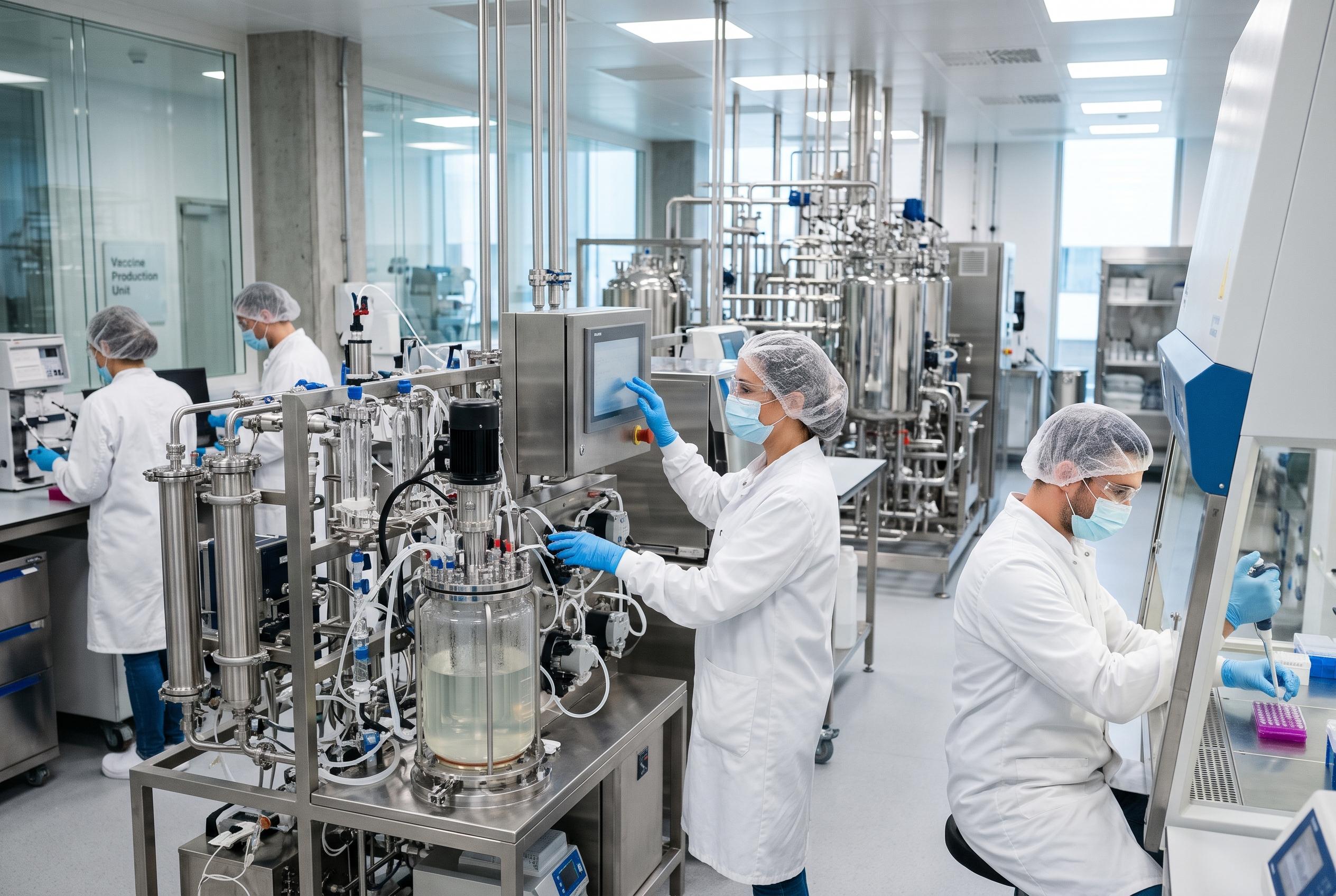

Egypt has begun technology transfer for domestic PCV13 production, targeting annual output of 140 million doses and positioning the country as a vaccine supply hub for Africa and the Middle East.
Egypt has launched the next stage of work to localise production of its first pneumococcal conjugate vaccine, in a move the health ministry says is intended to strengthen pharmaceutical security and reduce dependence on imports. Health Minister Khaled Abdel Ghaffar oversaw the start of technology transfer for PCV13, a vaccine designed to protect children against diseases caused by Streptococcus pneumoniae, including pneumonia and meningitis, according to the Arab News English edition of Al-Ahram and the original Arabic report.
The project brings together Egypt’s Vaccine and Biotechnology City, known as VBC, China’s Walvax and equipment specialist Tofflon. According to the reports, the plan is to build domestic manufacturing capacity with the aim of turning Egypt into a regional vaccine centre and an export platform serving 19 countries across Africa and the Middle East. The initiative is being presented as part of a broader push for self-sufficiency in critical health products.
Officials say the scale of the site underlines those ambitions. The Arabic report said VBC covers 115,000 square metres and includes specialised facilities for human and veterinary vaccines, along with a logistics store capable of handling 140 million doses a year under good manufacturing practice standards recognised by the World Health Organization and the European Union. The first production line, covering 6,000 square metres, has been set aside for annual output of about 140 million doses of PCV13.
Abdel Ghaffar said bringing the pneumococcal vaccine into Egypt’s routine childhood immunisation schedule before 2030 is a priority, with the aim of improving access and shielding families from supply disruptions in global markets. Rania Higazi, a paediatrics professor at Cairo University’s Kasr Al-Aini faculty, told Al-Arabiya and Al-Hadath that local production would mark a significant step for preventive medicine in Egypt because the vaccine covers 13 serotypes of pneumococcal bacteria and can help prevent serious infections affecting the lungs, brain and bloodstream.
Higazi said the vaccine is especially important for children under five, as well as for people at higher risk of complications, including those with chronic illnesses, weakened immunity, diabetes, heart or lung disease, sickle-cell disease, or those who have had a spleen removed or are receiving cancer treatment. She added that the vaccine had previously been available in the private sector under different brand names, but domestic manufacture should make access wider and supplies more stable.
For the pharmaceutical sector, the project also has an economic dimension. Mahmoud Ramzi, who chairs the drug manufacturing committee at the pharmacists’ syndicate, told Al-Arabiya and Al-Hadath that producing the vaccine locally should ease pressure on the public budget by cutting import costs in foreign currency. He said the bigger opportunity lies in exports to Arab and African markets, provided production stays aligned with international quality standards.
The latest announcement also sits alongside another vaccine-localisation effort Egypt pursued earlier this year. In January, local outlets reported progress on a separate partnership involving the state-owned VACSERA, GenVax Egypt and China’s Minhai to localise PCV13 production through existing state facilities. Taken together, the projects point to a broader Egyptian strategy of building vaccine capacity at home, while using foreign technology transfer to speed up that process. A Walvax statement in November 2025 also described the Cairo launch of its 13-valent pneumococcal vaccine as part of Egypt’s drive towards vaccine self-reliance.
Disclaimer: This content is for informational purposes only and is not intended to be a substitute for professional medical judgment, advice, diagnosis, or treatment.