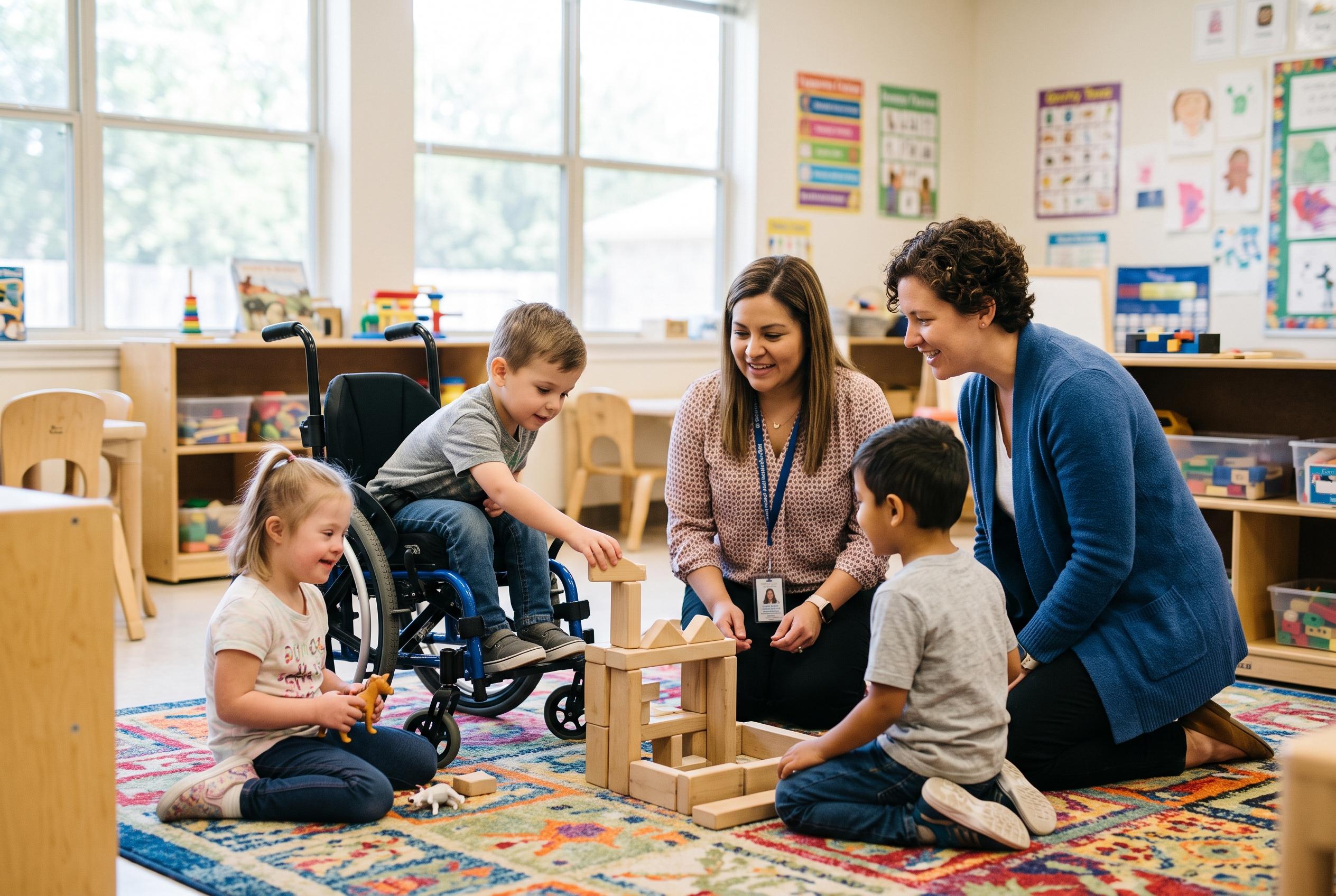

Texas’ new Early Childhood Inclusion Plan aims to enhance integration of children with disabilities in classrooms by addressing staffing shortages, funding, and coordination across multiple agencies, amid ongoing challenges and debates over implementation.
Texas is putting forward a new roadmap to bring more young children with disabilities into classrooms and childcare settings alongside their peers, as state agencies face pressure to make inclusion more consistent across an early childhood system spread over several departments.
The Texas Early Childhood Inclusion Plan 2026-2030 was developed by the Texas Education Agency, the Texas Health and Human Services Commission and the Texas Workforce Commission after lawmakers asked the agencies in the last legislative session to identify barriers and suggest solutions. According to the state, the plan draws on feedback from more than 1,200 families, educators, childcare providers and other stakeholders, many of whom pointed to a shortage of trained specialists such as special education teachers, occupational therapists and speech therapists.
Federal law already requires children with disabilities to be educated in the least restrictive environment, but what that means for a preschooler can vary widely. The Texas Education Agency says eligible children aged 3 to 5 may receive services in a pre-kindergarten classroom, at home or in community settings such as Head Start and preschool programmes. For some children, that means extra help in a mainstream classroom; for others, it may mean a specialised setting for part or all of the day.
Steven Aleman, a senior policy analyst at Disability Rights Texas, said the recommendations are sensible but not especially new. The harder task, he said, is finding the money and the staffing to carry them out, especially if Texas wants to reduce child-to-adult ratios in early childhood settings.
The plan also highlights a structural problem familiar to many families: responsibility is split among several agencies. The Health and Human Services Commission oversees Early Childhood Intervention for babies and toddlers with disabilities or developmental delays, the Education Agency handles public pre-K and early childhood special education, and the Workforce Commission oversees subsidised childcare and the state’s quality rating system. That division can become especially difficult for families when a child turns three and moves from Early Childhood Intervention into school-based services.
The state plan calls for more teacher training, smaller classes and closer coordination between programmes. It also urges Texas to examine whether additional funding and financial incentives could help recruit and keep early childhood educators and specialists. But the report does not include a cost estimate, leaving lawmakers to decide whether the recommendations will be backed by money in a state system that advocates say remains fragmented.
Disclaimer: This content is for informational purposes only and is not intended to be a substitute for professional medical judgment, advice, diagnosis, or treatment.