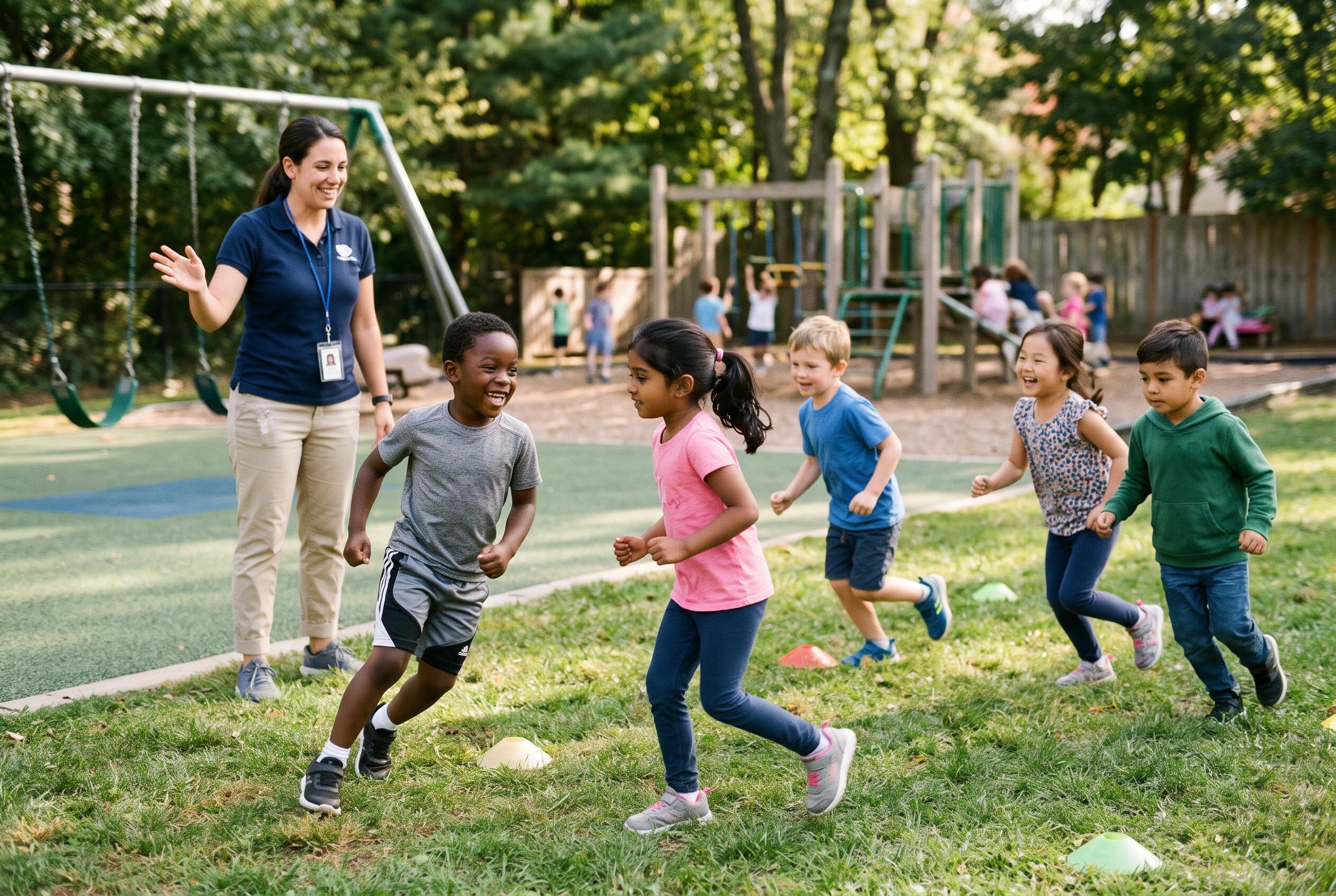

A small preliminary trial found that 12 weeks of organised physical games produced greater gains in memory and attention among five- and six-year-olds, although researchers caution that larger studies are needed.
A structured programme of physical play may help sharpen memory and attention in children aged five and six, according to a preliminary study from researchers at Shenzhen University published in Frontiers in Pediatrics. In a 12-week trial involving 59 kindergarten children, those who took part in specially designed game-based exercise sessions made larger gains on memory tests and an attention task than children who continued with their usual school physical activities.
The study used a class-level randomised design rather than assigning children one by one. One intact kindergarten class of 30 pupils formed the intervention group, while a second class of 29 children acted as the comparison group. The experimental class took part in structured physical games three times a week for 60 minutes at a time, whereas the control class followed its normal routine activities.
Researchers measured cognition before and after the programme using standard tools, including subscales from the Wechsler Memory Scale and the Schulte Grid attention test. According to the report, the strongest improvements were seen in short-term memory and immediate memory, with visual reproduction showing the largest effect. Picture memory and forward digit span also improved significantly in the intervention group, while the attention measure improved more than in the comparison class.
The findings point to a possible link between organised physical play and early cognitive development, but the study remains exploratory. Because only two classes were involved, classroom-level differences, teacher effects and routine variations could all have influenced the outcome. The report also does not fully detail the game content, how motion data were analysed or whether assessors knew which children were in which group, all of which limits how far the results can be extended. Even so, the authors say the pilot offers early evidence that carefully designed active play may support young children’s memory and attention, and they call for a fuller version of the research to explain which elements of the programme were most effective.
Disclaimer: This content is for informational purposes only and is not intended to be a substitute for professional medical judgment, advice, diagnosis, or treatment.