
Specialist hospital care for severe OCD is reserved for a small minority, with access tightly controlled and recovery depending on intensive ERP and careful support after discharge.
For families facing severe obsessive-compulsive disorder, the idea of a hospital bed can feel both daunting and, at times, necessary. In the UK, specialist inpatient treatment exists, but it is reserved for a small group of people whose OCD is so severe, entrenched or dangerous that outpatient care is no longer enough. The NHS says CBT with exposure and response prevention, usually alongside medication such as SSRIs, remains the foundation of treatment, while inpatient care is intended only for a small proportion of patients whose needs are much more complex. Mary Seacole Ward at Queen Mary’s Hospital in Roehampton is the best-known national adult unit for this kind of care.
What makes specialist OCD inpatient care different is not simply the fact that a person stays overnight in hospital. The point is structured, intensive therapy delivered every day, with staff trained to recognise compulsions, reduce reassurance-seeking and support exposure work in real-world settings. The South West London and St George’s Mental Health NHS Trust says its national OCD and BDD service sits at the highest level of stepped care and provides assessment and inpatient treatment for people with severe or treatment-resistant OCD or body dysmorphic disorder.
NHS guidance makes clear that hospital treatment is not a first-line option. It is generally considered when there is risk to life, severe self-neglect or extreme distress, or when someone has not improved after substantial courses of therapy and medication. The NHS also notes that inpatient services with specific expertise in OCD and BDD are suitable only for a small minority of patients, underlining how far up the care pathway this level of support sits.
Access to the national service is tightly controlled. South West London and St George’s says referrals must come from community mental health teams, and the patient must have an allocated care coordinator. That means a GP referral alone is usually not enough. For people seeking NHS-funded admission, the threshold is typically high, because the service is aimed at those with the most severe and complicated illness, not those who simply need a more intensive version of standard therapy.
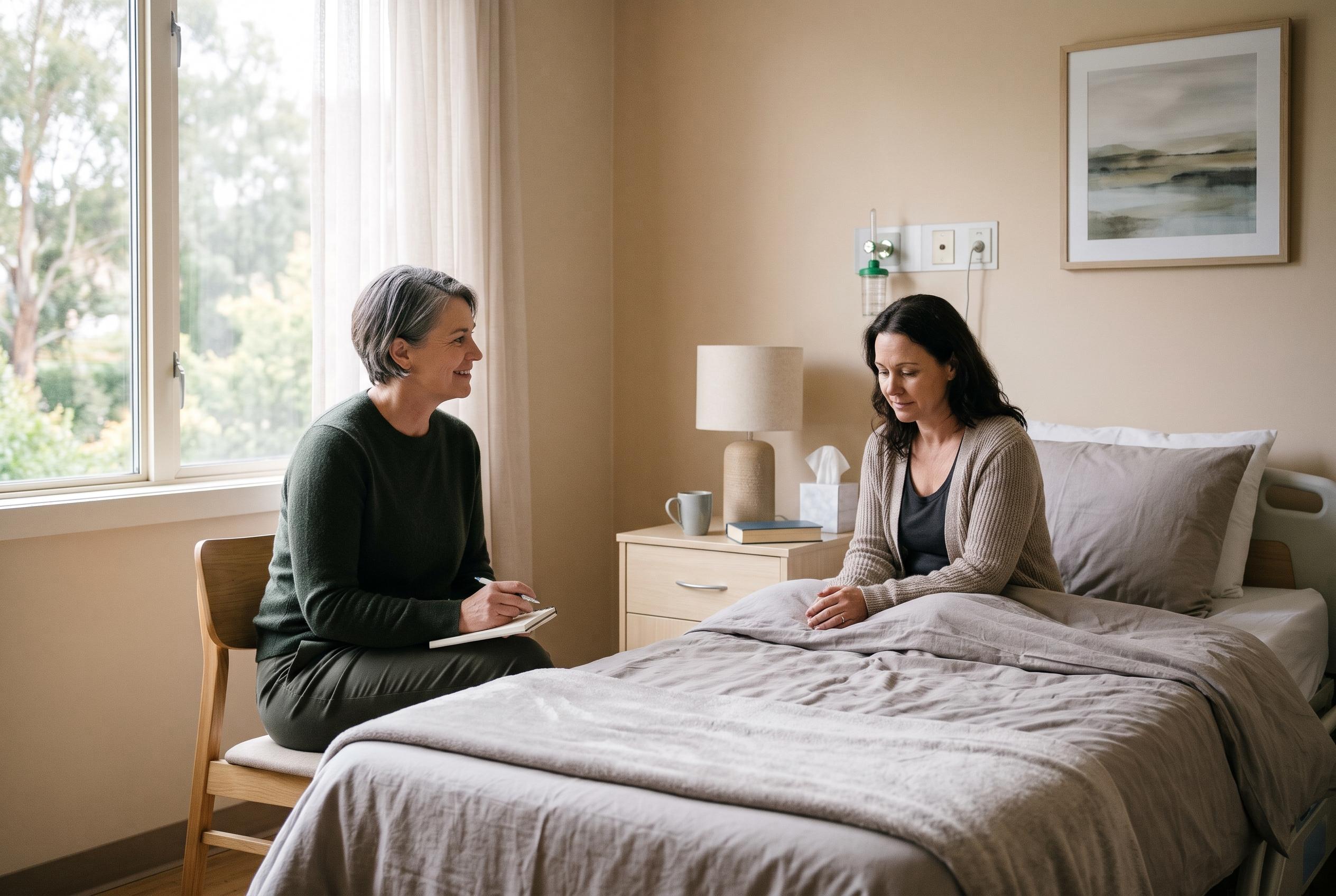
The ward environment itself is designed to support recovery in practical ways. Facilities at Mary Seacole Ward include a rehabilitation gym, sensory room, day and dining rooms, WiFi and an activities of daily living suite. The trust says multidisciplinary staff work together on individual treatment plans, which reflects the reality that severe OCD often affects sleep, self-care, eating, movement and the ability to manage ordinary daily routines.
Private inpatient options also exist, but they are limited and tend to be based in London. The appeal is obvious for families facing long waits or needing a more immediate start, yet cost and quality vary, and the level of OCD-specific expertise should be checked carefully before anyone commits. The crucial questions are whether the unit is truly OCD-focused, how much ERP is delivered each day, whether exposure work happens outside the ward and what support follows discharge. Without that, a hospital stay may offer containment but not the kind of treatment needed to change the disorder itself.
Evidence suggests that specialist inpatient care can make a substantial difference, especially for people with long-standing, severe OCD who have already tried other treatment. But gains are not the same as a cure. In practice, many patients leave hospital still living with moderate symptoms and need continued outpatient ERP to maintain progress. That is why discharge planning matters: the skills learned on the ward have to be transferred back into ordinary life, where the triggers, routines and compulsions still exist.
For many people, the most useful alternative is not inpatient care at all but an intensive outpatient block of therapy. If someone is medically safe, able to leave home and willing to work hard, concentrated ERP can be a better fit than a hospital admission. The NHS framework and the specialist service model both point to the same underlying principle: the right treatment depends on severity, risk and what has already been tried. For carers, the most important step is often to document symptoms clearly, push for a proper assessment and make sure the next referral is matched to the real level of need.
Disclaimer: This content is for informational purposes only and is not intended to be a substitute for professional medical judgment, advice, diagnosis, or treatment.