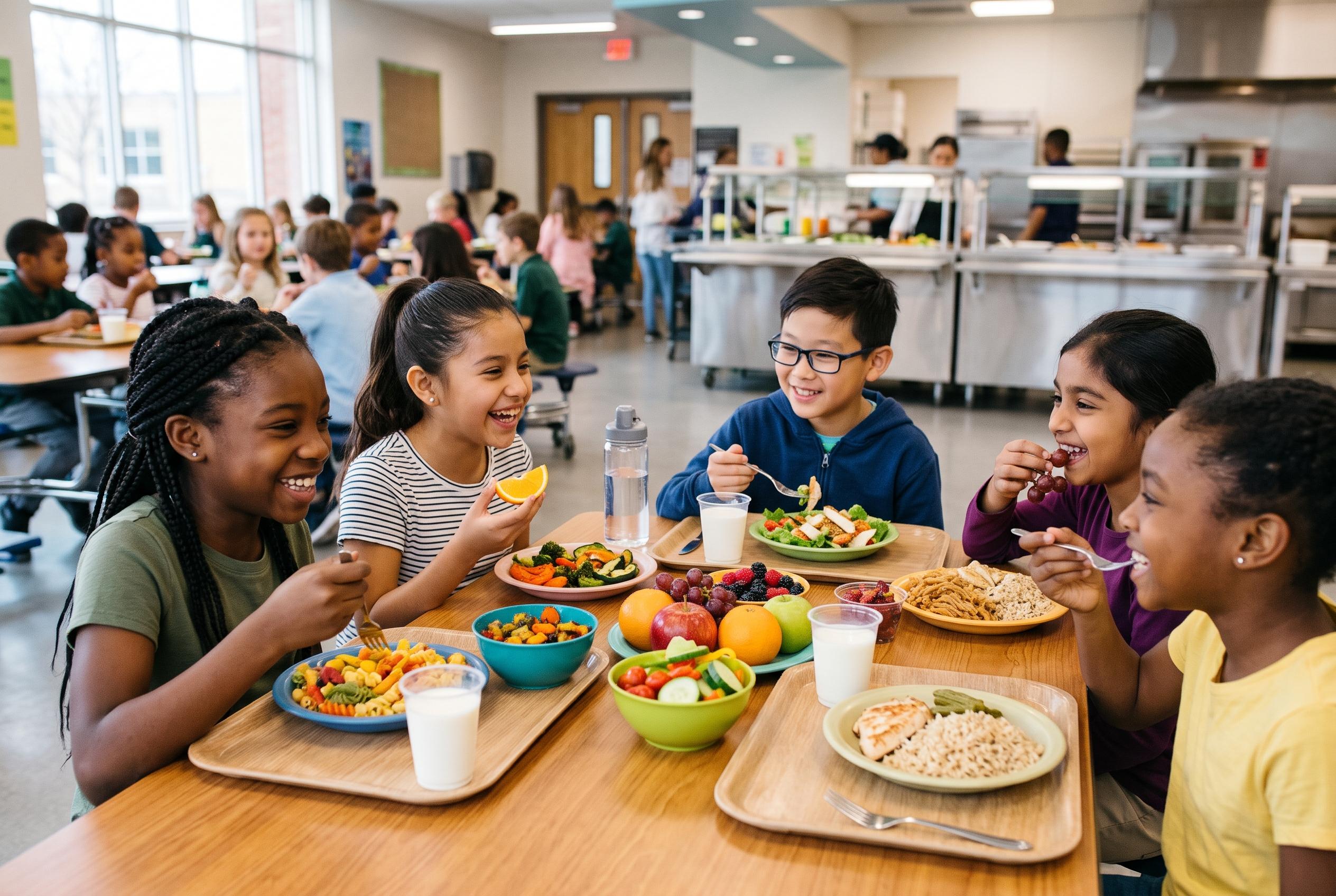

Research suggests pupils and parents are already demanding fresher, more filling meals as England prepares its first major overhaul of school food standards in more than a decade.
Pupils are already asking for school lunches that are healthier, more filling and less heavily processed, even as England prepares its first major overhaul of school food rules in more than a decade. Research highlighted by Public Sector Catering and commissioned by British Lion Eggs suggests children are increasingly conscious of what is on their plates, with many linking school meals to their energy, concentration and ability to get through the day.
The findings land as the Department for Education moves to tighten the School Food Standards, with ministers promising meals that are more nutritious and better aligned with current dietary advice. According to the government’s consultation response, the updated framework will place greater emphasis on breakfast provision, fibre, and limits on foods high in saturated fat, sugar and salt, while separate guidance has been issued to help schools and caterers put the changes into practice. Official guidance also encourages schools to work with suppliers on fresh, sustainable and locally sourced ingredients.
The research points to a strong appetite among families for those changes. More than half of parents surveyed said fresh ingredients were a top priority, while almost a third wanted less processed food and a further share said the most important factor was simply whether their child would actually eat the meal. Among children, a third said fat and sugar levels influenced their choices, and nearly a quarter said they noticed how processed their food was. More than one in five parents said their child comes home hungry every day, underlining the pressure on schools to provide meals that are both nourishing and satisfying.
Nick Allen, chief executive of the British Egg Industry Council, said the reforms offered a chance to “champion natural British ingredients” that support children’s wellbeing and give them the energy to learn and play. He also pointed to British Lion eggs, which the Food Standards Agency recognises as safe to serve runny to vulnerable groups, including young children. Amber Francis, who works with the charity Chefs in Schools, said nutritious food only succeeds if children want to eat it, adding that whole foods such as eggs are versatile, familiar and filling. The government’s updated standards, along with its practical guide and headteacher checklist, are intended to help schools deliver meals that meet those aims while staying safe for children with allergies.
Disclaimer: This content is for informational purposes only and is not intended to be a substitute for professional medical judgment, advice, diagnosis, or treatment.