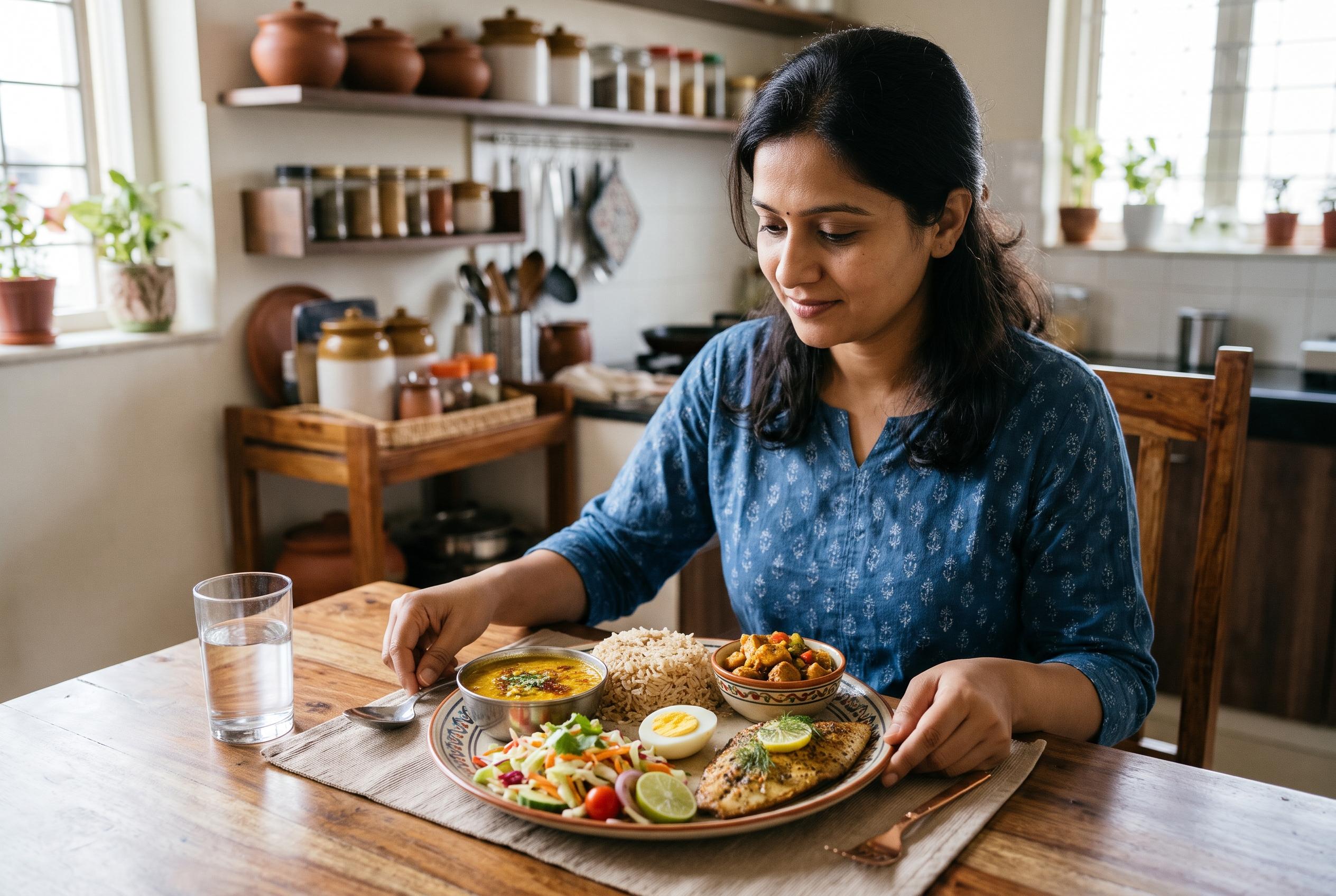

From dal and paneer to eggs, fish and soya, familiar foods can help meet daily protein needs when portions and meals are planned around individual health requirements.
If your doctor, dietitian or trainer has told you to eat more protein, the first challenge is often practical: what does that mean on an everyday Indian plate? According to Kokilaben Dhirubhai Ambani Hospital, the answer is less about dramatic dietary change and more about adding the right foods in sensible portions across the day, whether you eat vegetarian meals, fish, chicken or eggs. The hospital’s guidance is intended to help people match their intake to their needs without guessing.
For healthy adults, the Indian Council of Medical Research–National Institute of Nutrition recommends about 0.83 grams of protein per kilogram of body weight each day, a figure also set out in the biomedical literature summarising Indian dietary standards. That means a person weighing 60 kilograms would need roughly 50 grams a day, spread across breakfast, lunch, dinner and snacks rather than saved for one large evening meal. Protein needs are not fixed, however: age, activity level, pregnancy, illness and kidney health can all change the target, which is why dietitians advise against treating one general rule as a personal prescription.
Among vegetarian foods, dal, paneer, curd, milk, rajma, chana, soya, tofu, sprouts, peanuts and millet rotis stand out as useful building blocks. Kokilaben’s list shows how familiar servings add up: a katori of cooked dal or rajma, a bowl of chole, a handful of roasted chana or a small serving of soya chunks can each contribute meaningful protein, while paneer and tofu provide even more per portion. The hospital also notes that pairing foods matters, since dal with roti or rice offers a broader mix of amino acids than a single item eaten alone.
Non-vegetarian options can make it easier to reach a target in smaller portions. Boiled eggs, chicken breast, fish, prawns and mutton all supply substantial protein, and the hospital advises choosing cooking methods that do not add unnecessary fat, such as grilling, baking or steaming. Fish deserves special mention because, in addition to protein, it also contributes healthy fats, making it a useful regular choice for many people.
For those comparing foods by density rather than by serving size, the hospital ranks soya chunks at the top, followed by chicken breast, dals, fish, mutton, paneer, eggs and tofu. That ranking helps explain an important point: a food can look impressive per 100 grams yet deliver less protein in a typical serving if you only eat a small amount. It also matters whether the figure refers to dry or cooked weight, since some foods change substantially when prepared.
Protein can be helpful for weight loss because it tends to be more filling than carbohydrate- or fat-heavy snacks, but the hospital cautions that cooking method and total calorie intake still matter. Boiled dal, curd, sprouts, eggs, fish and grilled chicken are all sensible choices, while fried paneer, rich gravies and sweetened curd can push up calories quickly. For weight gain, by contrast, the same protein foods can be paired with nuts, full-fat dairy and a little ghee to raise energy intake as well as protein.
Children also need protein, but the amount depends on age and body weight. Kokilaben’s guide sets out age-based targets that rise steadily from early childhood into the teenage years, with milk, curd, paneer, eggs, dal, chana, soya, chicken and fish all able to play a role. The hospital recommends spreading protein across the day, using child-friendly meals such as paneer-stuffed parathas, moong dal chilla, curd with fruit, dal soup or khichdi. It also warns that young children should not be given whole nuts because of the choking risk, and says parents should check with a doctor first if a child reacts to milk, egg, soya or peanuts.
Low protein intake does not usually announce itself all at once, but the hospital says warning signs can include tiredness, muscle loss, hair thinning, swelling and slow wound healing. Even so, these problems can also point to other medical conditions, so professional assessment matters more than self-prescribing supplements. The same caution applies in the other direction: too much protein can add excess calories, and in people with kidney disease it may be harmful. A dietitian can help translate a general recommendation into a meal plan that fits a person’s health, appetite and routine, which is especially important for anyone with kidney or liver disease, diabetes, pregnancy, recovery from surgery or a child with slow growth.
Disclaimer: This content is for informational purposes only and is not intended to be a substitute for professional medical judgment, advice, diagnosis, or treatment.