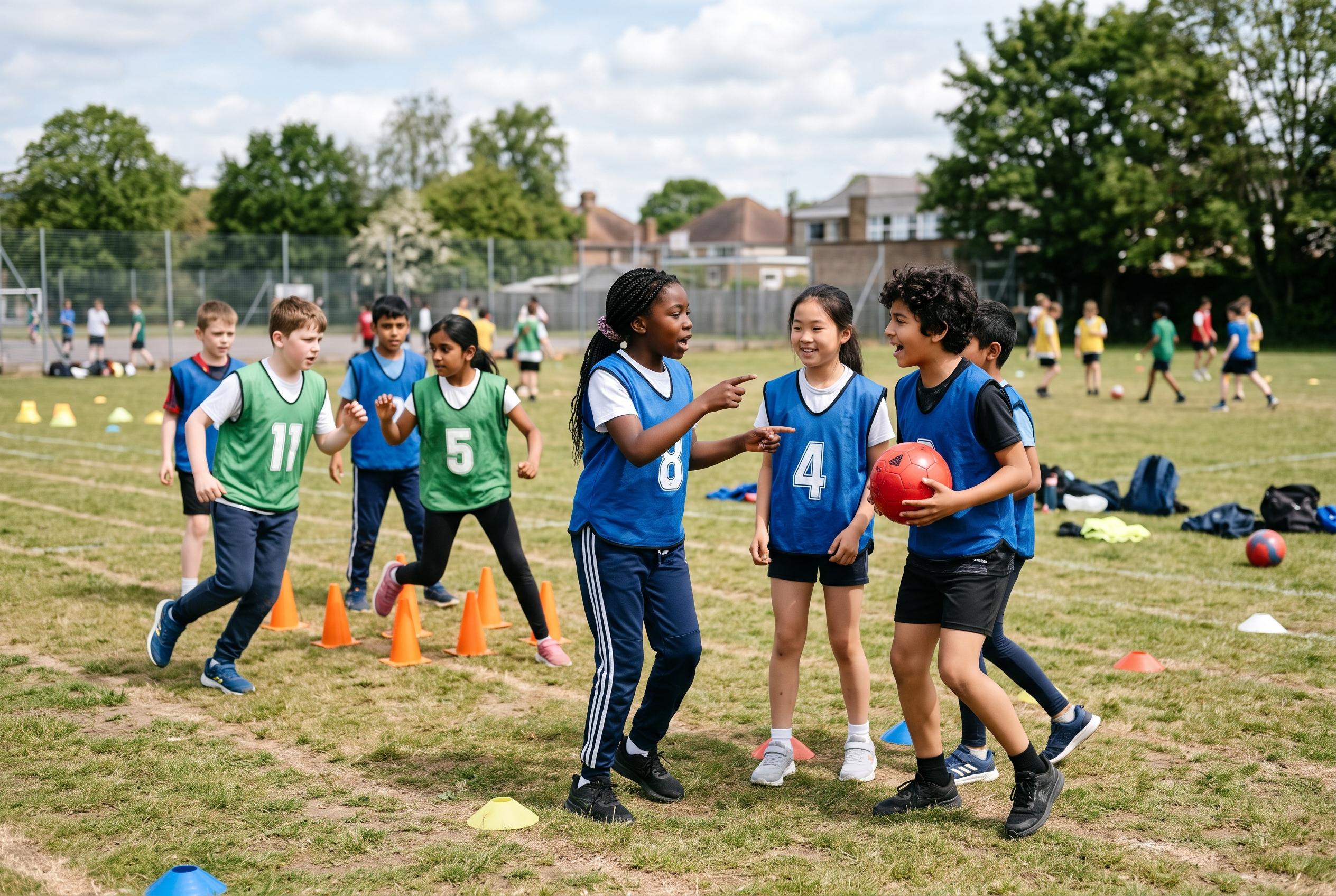

A review of Australian and international research finds that the strongest PE teaching combines physical skills with decision-making, collaboration and motivation.
A recent review of physical education literature for an Australian school system makes a clear case for change: the best PE lessons are not built around repetition alone, but around movement that gives pupils room to think, choose, work with others and stay engaged. The review, completed in 2023, pulled together Australian and international research on what teachers are being told about how to teach PE, and it found that active learning, student decision-making and social interaction matter as much as technical skill.
For much of the last century, PE has often been taught through a narrow sequence of teacher demonstration, pupil practice and repeated imitation. The review argues that direct instruction still has a role, but cannot carry the full weight of modern PE, which is now expected to develop physical competence alongside social, emotional and cognitive growth. In other words, the subject is no longer judged only by how well children perform a drill or a game skill, but by whether it helps them become motivated, capable and confident movers over time.
Among the approaches examined, Sport Education emerged as the most extensively researched. According to the review, it is designed to mirror the structure of sport in clubs and community settings, giving PE a clearer season-based framework. That model has been linked with stronger motivation, more responsibility, better tactical understanding, higher activity levels and improved social development. Recent studies add weight to that conclusion: a 2024 systematic review in BMC Public Health found that Sport Education significantly improved pupils’ attitudes towards PE, while earlier meta-analysis work reported gains in psychological needs, intrinsic motivation and prosocial behaviour.
The review also highlighted cooperative learning, which shifts the emphasis from individual performance to shared problem-solving. Research published in 2023 and 2025 found that this approach can strengthen communication, leadership, empathy and motivation, while also supporting physical, affective and cognitive learning. Rather than pitting pupils against one another, cooperative learning asks them to depend on each other to reach a common goal, which can build a more inclusive classroom culture and a richer learning experience. A long-standing body of literature, including work by educational researcher Robert Slavin, has argued that this approach is especially useful when teachers want children to learn both content and social skills at the same time.
A third strand of the evidence supports game-based teaching, sometimes described as teaching for understanding. Instead of teaching skills in isolation and then hoping pupils can apply them later, this approach starts with purposeful game situations so that children learn the “why” before the “how”. The review found that such methods can improve decision-making, tactical knowledge, enjoyment and performance. In Australia, related versions include Game Sense, Play Practice, Play with Purpose and Grammar of Games. Taken together, the research points to a broader message: there is no single best method for PE. Effective teaching depends on matching approach to purpose, pupil needs and context. For schools, that means PE should be treated not just as a way to keep children active, but as a carefully designed learning experience that can help them connect, collaborate and build habits for an active life.
Disclaimer: This content is for informational purposes only and is not intended to be a substitute for professional medical judgment, advice, diagnosis, or treatment.