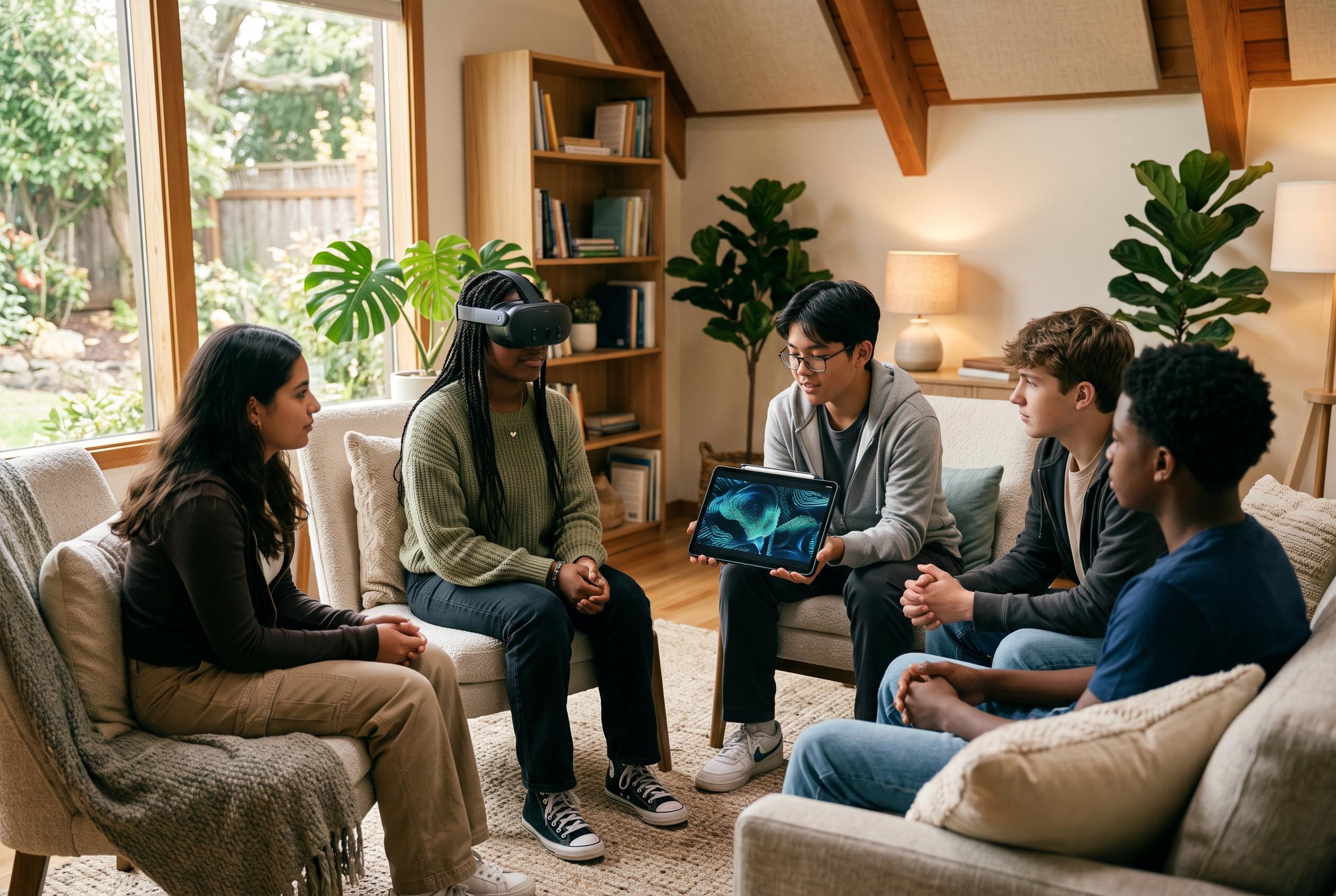

Researchers are transforming video games from sources of concern into innovative tools for supporting adolescent mental health, leveraging AI and virtual reality for personalised care and emotional resilience.
Video games are moving from a source of parental concern to a tool for mental health support, with researchers and clinicians increasingly looking at them as a way to build attention, resilience and coping skills. According to JMIR correspondent Benedette Cuffari, serious games are being designed around established psychological methods, while some commercial titles are also being studied for their potential to ease distress and support emotional well-being.
That shift matters most for adolescents, who are especially likely to develop mental health conditions during a period when the brain is still highly adaptable. Cuffari notes that many disorders first appear in the teenage years, yet access to care remains patchy: stigma, cost and unequal provision mean many young people do not get help when they need it. Left untreated, these problems can affect schooling, behaviour, substance use and suicide risk, which is why researchers are exploring options that are easier to reach and more engaging than standard care alone.
The clearest example is EndeavorRx, the first video game authorised by the US Food and Drug Administration as a prescription treatment for certain children with attention-deficit/hyperactivity disorder. The company behind it says the game is meant to sharpen attention by asking players to manage distractions and multitask in a structured environment, and it adjusts difficulty as performance changes. Clinical and consumer health coverage from the Cleveland Clinic and WebMD both stress the same point: it is designed to sit alongside medication, behavioural therapy and educational support, not replace them.
Researchers are also looking beyond prescription products. Cuffari writes that titles such as Gris may help players work through grief and reflection, while even demanding games such as Dark Souls have been linked in some studies to perseverance and emotional processing. Newer work is pushing further, including augmented reality projects such as LINA, which aims to strengthen peer connection among younger teens, and a pilot framework for a game called “World + You – World” that reported stronger engagement than conventional educational games. The next step, researchers say, is personalisation through artificial intelligence, virtual reality and physiological sensors that can tailor the experience to a player’s mood, attention and behaviour.
Disclaimer: This content is for informational purposes only and is not intended to be a substitute for professional medical judgment, advice, diagnosis, or treatment.