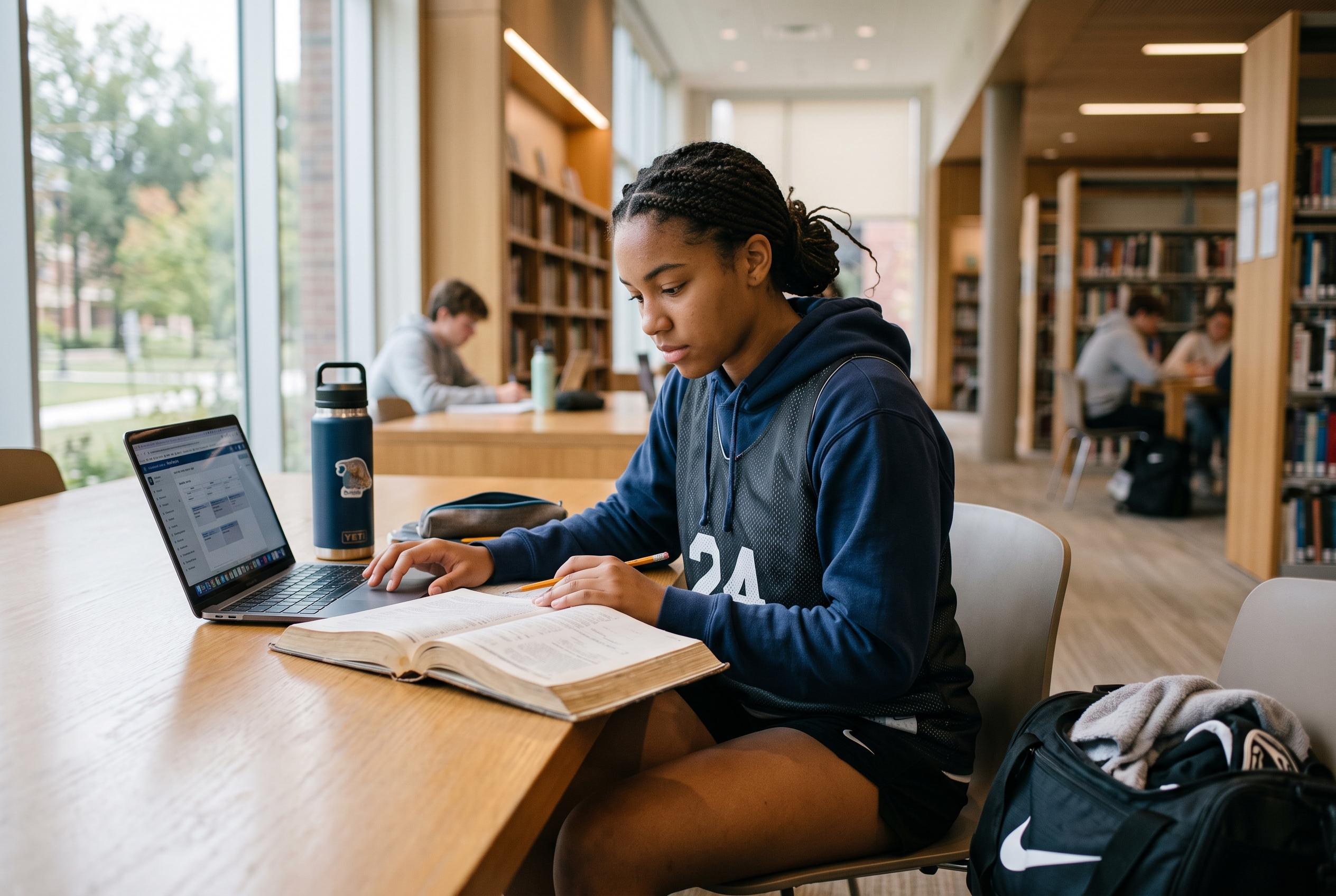

As student-athletes juggle schoolwork, training, and travel, educational institutions are increasingly providing specialised support services to help them balance their commitments and maintain well-being.
Student-athletes are often praised for discipline and resilience, but that admiration can hide a harder reality: many are trying to meet the demands of school, training, travel and home life at the same time. In the lead article, the author argues that this pressure is especially difficult for high school students, who can finish a full day of classes only to move straight into practice and then face hours of homework. Research cited by the National Federation of State High School Associations and the NCAA suggests that this is not just a local concern, but part of a wider pattern in which sport can take up a major share of a young athlete’s week.
The strain is not only physical. Frontiers in Sports and Active Living has reported that student-athletes often deal with overlapping academic and athletic stressors, which can affect performance and well-being. That concern is echoed by the college-level support systems now built around many programmes. East Los Angeles College’s Husky Athlete Support Centre offers tutoring, academic advising, counselling and even a snack centre, while the University of Delaware and Virginia Tech both run structured services that include study halls, tutoring, mentoring and academic monitoring.
Those examples point to a simple idea: talent alone is not enough if schools do not create room for athletes to succeed in both arenas. Bellevue University says coordinated academic support, including tutoring and faculty access, helps students stay accountable and keep up with coursework. Oregon State University takes a similar approach through its Academic for Student-Athletes team, which helps students choose majors, plan classes and manage weekly workloads. Together, those programmes suggest that flexibility and planning can make dual commitments more manageable rather than less demanding.
For younger athletes, that kind of support may be even more important. The lead article highlights how missed classes, late assignments and fatigue can quickly become a cycle that pushes students behind academically, even when they are trying hard to keep up. A stronger response from schools would not mean lowering expectations. It would mean recognising that the same students who are expected to compete, travel and perform are also expected to complete their schoolwork on time and stay mentally well. The question, then, is not whether student-athletes should work hard. It is whether schools are doing enough to help them carry that load.
Disclaimer: This content is for informational purposes only and is not intended to be a substitute for professional medical judgment, advice, diagnosis, or treatment.