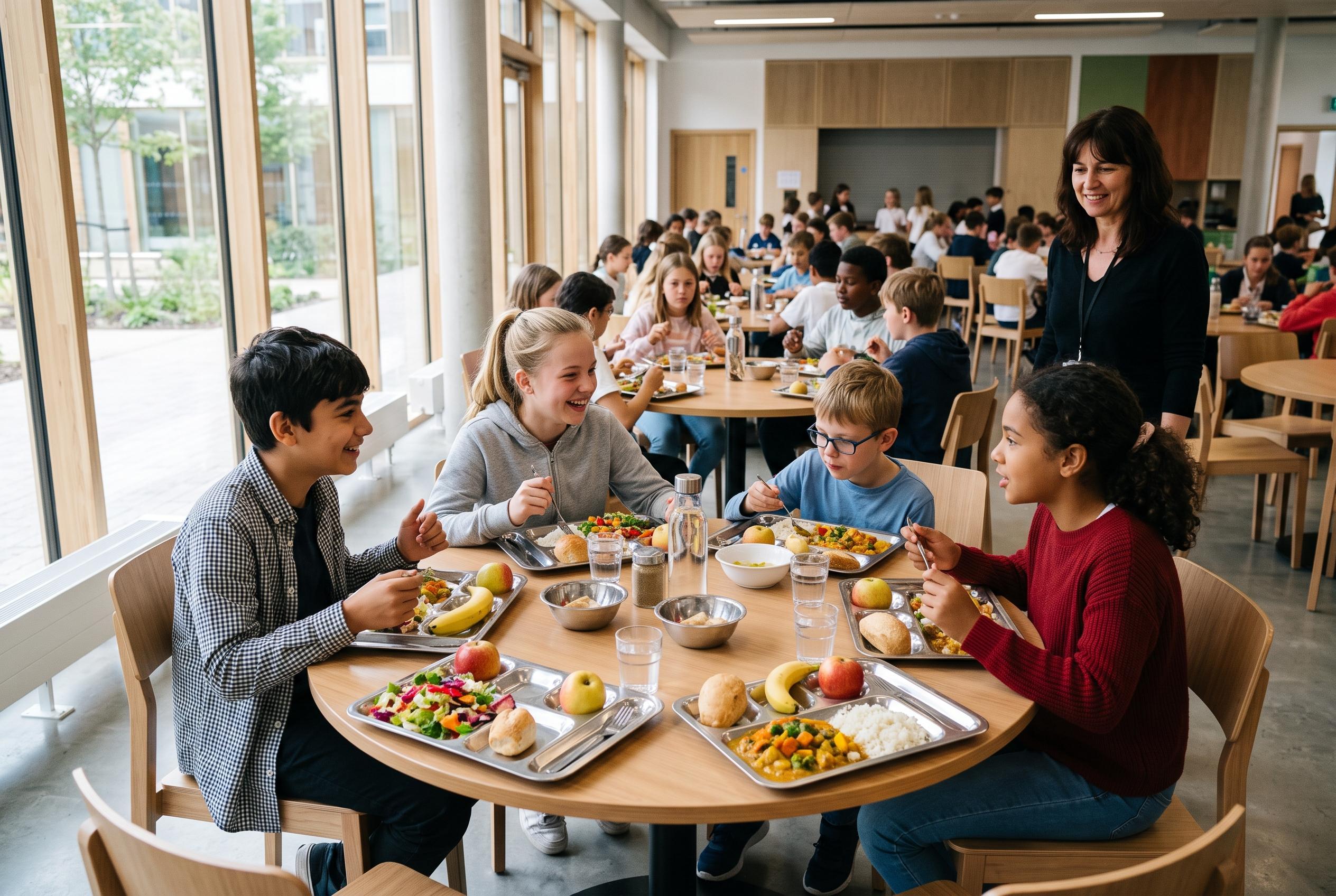

Poland has introduced updated school meal regulations featuring plant-based options, increased fruit and vegetables, and water, aiming to curb obesity and support environmental sustainability amidst political debate.
Poland’s new school meal rules, which took effect on 1 September 2026, are set to reshape what children eat in nurseries and classrooms, with the health ministry saying the changes are designed to curb ultra-processed food and encourage better habits from an early age. According to the ministry and local public health offices, menus should now include at least one fully plant-based meal a week built around legumes, soups made with vegetable stock at least twice weekly, more fruit, vegetables and wholegrains, and water as the preferred drink.
The updated standards replace rules that had been in force since 2016 and were drafted to match Poland’s current nutrition norms, as set out by the National Institute of Public Health. Health officials have linked the reform to the country’s growing obesity problem, citing WHO COSI data showing that roughly a third of primary-school-aged children are overweight or obese, while about 15% of eight-year-olds have obesity.
The ministry also says the broader aim is not only to improve diets but to support a model of eating that is better for the environment. That approach echoes the so-called planetary diet, which combines nutritional goals with lower environmental impact, and the government has paired the policy with fresh health screening plans, including the September rollout of the WOBASZ DZIECI study to look for early cardiovascular risk factors.
The changes apply alongside existing rules under education law, which require primary schools to give pupils access to at least one hot meal a day and a safe place to eat, though not necessarily a canteen. Schools may provide food through a kitchen, dining room or catering, while parents pay only for the ingredients in the meal. The Education Ministry said 2,033,790 pupils used school meals in the 2025/26 year, including 1,942,503 in public schools.
Funding remains available to help local authorities upgrade school kitchens and dining rooms. Under the government’s “Posiłek w szkole i domu” programme, public primary schools can receive up to 80,000 zlotys for kitchen and canteen equipment and 25,000 zlotys to adapt dining spaces. The Education Ministry said 35.9 million zlotys was allocated in 2026 for 641 public primary schools, following 38.6 million zlotys in 2024 for 671 schools and 36.2 million zlotys in 2025 for 607 schools.
The policy has already triggered political backlash. Opposition figures described it as ideological overreach, while Mateusz Morawiecki, the former prime minister and now leader of the Rozwój Plus group, mocked the reform by saying children would get soy instead of pork cutlets. Barbara Nowacka, the education minister, dismissed the row as an argument against healthy eating, saying the real issue is rising obesity and poor fitness among children. The dispute echoes earlier fights over school food, including the 2015 crackdown on so-called junk food in school shops, which was later softened when drożdżówki and other items returned under revised rules in 2016.
Disclaimer: This content is for informational purposes only and is not intended to be a substitute for professional medical judgment, advice, diagnosis, or treatment.