
Research using a custom-designed computer game indicates that differences in sensory integration, rather than autism alone, may influence learning and perception, highlighting potential benefits of structured environments for autistic learners.
Researchers at Boston University have used a computer game to probe how autistic people process visual information, adding to evidence that differences in perception may be tied to how the brain handles sensory input rather than to diagnosis alone. The work, published in Science Advances, tested participants with GEODE, an online task built to measure visual decision-making through brief flashes of light and simple reward feedback, a design intended to make the study accessible across a wide range of abilities.
In the study, autistic participants were able to complete the game, but they learned more slowly and were less accurate than typically developing siblings, particularly when the task became more complex. The researchers said those patterns were best explained by added variability, or “noise”, in how sensory evidence was combined, rather than by autism as a broad label on its own. A related summary of the preprint described the same finding as altered perceptual integration linked to higher-order visual processing.
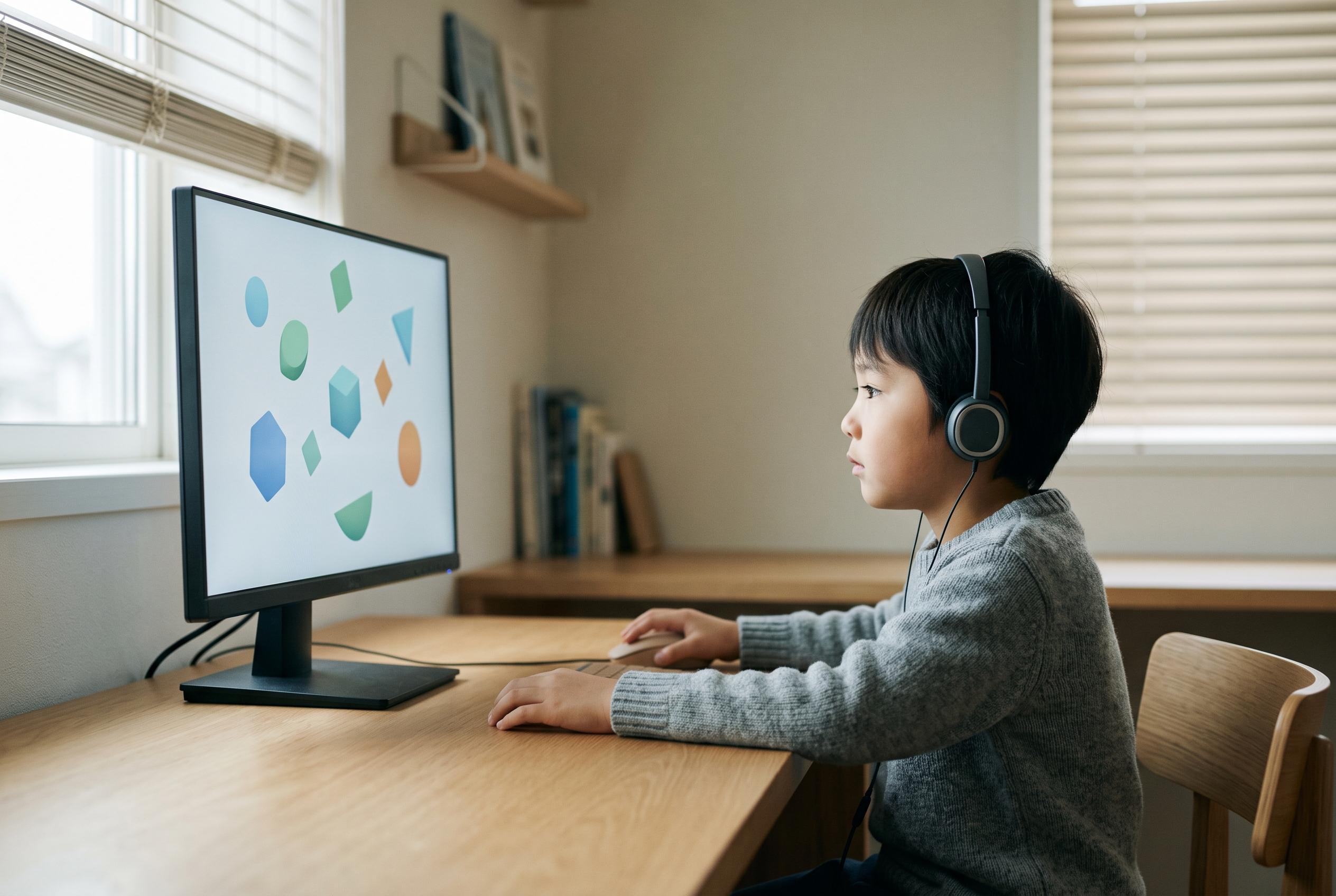
The appeal of the work lies partly in its design. According to the report from EurekAlert!, the game was developed to be non-verbal, touchscreen-friendly and usable by people across the autism spectrum, including some who are often left out of conventional lab studies. The authors also compared autistic participants with siblings, used carefully controlled stimuli and tested whether artificial neural networks exposed to similar noise would reproduce the same learning patterns, strengthening the case that the effect is computational rather than simply behavioural.
Still, the practical lesson for parents, teachers and therapists is less dramatic than the neuroscience might suggest. The study does not show that everyday learning problems in autism can be solved simply by removing all distraction, and the researchers themselves frame the findings as a mechanism for further investigation rather than a direct classroom prescription. Even so, the results support a familiar idea in special education: many autistic learners may benefit from environments that reduce sensory overload and present information in clear, structured ways.
Disclaimer: This content is for informational purposes only and is not intended to be a substitute for professional medical judgment, advice, diagnosis, or treatment.