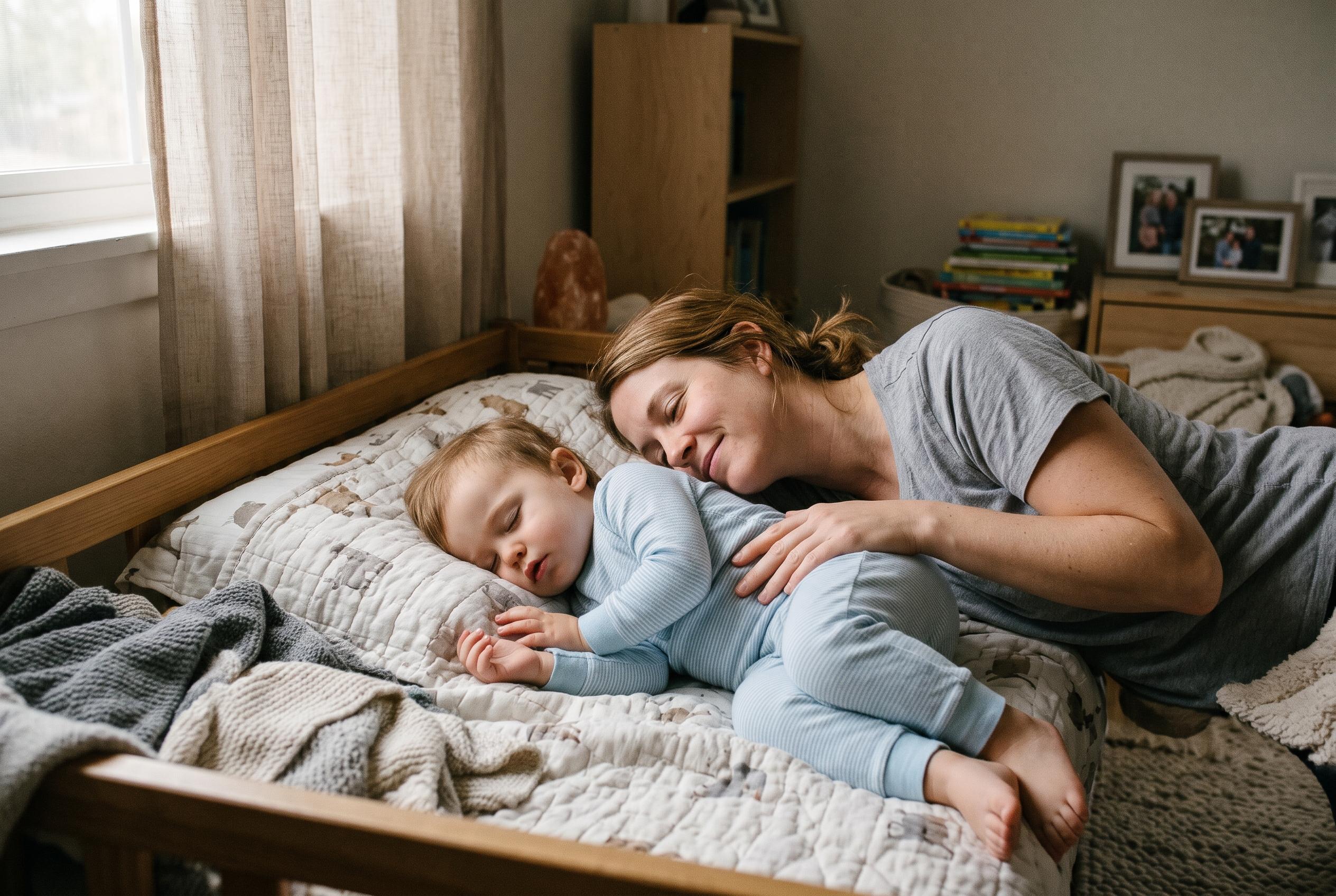

New research suggests bed-sharing during infancy is not linked to later anxiety or depression, while arrangements that begin in toddlerhood or early childhood may reflect underlying distress or family pressures.
Bed-sharing in the first year of life does not appear to raise the risk of later anxiety or depression, but the picture changes when it begins after infancy, according to new research drawing on the Avon Longitudinal Study of Parents and Children. The findings suggest that timing matters more than the sleep arrangement itself, and that later bed-sharing may be a sign that a child or family is already under strain rather than a direct cause of emotional problems.
The study’s authors report that children who were sharing a bed at six months old did not show higher rates of anxiety or depression later in childhood or adolescence. That fits with earlier work by the same researchers, who found no evidence that bed-sharing in infancy was linked to poorer mental health or less secure attachment. Taken together, the studies challenge the assumption that a parent and infant sleeping together is inherently damaging.
A different pattern emerged when bed-sharing started later. Children who began sleeping in a parent’s bed in toddlerhood, around 18 months, or in early childhood, around age 3.5, were more likely to be diagnosed with anxiety later on. The researchers estimate that those children had roughly three times the odds of anxiety at age 8 compared with children who did not bed-share. A separate study indexed on PubMed also found that persistent bed-sharing was associated with higher odds of psychiatric disorders and internalising problems at age 6, although that work did not focus on when the arrangement began.
Even so, the researchers caution against reading the findings as proof that bed-sharing causes anxiety. A more likely explanation, they say, is that a child who suddenly wants to sleep with a parent may already be coping with nightmares, separation worries, sleep disruption or stress at home. The study also found that later-onset bed-sharing was more common in families facing other pressures, including child sleep problems, maternal mental health difficulties, single-parent households and social and economic disadvantage. Research in other areas has likewise shown that family adversity and maternal anxiety can be linked with later emotional difficulties in children.
For parents, the message is less about the bed and more about the context. Occasional bed-sharing, especially during illness, upheaval or a difficult patch, is not a reason for alarm. But if the habit appears suddenly in toddlerhood or early childhood and seems tied to distress, nightmares or separation fears, the underlying issue may deserve attention. In that sense, the researchers argue, the more useful question is not whether bed-sharing is good or bad, but what is prompting a child to seek closeness at night.
Disclaimer: This content is for informational purposes only and is not intended to be a substitute for professional medical judgment, advice, diagnosis, or treatment.