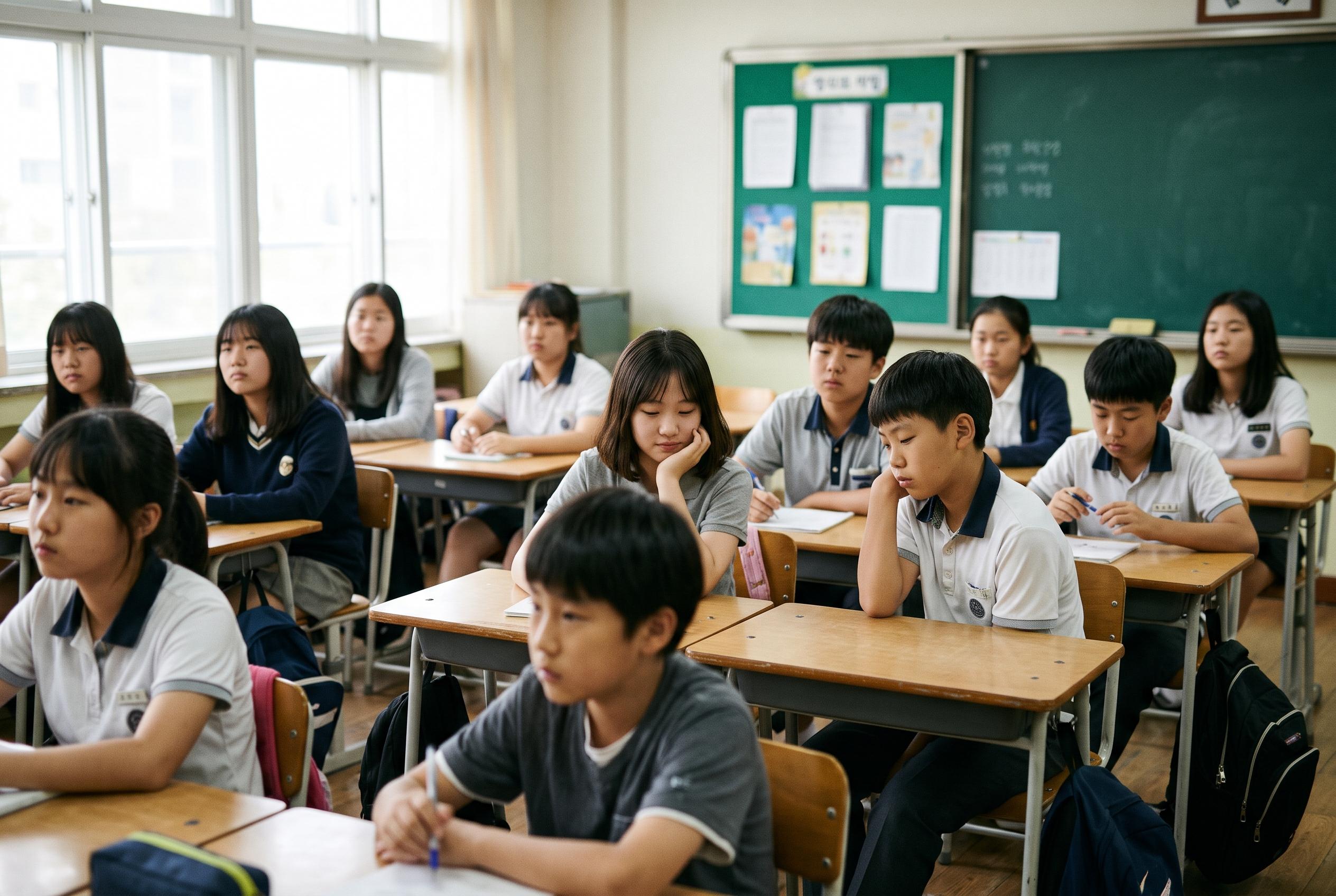

More than one in four middle school students reported severe depressive feelings in a 2025 survey, with younger pupils exceeding high school students for the third consecutive year.
South Korea is seeing a worrying mental health pattern among younger teenagers, with middle school students reporting depressed feelings at a higher rate than older high school pupils for a third year in a row, according to data released by the Korean Educational Development Institute and reported by Vietnamese state media and South Korean newspapers.
The institute’s 2025 survey found that 26.2% of middle school students said they had experienced feelings of depression, compared with 25.1% of high school students. The study defined those feelings as sadness or despair severe enough to disrupt everyday life for at least two consecutive weeks in the previous year. Korea Times and the Korea Herald said the gap between the two age groups has now persisted for three straight years, suggesting that the pressure on younger adolescents is not easing.
The figures sit against a broader backdrop of concern over youth suicide in South Korea. The education ministry said 112 students from primary, middle and high school died by suicide in the first half of this year, including 43 middle school pupils, or 38.4% of the total. Vietnam Plus also cited ministry data showing 244 student suicides in 2025, of which 92 involved middle school students. Earlier reporting by the Korea Times said student suicides hit a record 214 in 2023, with middle school students accounting for about a third of cases.
Public health concern extends beyond schools. The Korea Times reported in May 2024 that suicide remained the leading cause of death among people aged nine to 24 in South Korea, underscoring the scale of the challenge facing families, schools and policymakers. The latest education data adds to that picture by showing that mental distress among middle school students is not only high, but in some years worse than among older teenagers, a sign that targeted support may be needed earlier in adolescence.
Disclaimer: This content is for informational purposes only and is not intended to be a substitute for professional medical judgment, advice, diagnosis, or treatment.