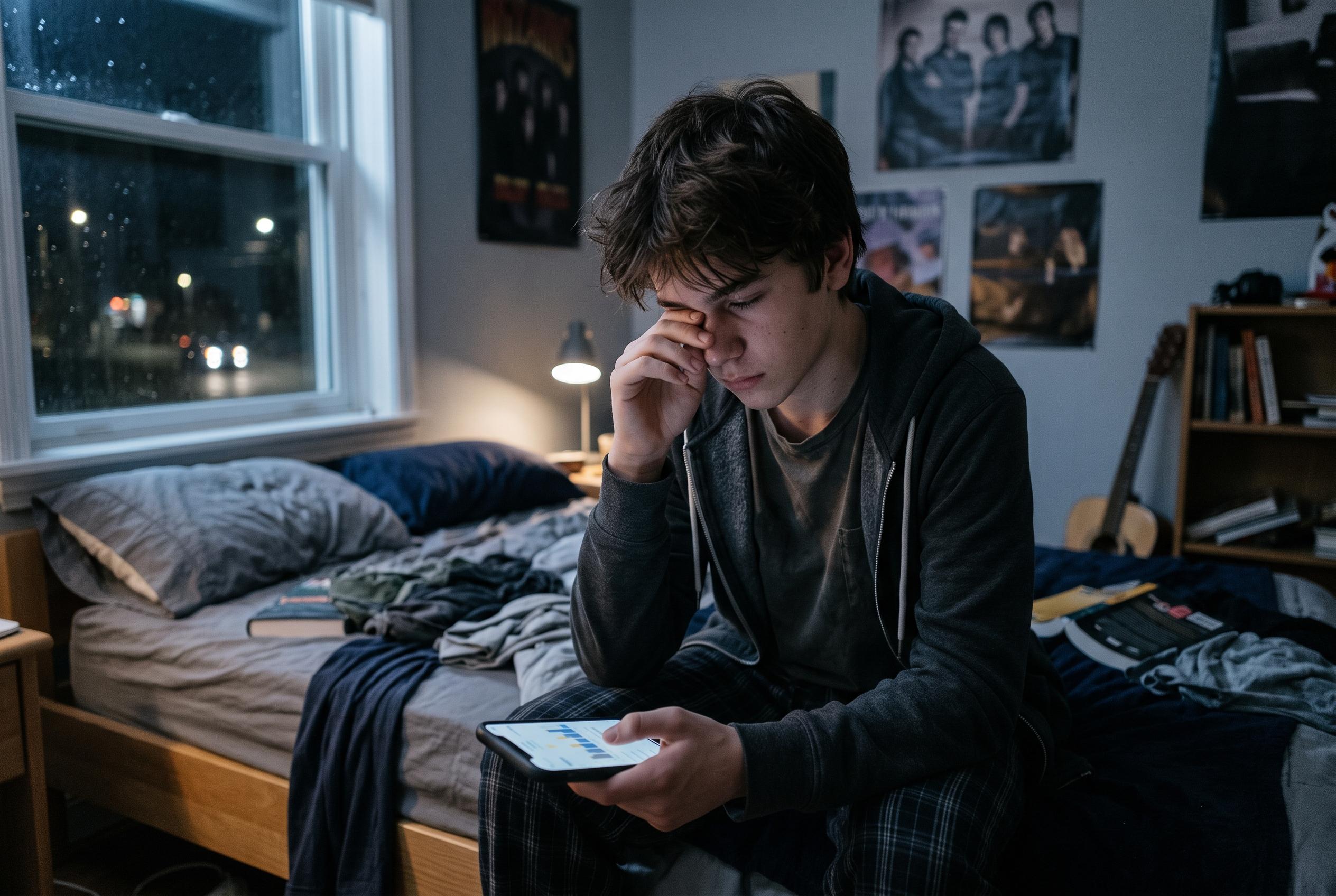

Research based on the Future of Families and Child Wellbeing Study reveals that teenagers experiencing irregular or poor-quality sleep face higher chances of hospitalisation and health issues in early adulthood, highlighting the importance of consistent sleep in adolescence.
Teenagers who struggle with irregular or poor-quality sleep may face worse health outcomes in early adulthood, according to research based on long-term data from the Future of Families and Child Wellbeing Study. Scientists tracked nearly 300 adolescents with wrist actigraphy, a device that records movement to estimate sleep, and analysed insomnia symptoms in a larger group of more than 2,000 young people, then compared those findings with overnight hospital stays, general health and life satisfaction at ages 15 and 22. The study suggests that sleep problems in the teen years can echo well beyond adolescence.
At age 22, the chance of having spent a night in hospital during the previous year was almost 2.5 times higher among those who, at 15, had more mismatch between sleep timing on schooldays and weekends. The risk was about twice as high for young people whose bedtime varied more from night to night, and 66% higher among those who reported difficulty falling asleep at least twice a week. The results point not only to sleep duration, but also to regularity and timing, as important markers of adolescent health.
The researchers said sleep remains essential to health and stressed that the quality of rest matters alongside how long a teenager sleeps. They recommended that people aged 13 to 18 get eight to 10 hours of sleep each night on a regular schedule. Dr Gina Marie, the lead author, said that improving sleep consistency and easing insomnia symptoms in adolescents could help protect young adults’ health, wellbeing and overall quality of life. She added that early attention to sleep health may have lasting effects into the early adult years.
Other studies underline why objective sleep tracking is useful in young people. Research published in Sleep found that wrist actigraphy is a reliable way to assess adolescent sleep, while another study in the same field reported that a first night of actigraphy should not be dismissed when collecting data from teenagers. Separate work has also linked sleep duration, timing, maintenance efficiency and night-to-night variability with academic functioning, suggesting that sleep patterns may affect both classroom performance and later health.
Disclaimer: This content is for informational purposes only and is not intended to be a substitute for professional medical judgment, advice, diagnosis, or treatment.