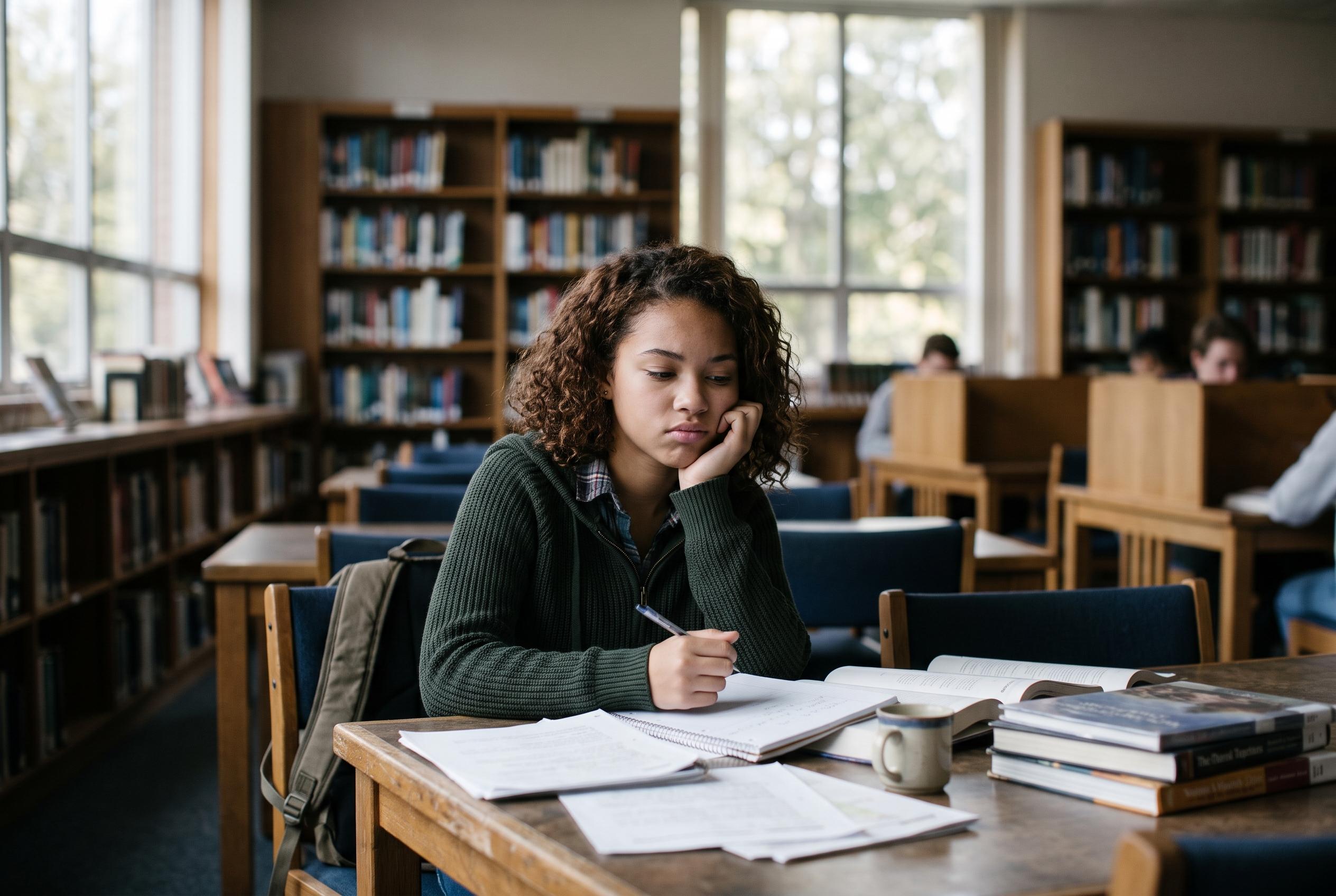

School psychologists say high-achieving students are increasingly seeking help over academic expectations, family pressure, online exposure and fear of falling short.
Selective schools are often presented as the pinnacle of the public system, places where the highest-performing students are gathered and results are closely watched. But school psychologist Lisa O’Sullivan says that inside those classrooms, another reality is playing out: a steady stream of children and teenagers seeking help for stress linked to achievement, family expectations and the fear of falling short.
O’Sullivan, who has worked across public schools on Sydney’s northern beaches and previously at Northern Beaches Secondary College Manly Campus, said academic pressure was the dominant reason many students came to see her. In some cases, she said, that pressure was reinforced at home by parents who had already mapped out a future for their children, including ambitions the students themselves did not always share. Her experience reflects a wider concern among educators and researchers that high-achieving environments can magnify anxiety rather than ease it.
That worry is backed by research. A 2023 study in Psychology in the Schools found that parental achievement pressure was linked with higher psychological symptoms in high-performing students, with perfectionism and academic expectation stress acting as important pathways. A 2026 study in Frontiers in Psychology reached a similar conclusion, finding that excessive emphasis on academic success could increase psychological burden, undermine self-esteem and leave students less able to adjust well at school. Earlier research has also suggested that selective schooling itself does not necessarily improve health outcomes, even if it is associated with higher academic attainment and more advantaged backgrounds.
The pressure is not confined to marks and league tables. O’Sullivan and other school psychologists described growing challenges linked to sleep deprivation, friendship tensions, relationships and exposure to troubling content online. They said some children are arriving with knowledge of self-harm, eating disorders and suicide that they have picked up through phones and social media before they are emotionally ready to make sense of it. The youngest students raising serious concerns can be in primary school, which underlines how early these problems can surface.
The NSW government says it has expanded school-based mental health support, recruiting more than 260 counsellors and psychologists and lifting the public school workforce to more than 1,500. Education Minister Prue Car said supporting the wellbeing of students was one of the government’s most important responsibilities. Yet practitioners remain divided over whether policy changes alone can keep pace with the realities of adolescence, technology and family pressure. Some are cautiously hopeful that wider measures, including the under-16 social media ban, may reduce exposure to harmful material. Others, like O’Sullivan, say the pressure in selective settings is still strong enough to send students searching for help.
Disclaimer: This content is for informational purposes only and is not intended to be a substitute for professional medical judgment, advice, diagnosis, or treatment.