
A Yettel survey finds rising screen time, growing cyberbullying and widespread anxiety over online approval, while fewer than half of parents monitor teenagers’ digital lives.
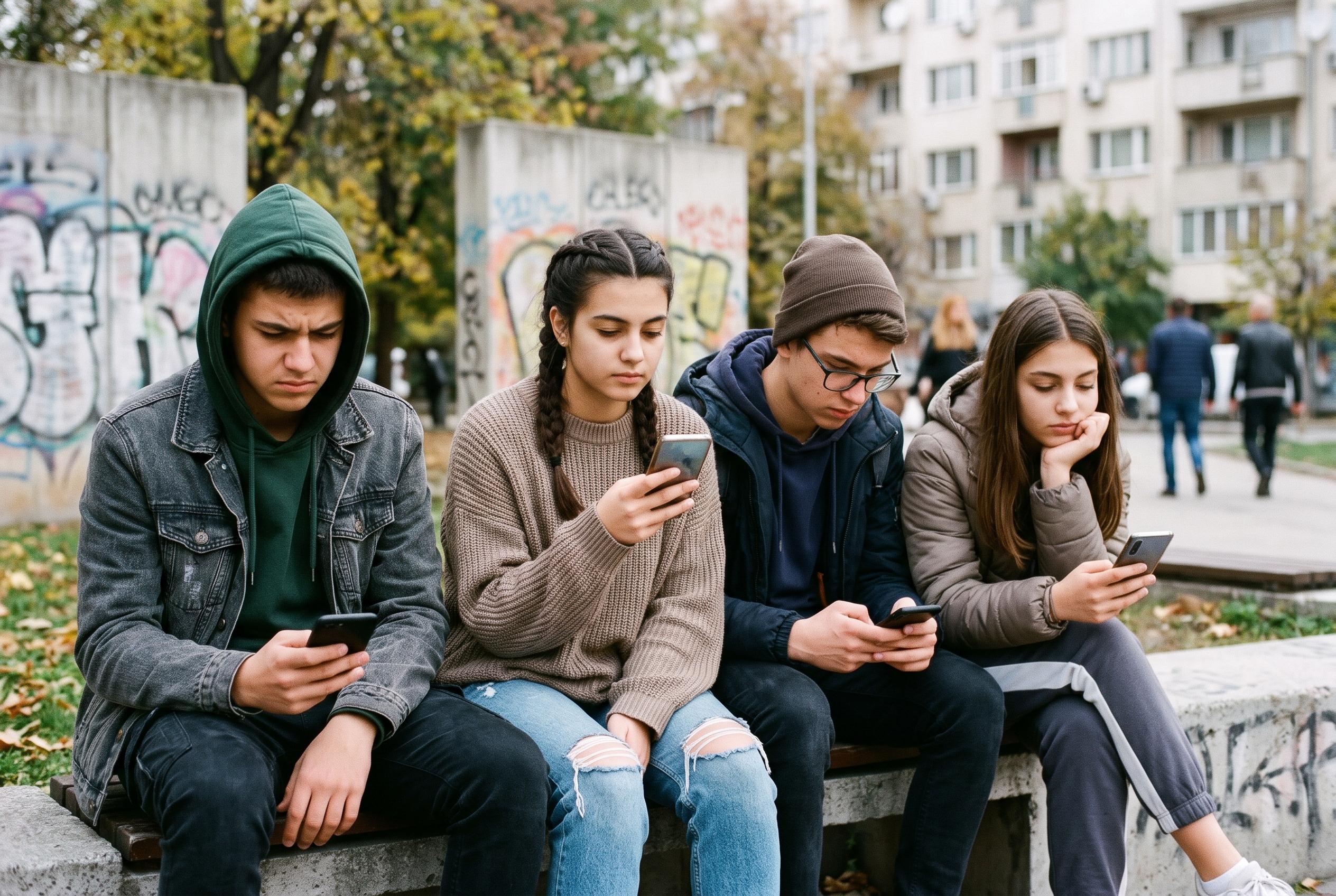
A new Yettel survey suggests that internet life is now shaping the emotions, habits and relationships of many children and teenagers in Bulgaria. The company’s “Digital Life of Children and Their Parents” study found that 56% of children aged seven to 12 and 61% of teenagers aged 13 to 19 believe online content can affect their feelings negatively, with the digital environment often linked to anxiety, insecurity and self-doubt. According to Yettel, the research was carried out with the market research agency Arbitrage.
The findings also point to longer and more intensive online use. Compared with the previous year, the share of teenagers spending more than four hours a day online has risen to 57% from 49%, while among younger children the most common pattern is between two and three hours a day. For children, gaming remains the main online activity, followed by chatting with friends, while teenagers are most likely to use the internet to talk to friends, listen to music, watch films or series, use social media and play games.
Social media appears to weigh more heavily on older children’s sense of self. The study says that around a third of teenagers compare themselves with peers and influencers online, and that this can leave them questioning whether they are good enough. Nearly half link their value to how popular they are on the internet. The report also found that 58% of teenagers keep checking whether a post has been liked after publishing it, while 54% worry about missing something important when they are offline, a pattern commonly known as FOMO, or the fear of missing out.
Parents are noticing the consequences at home. Six in 10 say they have seen at least one negative effect tied to their child’s time online, most often schoolwork and household duties being neglected, difficulty putting devices aside, and a constant urge to check notifications, profiles, chats and games. The research also suggests that fewer than half of parents of teenagers monitor what their children consume online, underlining a gap between children’s digital habits and adult oversight.
The survey also highlights the growing role of artificial intelligence and the scale of online harassment. More than 40% of teenagers now use AI tools, most often for homework, and 26% of those users say they have shared personal information, feelings or secrets with a chatbot. At the same time, reports of cyberbullying are up: 17% of younger children and 28% of teenagers say they have been targeted, compared with 12% and 23% a year earlier. Yettel says the results reinforce the need for parents, teachers and children to build safer digital habits, a goal the company says has guided its internet safety programme for 20 years.
Disclaimer: This content is for informational purposes only and is not intended to be a substitute for professional medical judgment, advice, diagnosis, or treatment.