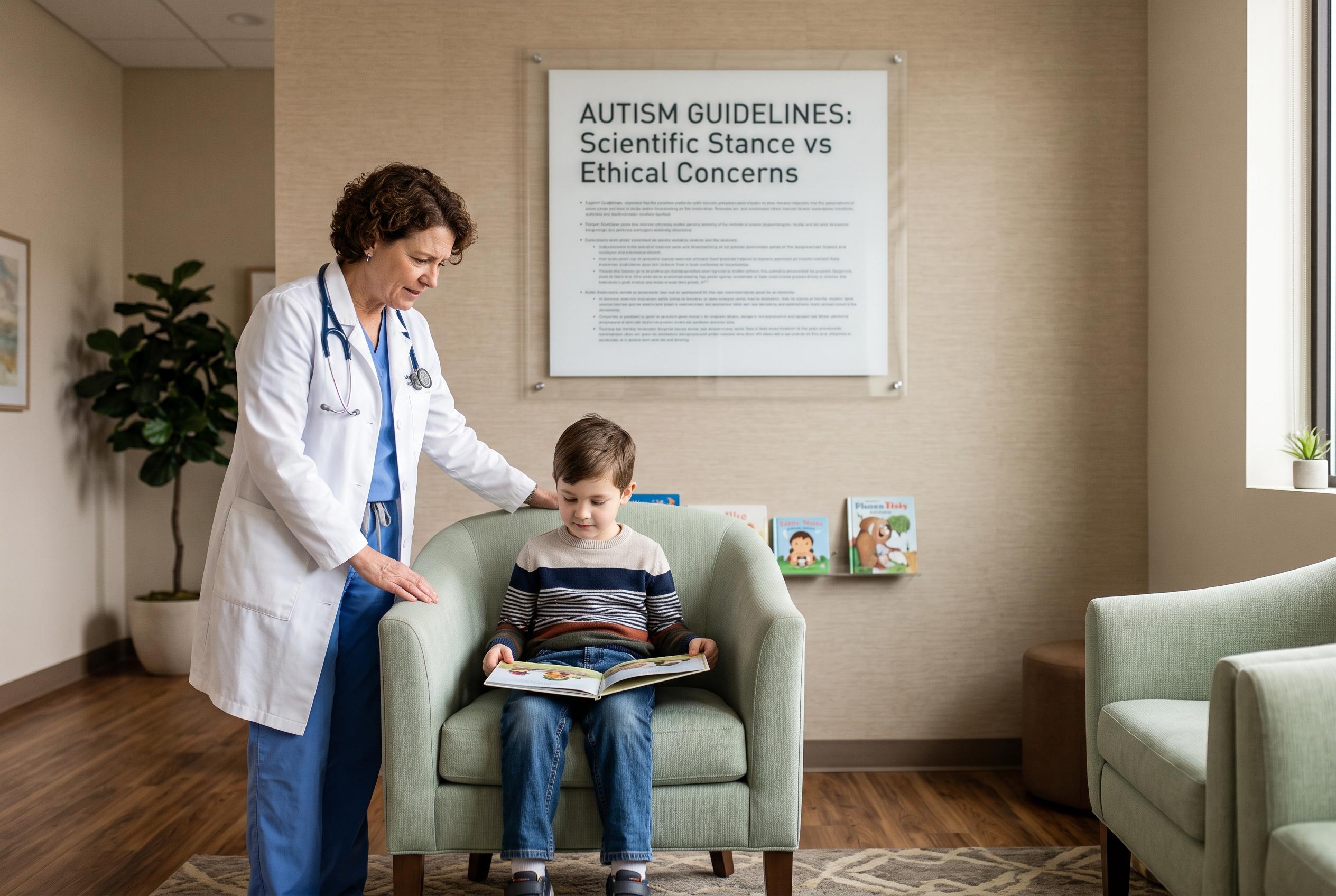

The American Academy of Pediatrics maintains its outdated autism treatment guidance despite internal and external ethical objections, highlighting a disconnect between scientific recommendations and evolving ethical standards surrounding aversive therapies.
The American Academy of Pediatrics has left itself in an awkward position. In October 2025, it reaffirmed its autism clinical report from 2020 without change, even though its legal team had previously argued in federal court that the Judge Rotenberg Center’s use of contingent electric shock on disabled people was unsafe and ethically indefensible. The result is two public positions that sit uneasily beside each other: one scientific document that still treats applied behaviour analysis as a first-line treatment and one legal filing that condemned the most extreme aversive practices associated with that same therapeutic tradition.
That tension matters because the federal government has already weighed in on the underlying issue. The Food and Drug Administration banned electrical stimulation devices in 2020, saying they were unsafe and lacked medical justification. The Judge Rotenberg Center challenged that decision, and the ban was later overturned on a narrow legal point about regulatory authority, not because the central safety concerns disappeared. In other words, the legal fight changed the status of the ban, but it did not erase the ethical and clinical objections that prompted it.
The broader debate over applied behaviour analysis is more complicated than either side often admits. A recent scholarly article in a SAGE journal revisited the ethical case for ABA, arguing that interventions for autistic people must be judged not only by effectiveness but also by whether they meet basic bioethical standards. That discussion reflects a long-running fault line in the field: ABA is widely used and often described as evidence-based, yet critics have long argued that some of its historical methods and current applications can be coercive or degrading. Recent data cited in the literature suggest that more than 81% of board-certified behaviour analysts work with autistic clients, which helps explain why the standards attached to ABA carry such wide practical weight.
The American Academy of Pediatrics itself has shown that it understands how much influence its words have. In a separate statement on autism, the organisation warned against false claims that vaccines or medicines cause the condition, saying such misinformation confuses families and harms children. That makes its silence in the reaffirmed clinical report more striking. When a professional body is willing to speak forcefully about evidence in one context, but leaves unresolved an ethical contradiction in another, the omission looks less like neutrality than institutional drift.
Other disability-rights organisations have been less hesitant. The American Association on Intellectual and Developmental Disabilities has called for the elimination of aversive procedures, arguing that practices involving pain or humiliation have no place in support for people with developmental disabilities. That position is consistent with the FDA’s original conclusion and with the AAP’s own legal argument. What remains unresolved is why the academy’s scientific arm did not align its autism guidance with that stance. For clinicians, insurers and state policymakers, the difference is not academic. Guidelines shape practice, and when they ignore a profession’s own ethical findings, they risk turning a procedural reaffirmation into a substantive failure.
Disclaimer: This content is for informational purposes only and is not intended to be a substitute for professional medical judgment, advice, diagnosis, or treatment.