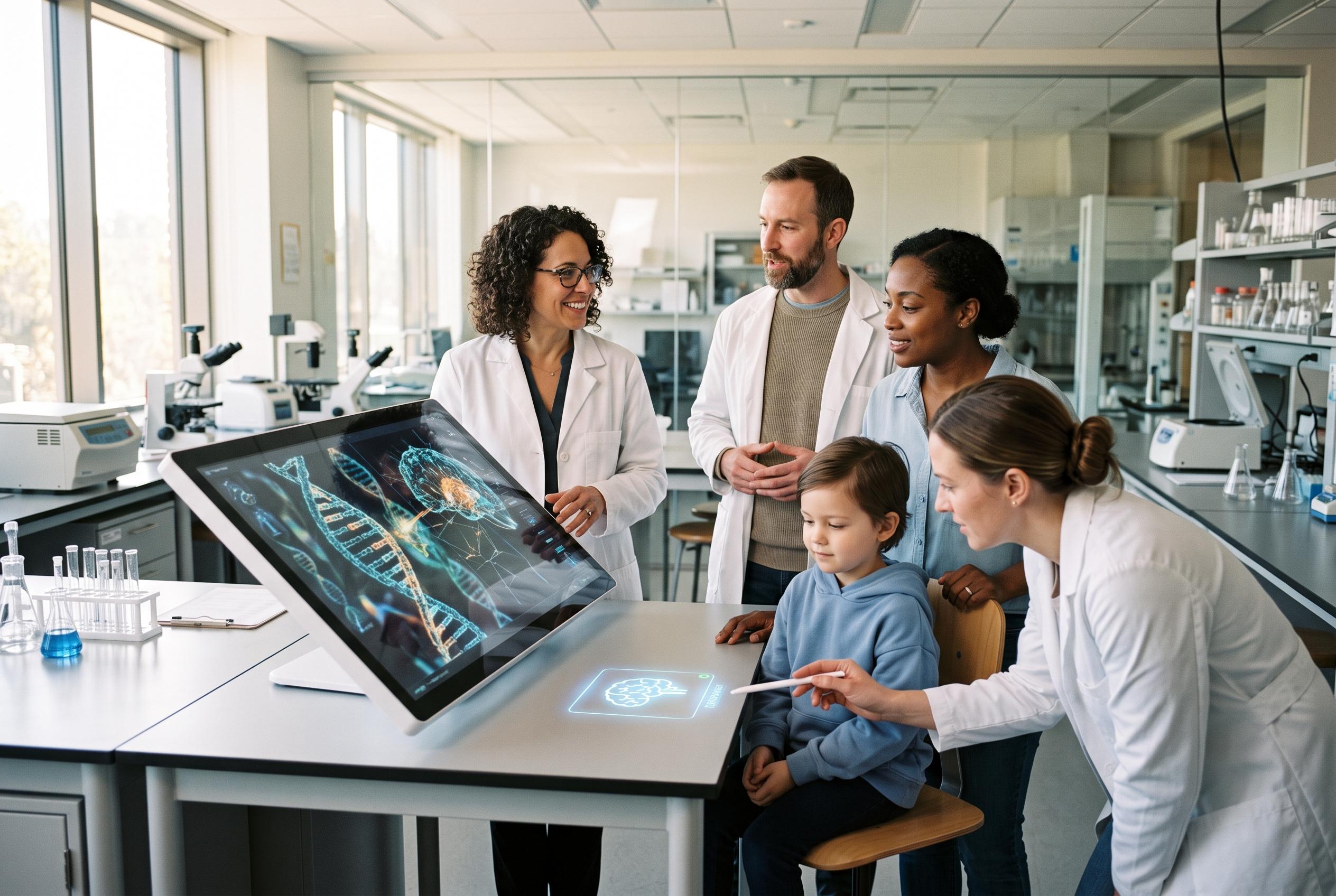

Dr. Ana Kostic at Mount Sinai advances personalised autism therapies by integrating genetics, neuroscience, and biomarker research, focusing on biological subtypes and rare genetic syndromes to develop targeted treatments.
Dr. Ana Kostic’s work at Mount Sinai sits at the junction of genetics, neuroscience and drug development, reflecting a growing effort to move autism research towards treatments tailored to specific biological subtypes. As director of drug discovery and development at the Seaver Autism Center for Research and Treatment, Kostic brings industry experience from Regeneron Pharmaceuticals and Kiniksa Pharmaceuticals to an academic setting focused on understanding autism biology as well as finding therapies, according to her Mount Sinai profile. The result is a programme that aims not to treat autism as one condition, but to match interventions to the diverse needs of different patients.
That approach is shaped by the reality that autism is highly varied. Researchers at the Seaver centre study the condition through epidemiology, clinical care and laboratory work, using model systems ranging from human induced pluripotent stem cells to genetically modified mice. Kostic has said the centre uses these simpler systems to test whether a biological finding holds up across platforms before moving a candidate drug towards patients. The team also looks for biomarkers, including EEG measures, that can be tracked in both preclinical work and human studies to increase confidence that a treatment is doing what it is supposed to do.
A major part of the strategy focuses on single-gene forms of autism, where a mutation or deletion in one gene is a clear driver of disease. That includes disorders such as ADNP syndrome and Phelan-McDermid syndrome, both of which have become important models for precision medicine in autism research. Mount Sinai launched the first drug trial for ADNP syndrome in 2020, testing low-dose ketamine in a small Phase 2a study, underscoring how rare genetic conditions can serve as entry points for wider treatment development. In Phelan-McDermid syndrome, the SHANK3 gene is a key target because disruptions to it affect synapse formation and neural communication, according to the National Centre for Biotechnology Information and Northwestern University’s autism research resources.
Kostic’s broader message is that treatment should be individualised. Even when a therapy helps one part of the autism profile, such as seizures or motor difficulties, it may not affect social communication or other challenges. That is why the Seaver centre’s researchers are trying to build a platform that can be adapted across multiple genetic conditions while still leaving clinical decisions to physicians who know each patient’s needs. In that sense, the work is as much about refining who should get a therapy as it is about inventing the therapy itself.
Disclaimer: This content is for informational purposes only and is not intended to be a substitute for professional medical judgment, advice, diagnosis, or treatment.