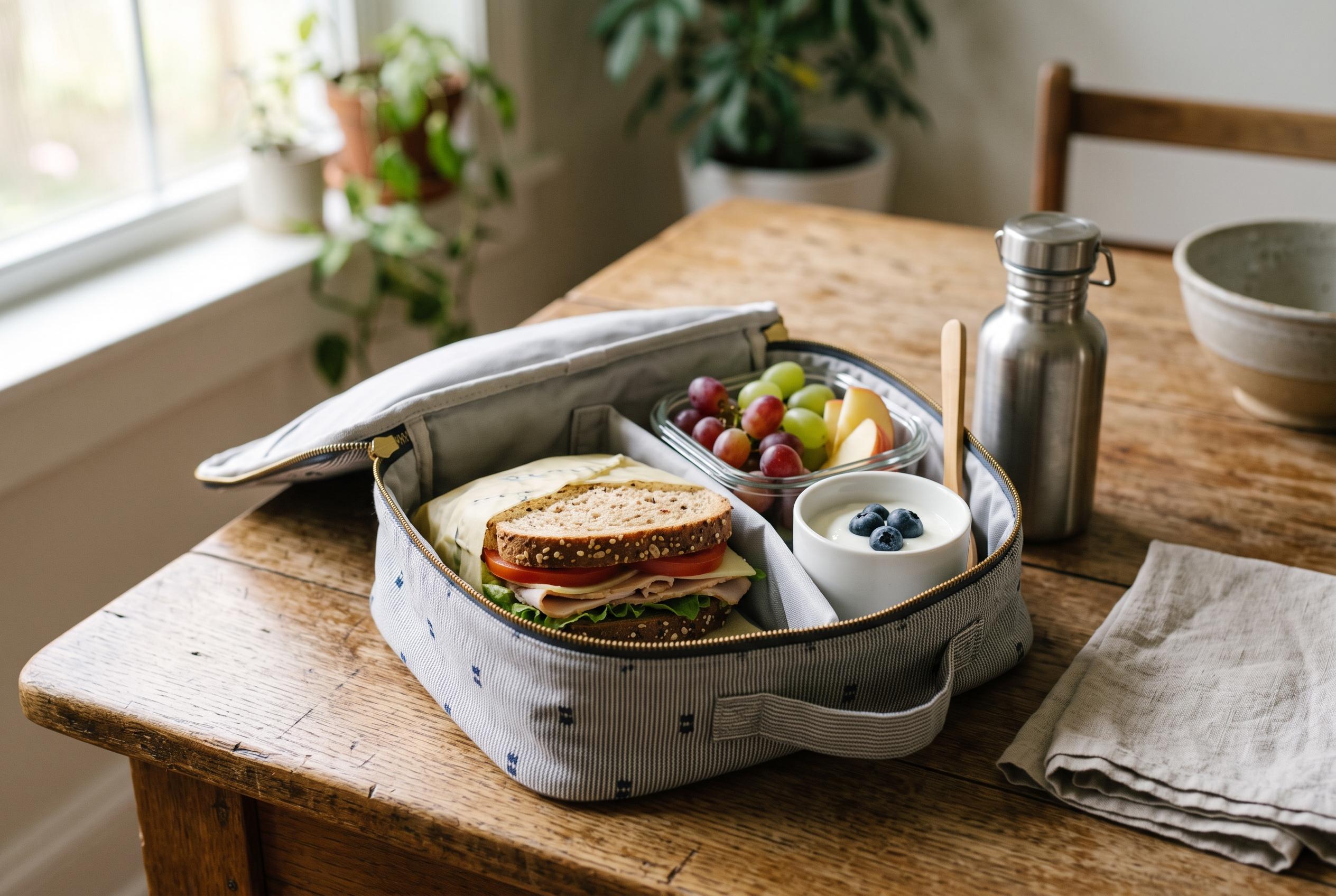

Nutrition experts emphasise that a straightforward, balanced approach to packing school lunches, focusing on variety, involvement, and practicality, can better support children’s learning and health than elaborate or trendy meals.
As the new school term approaches, nutrition specialists are urging parents to think less about elaborate lunchbox displays and more about a simple question: will the meal help a child stay full, alert and ready to learn through the afternoon? Across guidance from hospitals, dietitians and family-focused publishers, the consistent advice is that a strong packed lunch is built on balance, not novelty.
Ohio State University’s Wexner Medical Center says “balance is key” when putting together a lunchbox, recommending a mix of protein, whole grains, fruit, vegetables and a snack. Cleveland Clinic makes a similar case, but goes further by linking lunch quality to performance in the classroom, saying research suggests children’s academic results tend to improve when they eat a healthy meal in the middle of the school day. Its lunch framework is similarly straightforward: include protein, whole grains, fruit, vegetables and something “snacky” so children get steady energy and what the clinic describes as the brain fuel needed for the rest of the day.
That advice is paired with a warning that healthy lunches only work if children will actually eat them. Scripps Health says packed meals can be difficult because many children prefer processed foods and sugary drinks, especially if they are picky eaters. Its guidance argues that habits formed at home matter: children used to seeing fruit, vegetables, lean proteins and whole grains on the table are more likely to accept the same foods at school. Rather than treating lunch as a daily battleground, the aim, according to the Scripps advice, is to find a workable balance between nutrition, taste and ease.
Several of the sources say children should not be passive recipients of whatever is packed for them. Scripps recommends letting them help with practical tasks such as cutting up vegetables, choosing fruit, packing crackers, spreading peanut butter on whole-grain bread or building mini kebabs with cheese and grapes. Andrea Holwegner of Health Stand Nutrition is even more direct, writing: “As a Registered Dietitian and parent, I am a huge advocate for getting your kids involved in lunch packing.” Her approach is to offer choice while still nudging variety, mixing favourites with less familiar foods so lunch does not become monotonous.
The public-health message extends beyond food groups alone. In a back-to-school post published in August 2025, Lori Wiggins of UF/IFAS Extension Taylor County said good nutrition is one of the most important tools for setting students up for success. The post argues that balanced meals, hydration and family engagement all support a child’s ability to focus, stay energised and learn, and presents the return to school as a moment to reset household habits rather than simply buy supplies and organise transport. That broader framing matters because it shifts lunchbox planning from a search for clever recipes to part of a family routine.
Practicality is another recurring theme. ParentMap, in a guide published on 25 August 2026, suggests parents lean on make-ahead strategies to ease busy mornings. Sandwiches can be prepared and frozen in advance, it says, while yoghurt, smoothies, muffins and even breakfast foods such as pancakes, waffles and French toast can be frozen and packed to thaw by lunchtime. Frozen grapes and berries can serve a similar purpose. The same guide recommends segmented bento-style containers so foods stay separate, with each box containing a protein, a grain or other carbohydrate, a vegetable, a fruit and a small treat.
That has helped broaden the idea of what belongs in a school lunch. Health Stand Nutrition lists cold pizza quesadillas, chilled chicken fingers, pretzel dippers, homemade snack mix, fruit kebabs, quinoa yoghurt parfait and Hawaiian pizza bagels among its options, along with nut-free substitutions such as pea butter where school allergy rules require them. ParentMap suggests build-your-own lunches based on tacos, burritos, pizza or nachos, as well as quesadillas cut into small pieces and packed with guacamole or salsa. Cleveland Clinic, meanwhile, recommends “fun and healthy” extras including air-popped popcorn, trail mix with nuts and dried fruit, graham crackers, pretzels and whole-grain tortilla chips with salsa.
Experts also stress that presentation and convenience can matter almost as much as ingredients. Cleveland Clinic advises parents to cut fruit into manageable pieces, rotate menus instead of sending the same lunch every day and pay attention to what comes home uneaten. That last point is especially useful for families trying to improve nutrition without wasting money: an untouched lunchbox may say more about portion size, texture or timing than about whether a child likes a food in theory. Ohio State’s Wexner Medical Center makes a similar point in gentler terms, encouraging flexible staples that can be mixed and matched and reminding parents that progress does not depend on producing a perfect lunch every day.
Taken together, the advice suggests the best school lunches are rarely the most complicated. A sandwich or wrap can still work, but so can leftovers, pasta salad, yoghurt, vegetables with dip or freezer-friendly breakfast items repurposed for midday. What matters, the health and family specialists say, is a pattern children can recognise and families can sustain: enough protein and fibre to keep hunger at bay, enough variety to prevent boredom, enough fluid to avoid dehydration, and enough child involvement to give the meal a chance of being eaten.
Disclaimer: This content is for informational purposes only and is not intended to be a substitute for professional medical judgment, advice, diagnosis, or treatment.