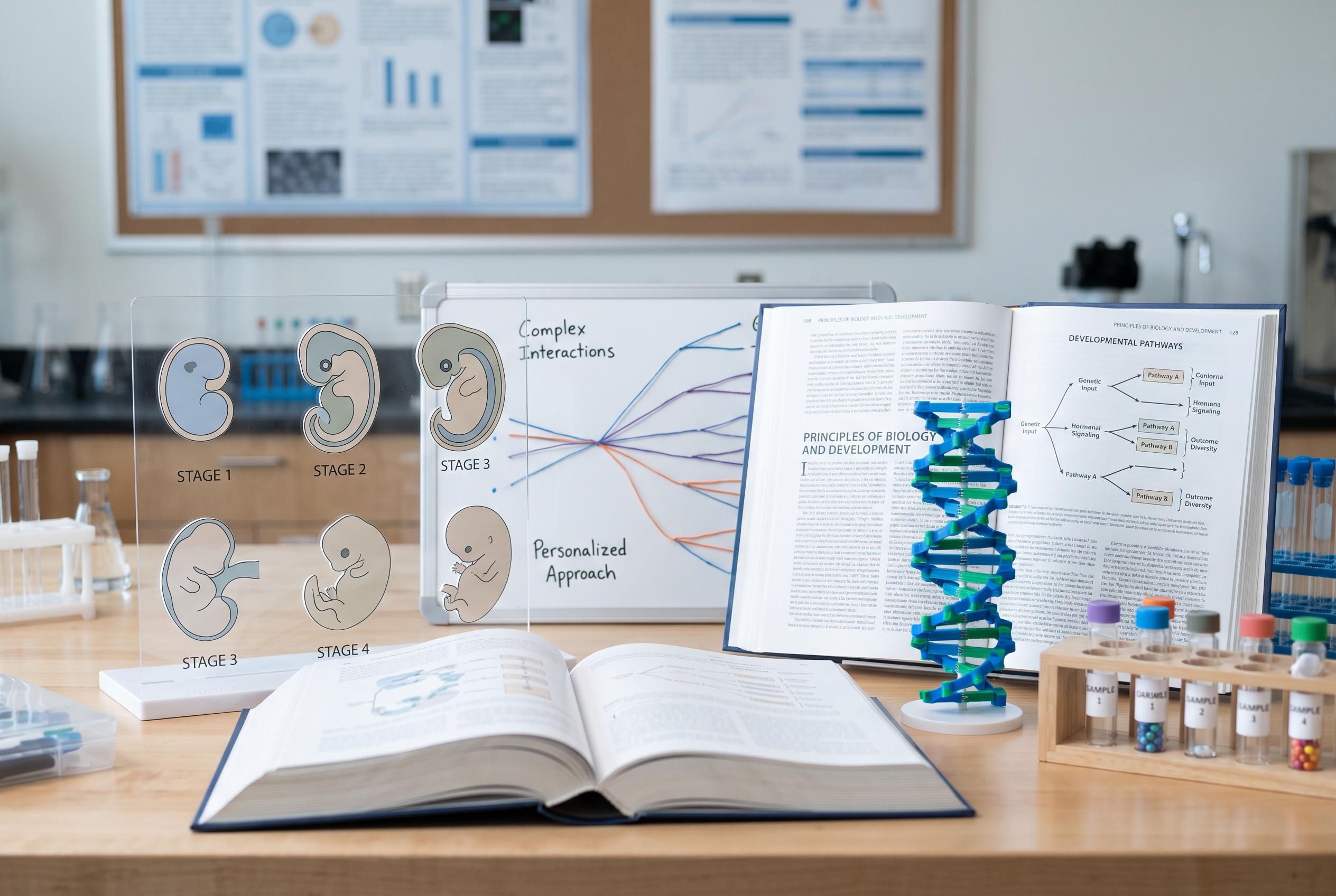

Emerging research underscores the intricate stages of sex development, revealing diverse biological pathways and emphasising personalised medical approaches for individuals with differences of sex development (DSDs).
Biological sex is not switched on by a single gene or hormone. It develops in stages before birth and continues through puberty, with chromosomes helping direct gonad formation, the gonads producing hormones and the body then responding to them. In most people, those steps align neatly. In others, they do not, and that is where differences of sex development, or DSDs, come in.
DSDs cover a wide range of conditions that affect chromosomes, gonads, hormone production or the body’s response to hormones. Because different parts of the pathway can be altered, two people with the same broad diagnosis may have very different bodies, medical needs and life experiences. That complexity also helps explain why sex development can look straightforward on the outside while being biologically varied underneath.
One example is congenital adrenal hyperplasia, a group of inherited conditions affecting the adrenal glands. Mayo Clinic and Johns Hopkins Medicine say classic cases are often detected at birth, while milder forms may not appear until later in childhood or adulthood. In some babies with two X chromosomes, excess androgen production can affect the appearance of the external genitalia, and treatment usually centres on hormone replacement.
Another condition, complete androgen insensitivity syndrome, shows the opposite problem: hormones are produced, but the body cannot use them properly. A person with XY chromosomes and testes may therefore develop typically female external genitalia at birth and only be diagnosed later, often when periods do not begin. According to the medical summaries, it is rare, affecting roughly one to five in 100,000 live-born females.
5-alpha-reductase deficiency illustrates that sex development does not end at birth. The condition affects an enzyme needed to convert testosterone into a stronger form before birth. MedlinePlus says an XY baby may be born with genitalia that appear female, then masculinise at puberty as testosterone rises. The condition has been reported more often in parts of the Dominican Republic, where it is known as guevedoces.
Chromosome variations can also alter sexual development. The NHS says Klinefelter syndrome, in which males have an extra X chromosome, is often undiagnosed and can reduce testosterone and fertility. Turner syndrome, in which one X chromosome is missing in females, can affect growth, puberty and fertility. Swyer syndrome is rarer still: an XY person may not develop testes because a key signal for testis formation is disrupted, leaving the person with typically female anatomy.
Researchers and specialist clinics have argued for better counselling, clearer information for families and more caution about irreversible surgery in childhood when it is not medically urgent. The broader lesson is not that sex is meaningless, but that it is a process rather than a single event. For people living with DSDs, the practical issues often involve hormone treatment, fertility, puberty and long-term support, not abstract debates about biology.
Disclaimer: This content is for informational purposes only and is not intended to be a substitute for professional medical judgment, advice, diagnosis, or treatment.