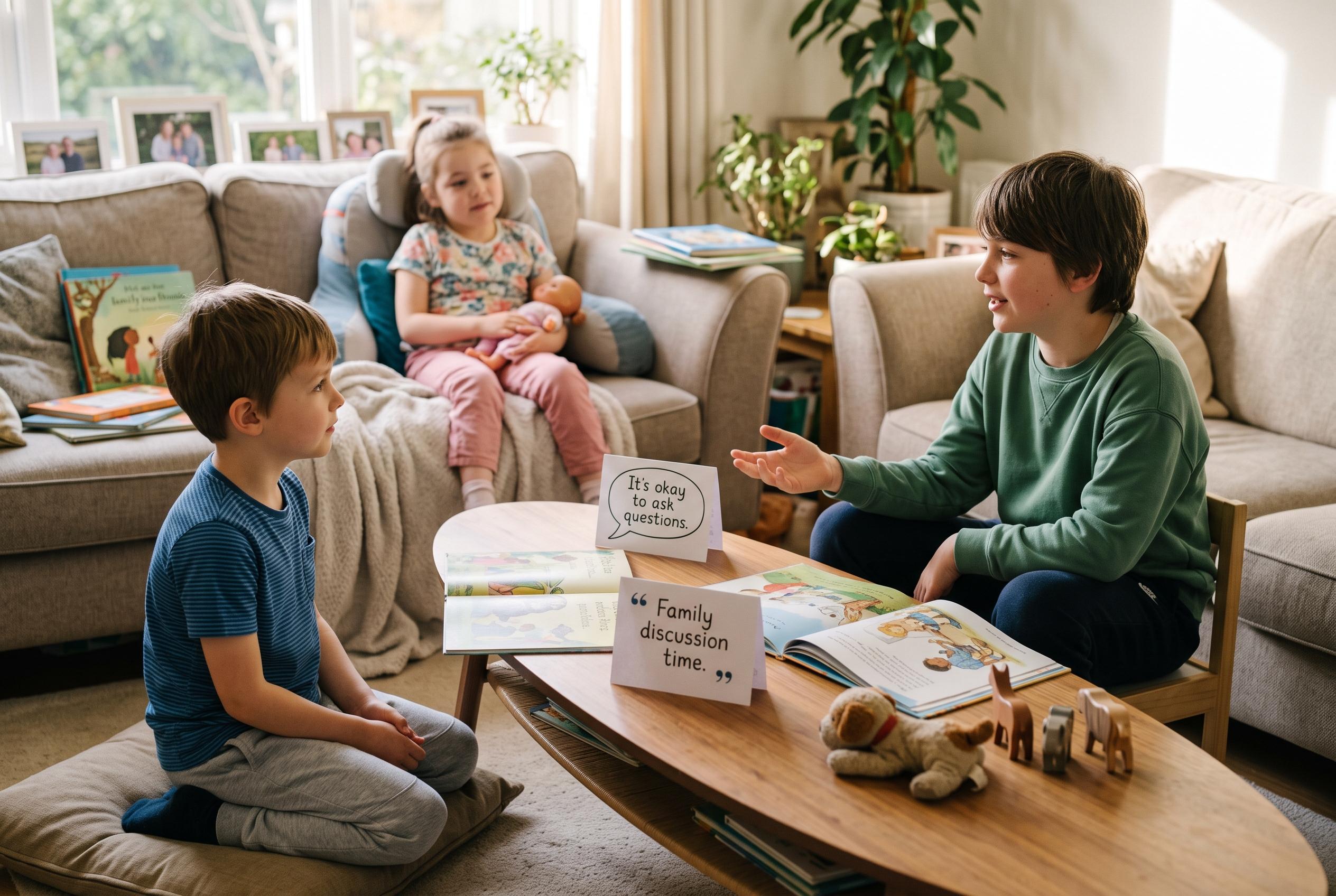

Experts highlight that open, age-appropriate dialogue with siblings of children with cerebral palsy fosters understanding, reduces confusion, and strengthens family relationships amid evolving questions and emotional responses.
When a child has cerebral palsy, the experience reaches beyond the child alone. Brothers and sisters often notice early that something is different: extra appointments, special equipment, different ways of moving or speaking, and more of a parent’s time and attention. Experts from Sibs, the UK charity for siblings of disabled children, say children are usually aware of these differences long before adults explain them, and that silence can leave them to invent explanations that are more frightening than the truth. The most helpful approach is honest, age-appropriate conversation that gives a child a clear, simple account of what they see.
For younger children, the language should stay concrete and brief. A child under five does not need a detailed medical explanation, but does need to understand that a brother or sister’s body works differently and may need support such as a wheelchair or a communication device. As children grow, they become more interested in causes, fairness and what other people will think. Sibs notes that siblings may worry, feel guilty or wonder whether the condition could have been prevented, while Navigate Life Texas warns that when adults avoid the subject, children often fill the gaps with their own assumptions.
Older children and teenagers usually need more than reassurance; they need inclusion. Sibs advises parents to answer difficult questions openly and to make space for mixed emotions such as jealousy, embarrassment, protectiveness and grief. That openness can strengthen sibling relationships and reduce confusion. Gillette Children’s Hospital also recommends treating cerebral palsy as an ongoing family conversation rather than a one-time announcement, because the questions change as children mature and the practical realities of family life change too.
The most reassuring message for siblings is often the simplest: they did not cause their brother or sister’s cerebral palsy, and they are not expected to become caregivers unless they want that role. Clear boundaries matter, especially in families under pressure. Parents are encouraged to protect one-to-one time with each child, avoid making siblings responsible for care, and explain in advance what to say when friends or classmates ask questions. If a sibling starts to withdraw, struggle at school or show anger and resentment, that can be a sign they need more support rather than a sign they are being difficult.
That support can also include outside help. Some families find it useful to let siblings attend selected appointments or therapy sessions, if the child wants to go and has been prepared for what to expect. For others, a private conversation with a counsellor or therapist gives the child space to speak freely about fears they may not want to share at home. The common thread across the guidance is that children do better when adults do not leave them guessing. Honest information, repeated over time, gives siblings a steadier sense of what cerebral palsy means for their family and for themselves.
Disclaimer: This content is for informational purposes only and is not intended to be a substitute for professional medical judgment, advice, diagnosis, or treatment.