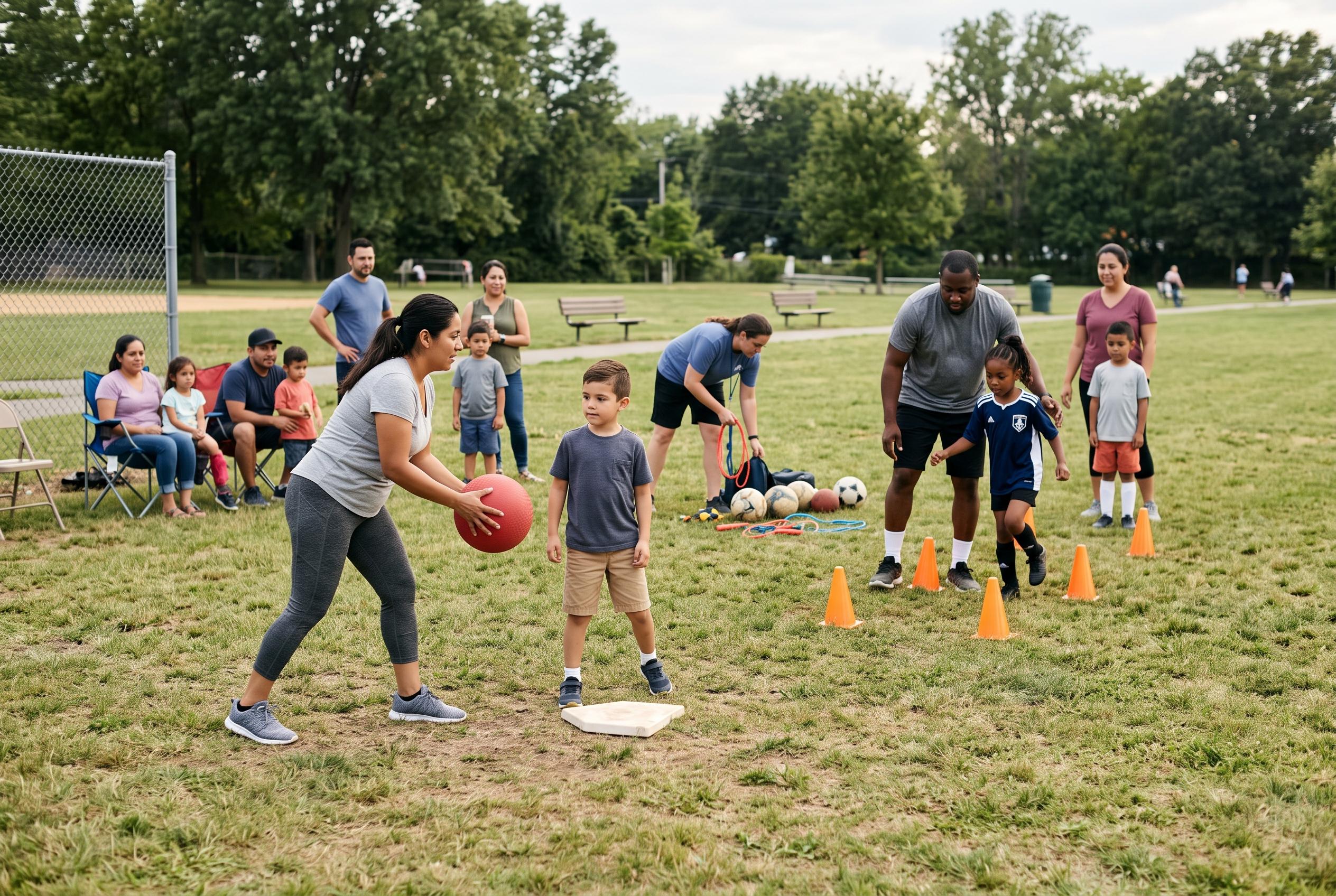

A new AP-Ipsos survey reveals that most families spend modestly on youth sports, with cost and time commitments shaping participation and attitudes towards safety and regulation in the sector.
For youth sports families, the biggest surprise may be how ordinary the economics look. A new AP-Ipsos poll suggests that most households are not spending the eye-watering sums often assumed by the industry: 68% of sports parents say they spend no more than $2,000 a year on equipment, fees, training and travel, while only 11% go above $5,000. The same survey found that 54% of parents with school-age children have at least one child in organised sports, offering a broad national snapshot of a market that is often viewed through its most expensive edge cases.
The poll also points to a clear divide between the families who can absorb the costs and those for whom youth sport is harder to sustain. AP reported that participation is much higher in higher-income households, with about 70% of parents earning more than $100,000 saying their children play organised sports, compared with 40% in lower-income families. Even so, the survey found that both groups spend similar amounts in absolute terms, which helps explain why fees, travel and equipment can feel more burdensome at the lower end of the income scale. Parents still say the value proposition is strong: the dominant reasons for enrolling children remain college prospects and scholarships, but character-building, teamwork and fitness also rank highly.
Inside the home, the pain points are less about the invoice than the calendar. Scheduling and the time commitment were each cited by 84% of sports parents as a major or minor challenge, ahead of club fees, travel and equipment costs. When parents were asked why a child had stopped playing, lost interest, lack of confidence and pressure to perform came before expense. That helps explain why many families say they are proud and happy rather than burned out, even as they acknowledge the strain. The AP-Ipsos survey found that 89% believe the benefits of youth sports outweigh the drawbacks for their family.
The poll also shows how the sport’s cultural footing is changing. Forty-four per cent of parents say the possibility of name, image and likeness earnings affects their decision to enrol a child, even though most still point first to college admission and scholarship opportunities. Football remains the clearest example of a shifting landscape: flag football now edges tackle football in current K-12 participation, and 47% of sports parents support banning tackle before high school. That concern is not new. In a 2015 Ipsos-Reuters poll, many Americans said they had heard about brain-injury risks, and in 2023 a majority of parents said they would let a child play tackle if the child wanted to, showing how the public debate has long mixed caution with acceptance.
Policy attitudes in the latest survey suggest the public is open to intervention, but not fully settled on the shape it should take. Support was strong for a youth sports tax credit, which drew backing from 70% of sports parents, and there was also sizeable support for restricting private equity ownership in youth sports, although many respondents said they were unsure. That uncertainty may matter as investors, facility operators and brands push deeper into the sector. The broader message from the poll is that youth sport is still valued, but the market is less defined by elite spenders and more by families trying to fit games, work and school into the same week. According to Ipsos, Americans have also grown more sensitive in recent years to the costs and commercialisation of sport more generally, a backdrop that makes affordability and access increasingly important to the youth side of the business.
Disclaimer: This content is for informational purposes only and is not intended to be a substitute for professional medical judgment, advice, diagnosis, or treatment.