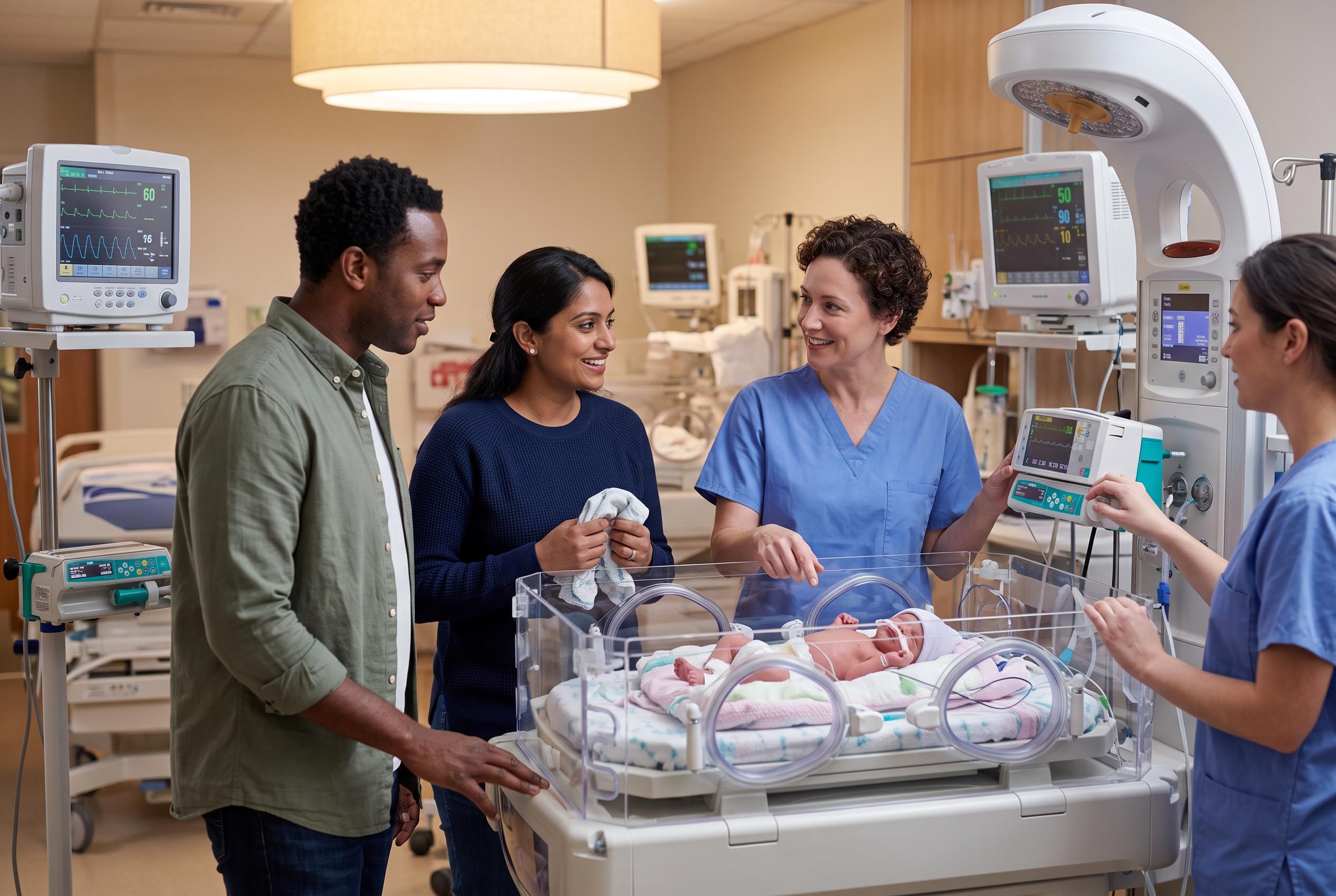

A new call to action urges neonatal teams to treat parents as active partners in managing hypoxic-ischaemic encephalopathy, aiming to improve outcomes and support through inclusive, compassionate care and research practices.
Neonatal teams should treat parents not as bystanders but as partners in care and research for hypoxic-ischaemic encephalopathy, according to a call to action published in Pediatric Research. The paper, led by Beatrice Pilon, Mariona Cavaller-Bellaubi and Mary Daly, says families’ lived experience should help shape treatment decisions, research questions and long-term support for children with the condition.
Hypoxic-ischaemic encephalopathy, or HIE, can occur before, during or soon after birth when a baby’s brain is deprived of oxygen and blood flow. The result can be a cascade of injury that unfolds over hours, which is why rapid diagnosis matters. For babies with moderate to severe HIE, therapeutic hypothermia remains the main treatment: clinicians lower body temperature for about 72 hours to slow metabolism and limit further damage.
Even with that care, outcomes can vary widely. Some children later face cerebral palsy, epilepsy, learning problems, or difficulties with vision, hearing, behaviour and cognition. Others have far fewer lasting effects. The authors say that uncertainty can begin in the first hours of life and continue for years, as developmental issues emerge at different stages and may not be captured by standard examinations alone.
Research on family involvement supports that argument. A systematic review of family engagement interventions in intensive care units found that programmes involving parents in direct care were linked to improvements in outcomes such as stress, anxiety, confidence and satisfaction. Separate studies in neonatal encephalopathy have also shown that parents often move from shock and grief to advocacy, reinforcing the value of involving them in defining outcomes that matter in daily life.
The paper also stresses communication and access. Parents facing HIE often receive complex information about scans, seizures and prognosis while under intense strain, and the authors say that explanation must be clear, repeated and compassionate. They also argue for more inclusive research practices, including flexible participation, translated materials and support for families who are underrepresented because of language, geography, disability or cost.
Disclaimer: This content is for informational purposes only and is not intended to be a substitute for professional medical judgment, advice, diagnosis, or treatment.