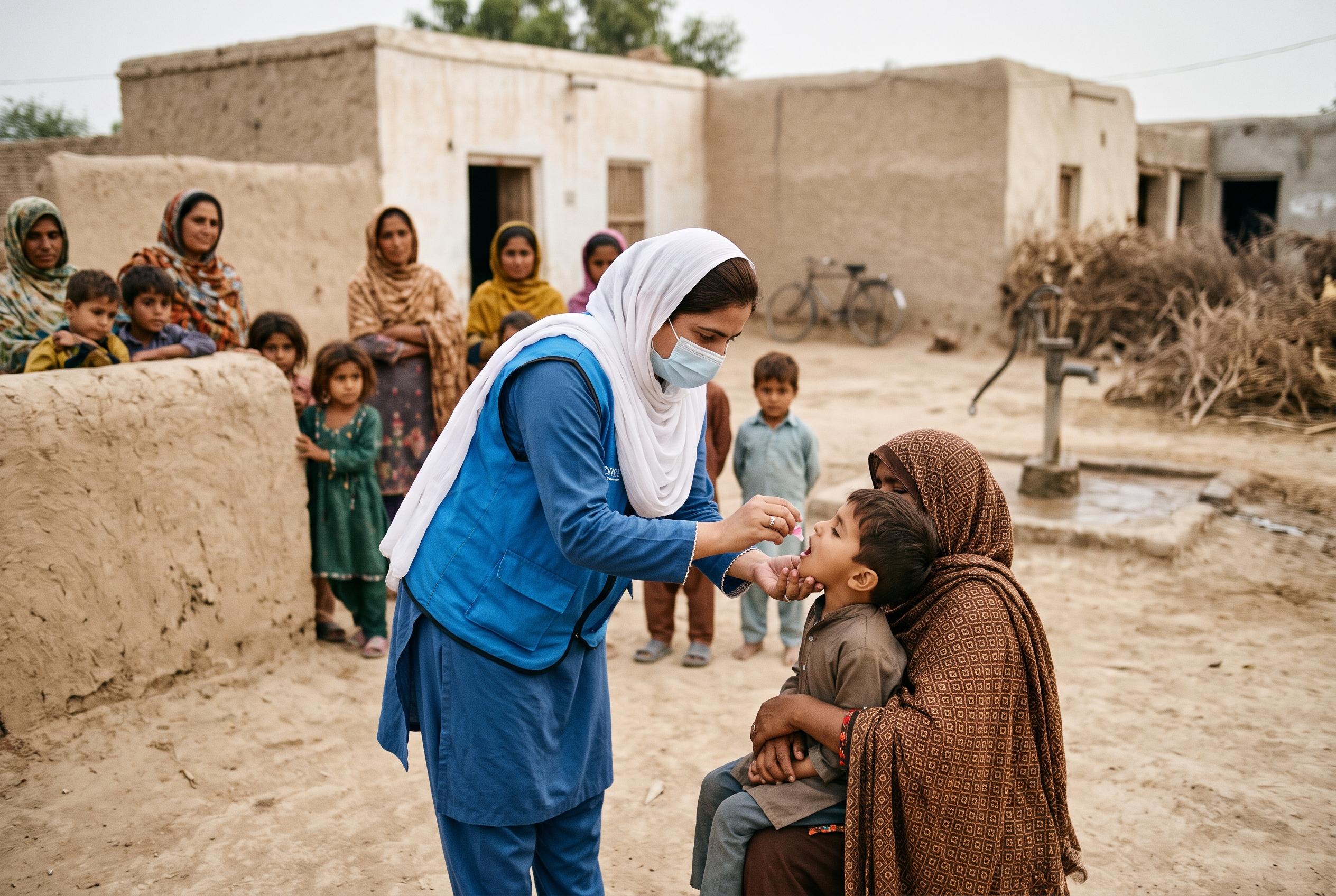

WHO and Rotary leaders say the dramatic decline in polio cases has brought eradication within reach, but warn that cross-border transmission, fragile health systems and funding pressures threaten the final push.
At events in Cairo to mark World Polio Day, the World Health Organisation’s Regional Office for the Eastern Mediterranean and Rotary leaders used the occasion to underline how far the global campaign against polio has come, and how much remains to be done. Dr Adham Ismail, the WHO office’s officer-in-charge, told a Rotary Foundation seminar that in 1988 the disease paralysed an estimated 350,000 children a year in more than 125 countries, while last year there were 52 reported cases of wild poliovirus worldwide, all in Afghanistan and Pakistan. He also praised Rotary’s long role in the Global Polio Eradication Initiative, saying the organisation has contributed more than US$2.9 billion and countless volunteer hours.
Ismail said the final stretch of eradication would require a different approach, with stronger coordination across borders, especially between Afghanistan and Pakistan, and closer work with trusted community figures and women health workers. He also called for polio activities to be tied more closely to routine immunisation, so that efforts to stop transmission also strengthen broader public health systems. Rotary, he said, should continue to provide funding, advocacy and local engagement in the hardest-to-reach areas.
The message was reinforced by WHO data shared earlier this year. In May, the organisation said wild poliovirus transmission had fallen sharply, with only six cases reported at that point in 2026, and that the remaining spread was largely confined to high-risk border areas. WHO said synchronised vaccination campaigns had reached nearly 58 million children, often alongside measles vaccines and vitamin A supplements. The agency also pointed to progress in 2025, including improved strategies in endemic countries, expanded laboratory capacity and closer integration with routine immunisation, with Pakistan reporting fewer than half as many cases as in 2024.
The Cairo events also drew on Egypt’s own experience. At the End Polio Now Carnival at the American University in Cairo, Dr Jamal Ahmed, WHO’s director for polio eradication and vaccine-preventable diseases in the region, said Egypt’s success in eliminating polio more than two decades ago showed what sustained effort can achieve. That regional spirit has been reinforced through the WHO Eastern Mediterranean Region’s polio subcommittee, created to deepen solidarity among member states, and through wider discussions in October on the need for political leadership, stronger immunisation systems and cross-border cooperation at a time of tighter humanitarian funding. Ismail closed by restating the goal in simple terms: “Our goal is simple. No child, anywhere, should ever be paralyzed by polio again.”
Disclaimer: This content is for informational purposes only and is not intended to be a substitute for professional medical judgment, advice, diagnosis, or treatment.