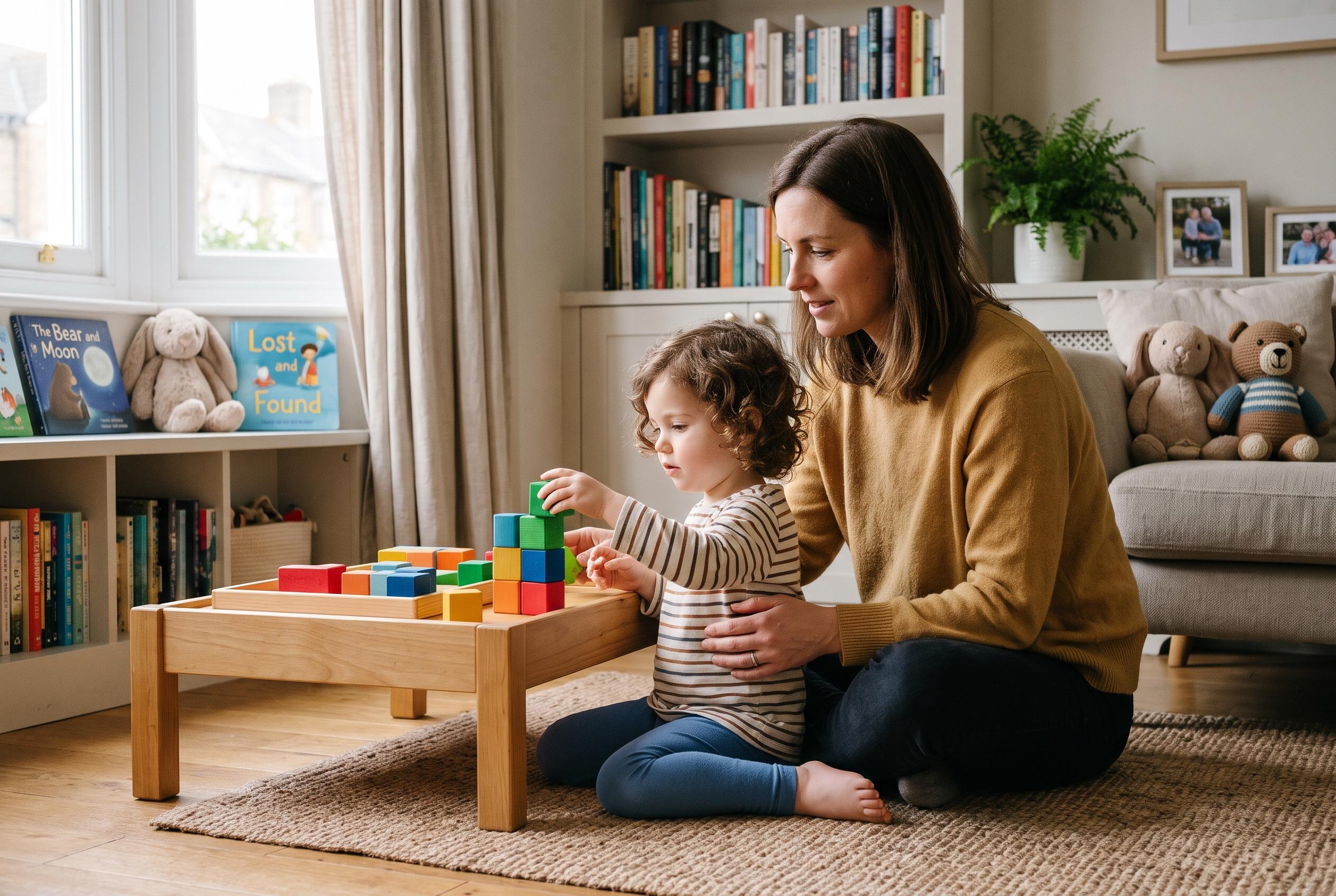

Research suggests children fare best when affection is combined with consistent supervision and clear boundaries, rather than provided on its own.
A new study suggests that children’s behaviour is shaped less by any single parenting habit than by the overall mix of warmth, discipline and supervision they experience at home. For parents and caregivers, the finding points to a simple but important message: affection matters, but it appears to work best when it is paired with consistent oversight and clear limits.
Researchers analysed data on 2,752 children aged five to 18 across 18 US states and Puerto Rico, drawing on the Environmental influences on Child Health Outcomes programme backed by the National Institutes of Health. Writing in PLOS One, Xiaoye Xu of SUNY Cortland and Santiago Morales of the University of Southern California said they looked at parenting patterns as a whole rather than isolating one behaviour at a time. Their conclusion was that combinations of parenting practices, not just isolated actions, were closely tied to children’s emotional wellbeing and conduct.
The study grouped parents into three broad styles. Most fell into the category of high warmth and high supervision, while a second group showed moderate warmth and moderate monitoring. A very small share were warm but provided little oversight. Children in the first group had the lowest levels of emotional and behavioural difficulties. Problems were higher in the second group and greatest in homes where warmth existed but monitoring was weak. The researchers said the clearest dividing line between children with more and fewer behaviour problems was the extent of parental supervision, rather than warmth alone.
Their findings fit with wider research. A large meta-analysis published in PubMed found that parental warmth and behavioural control were linked to fewer externalising problems, while harsh or psychologically controlling parenting was associated with more acting out. Other studies have suggested that strictness and warmth tend to work together as separate dimensions, but that the best balance can vary across cultural settings. In practice, that means there is no single universal formula, although consistent care and firm boundaries repeatedly appear to support healthier child development.
The researchers also warned against assuming a simple cause-and-effect relationship. Because the study captured families at one point in time, it cannot prove that parenting style alone drives children’s behaviour. A child’s temperament may also shape how parents respond, creating a back-and-forth dynamic within the household. Even so, the study adds to growing evidence that everyday parenting choices, repeated over time, can accumulate into meaningful differences in a child’s emotional and behavioural health.
Disclaimer: This content is for informational purposes only and is not intended to be a substitute for professional medical judgment, advice, diagnosis, or treatment.